
Xactly is a compensation company first. Xactly Plan and its OpsPanda-based capacity planning sit alongside the incentive engine that made its name, and for teams whose center of gravity is commission administration, that bundle is a sensible home.
The teams that go looking for an Xactly alternative are usually the ones who have realized their problem starts upstream of comp: the quota itself was set above what the team could actually carry.
A comp engine can pay flawlessly for a full year the team never had the capacity to hit. The plan was wrong before the first payout cleared.
One disclosure up front: Lative is our product, and it appears on this list as the capacity-first option, not another comp engine. Every tool here is judged on the same four criteria, including what it is not.
Quick picks by need
- Best capacity-first alternative: Lative
- Best territory-quota-comp suite: Varicent
- Best flexible comp engine: CaptivateIQ
- Best rep-friendly commissions: Salesforce Spiff
- Best configurable ICM: Performio
- Best enterprise comp: SAP Commissions
Xactly alternatives at a glance
| Tool | Best for | Pricing | Standout |
|---|---|---|---|
| Lative | Quota set to capacity | Custom quote, no per-user | Quota in ramped equivalents |
| Varicent | Territory, quota and comp | Custom quote | One SPM suite |
| CaptivateIQ | Flexible comp | Custom quote | Complex plans without IT |
| Salesforce Spiff | Rep-friendly commissions | Custom quote | Real-time comp visibility |
| Performio | Configurable ICM | Custom quote | Reliable comp administration |
| SAP Commissions | Enterprise comp | Custom quote | Largest, most complex plans |
| Everstage | Comp engagement | Custom quote | Rep motivation and clarity |
Pricing is enterprise custom-quote across this category; confirm current rates with each vendor.
How we evaluated the alternatives
Four questions decide this one. Does it set quota to what the team can actually carry, or does it assume the number and pay against it? Does it administer commission accurately and on time? How long is time-to-value, weeks or a multi-quarter rollout? And who owns it day to day, RevOps or a comp admin? Xactly and the incentive tools here are strong on the second question.
The one most orgs skip is the first, setting quota to capacity, which is the gap this list is judged against. For the mechanics of that first job, see our guide to setting quotas for SaaS sales reps.
Where Xactly is strong, and where it isn’t
Xactly earns its reputation on incentive compensation: mature plan modeling, governance, and the Xactly Insights benchmark dataset built from years of comp data. It has moved toward planning with Xactly Plan and the capacity planning it picked up by acquiring OpsPanda.
The caveat is that the platform is comp-led by design, the capacity piece is newer and sits alongside the comp engine rather than under it, and ramp-cohort math is not the native object it is in a purpose-built planning tool. If comp is your center of gravity, Xactly is a reasonable home. If the quota itself is the problem, the alternatives below plan it more directly.
For the wider category, see our roundup of the best sales performance management software.
The 7 best Xactly alternatives in 2026
1. Lative: the capacity-first alternative
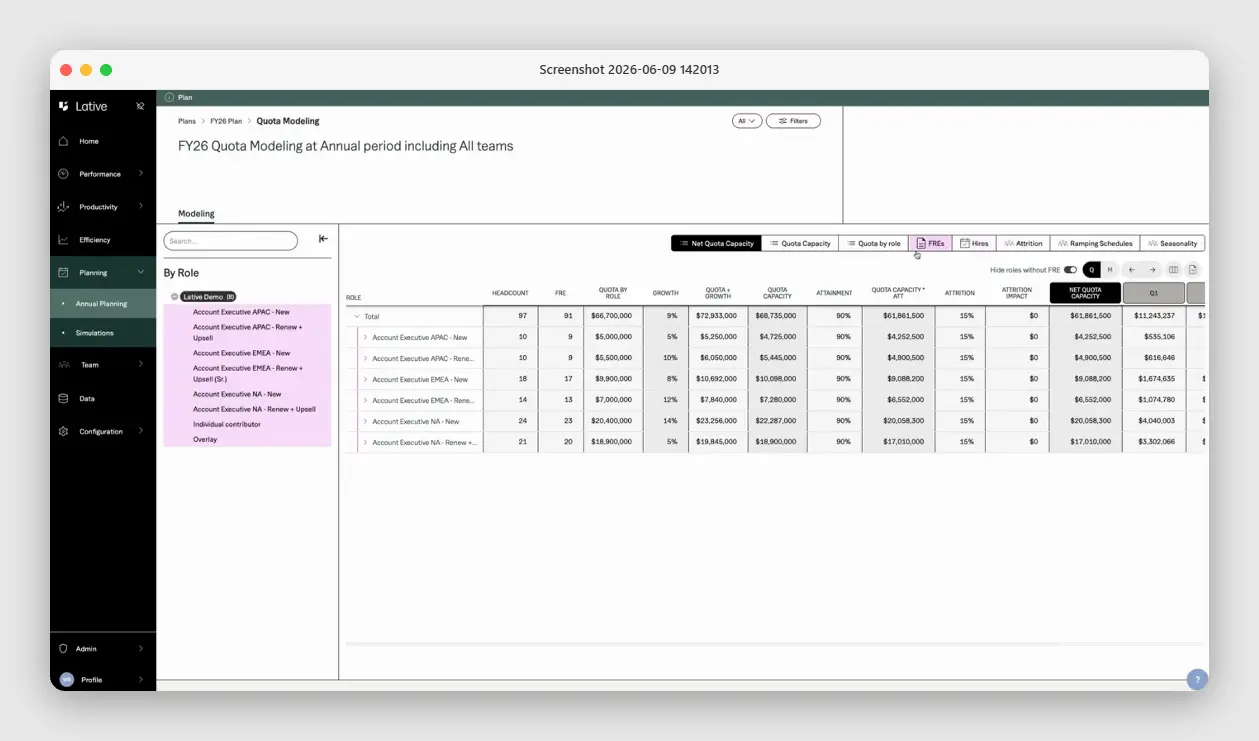
Full disclosure: Lative is our product, so weigh this with the appropriate skepticism. It belongs on an Xactly-alternative list because it solves the problem one step upstream of comp: it sets quota to real productive capacity, ramp-adjusted and reconciled to the target, before any incentive plan pays against it.
Xactly pays accurately on a number; Lative makes sure that number was achievable in the first place.
It is not an incentive-compensation tool. It does not calculate commissions or administer comp plans, so if payout administration is your core need you will still pair it with an ICM engine. What it replaces is the spreadsheet quota-and-capacity model that Xactly Plan only partially covers, expressed as net quota capacity in fully ramped equivalents.
2. Varicent: the territory-quota-comp suite
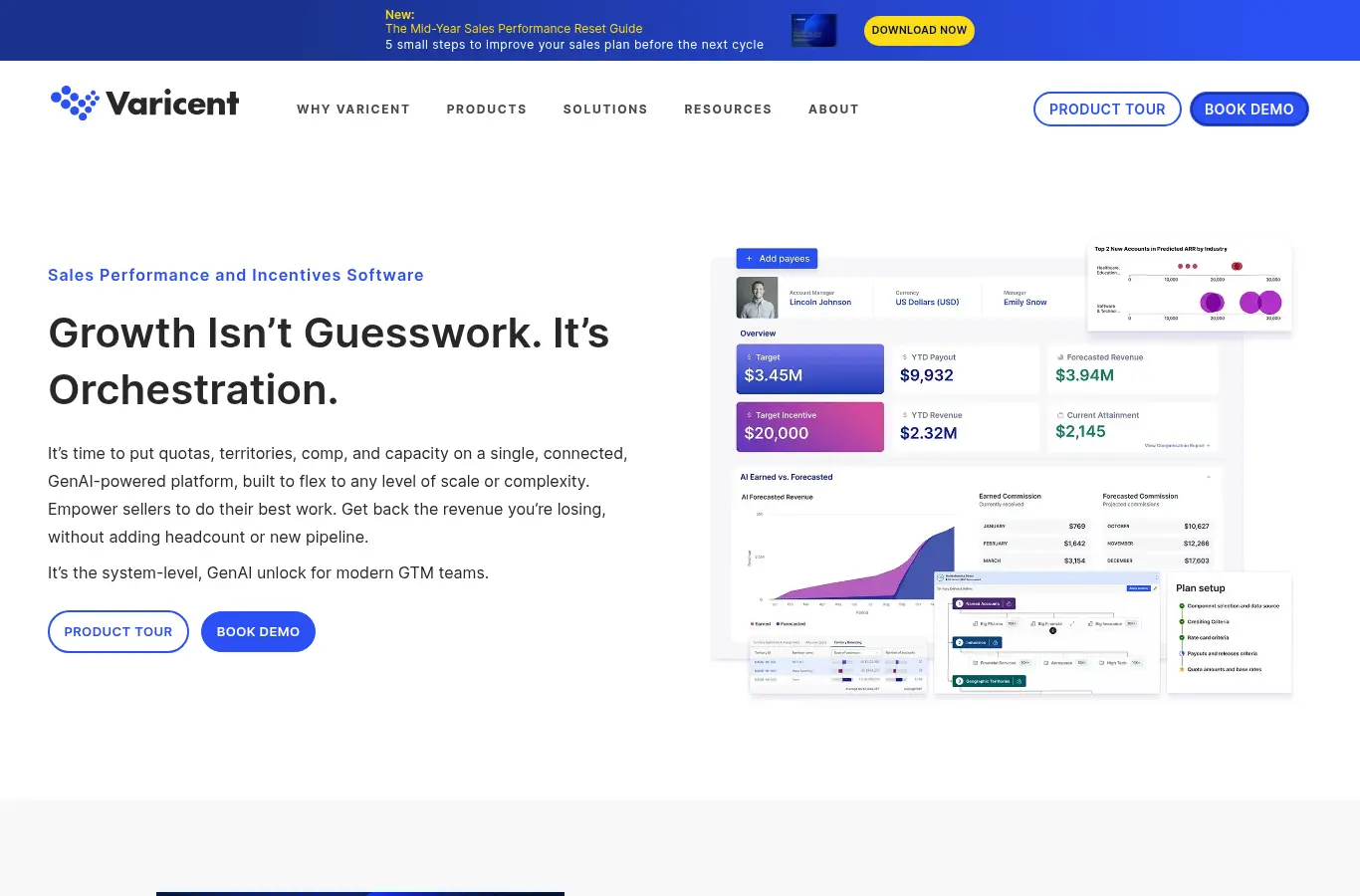
Varicent is the closest like-for-like swap on this list. It is the other enterprise SPM suite, with territory and quota planning sitting beside incentive comp, so the move is lateral rather than a rethink: same category, same shape of contract, same class of implementation.
That is the case for it and against it. You keep the single-vendor bundle Xactly gave you, and you keep the trade that came with it, where planning is a module next to the comp engine rather than the product’s center of gravity. If the suite model itself is why you are leaving, Varicent will not fix it.
3. CaptivateIQ: the most flexible comp engine
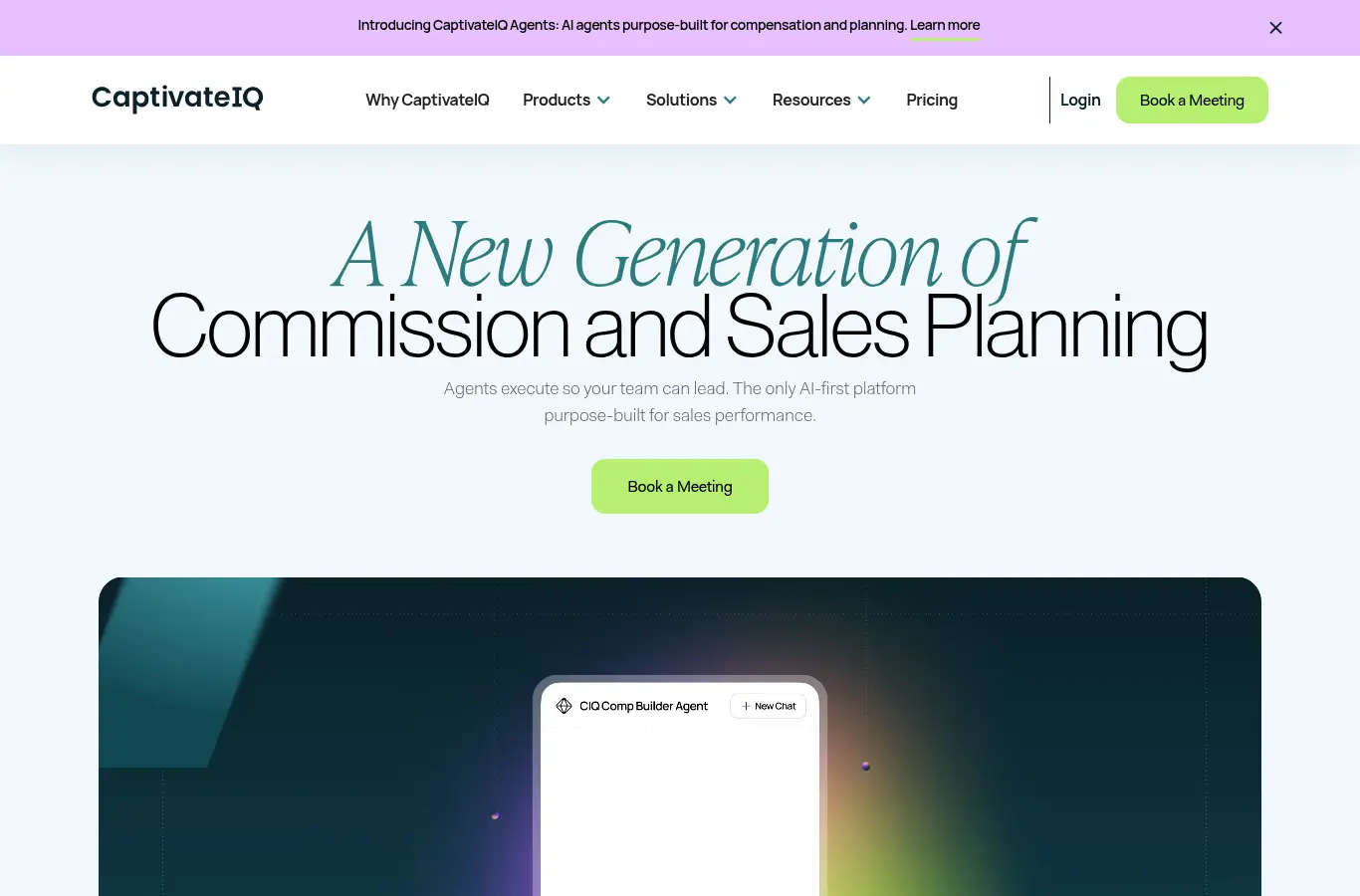
CaptivateIQ is the usual destination for teams whose complaint about Xactly is change velocity. Plans are modeled in a spreadsheet-like interface that comp admins can edit themselves, so a mid-quarter SPIF or a new accelerator does not become an implementation ticket.
What you give up is the surrounding suite. There is no benchmark dataset and no territory or quota module, so whatever Xactly Plan was doing for you has to move somewhere. It calculates and pays commission very well, and it assumes the quota arrives already set.
4. Salesforce Spiff: the most rep-friendly commissions
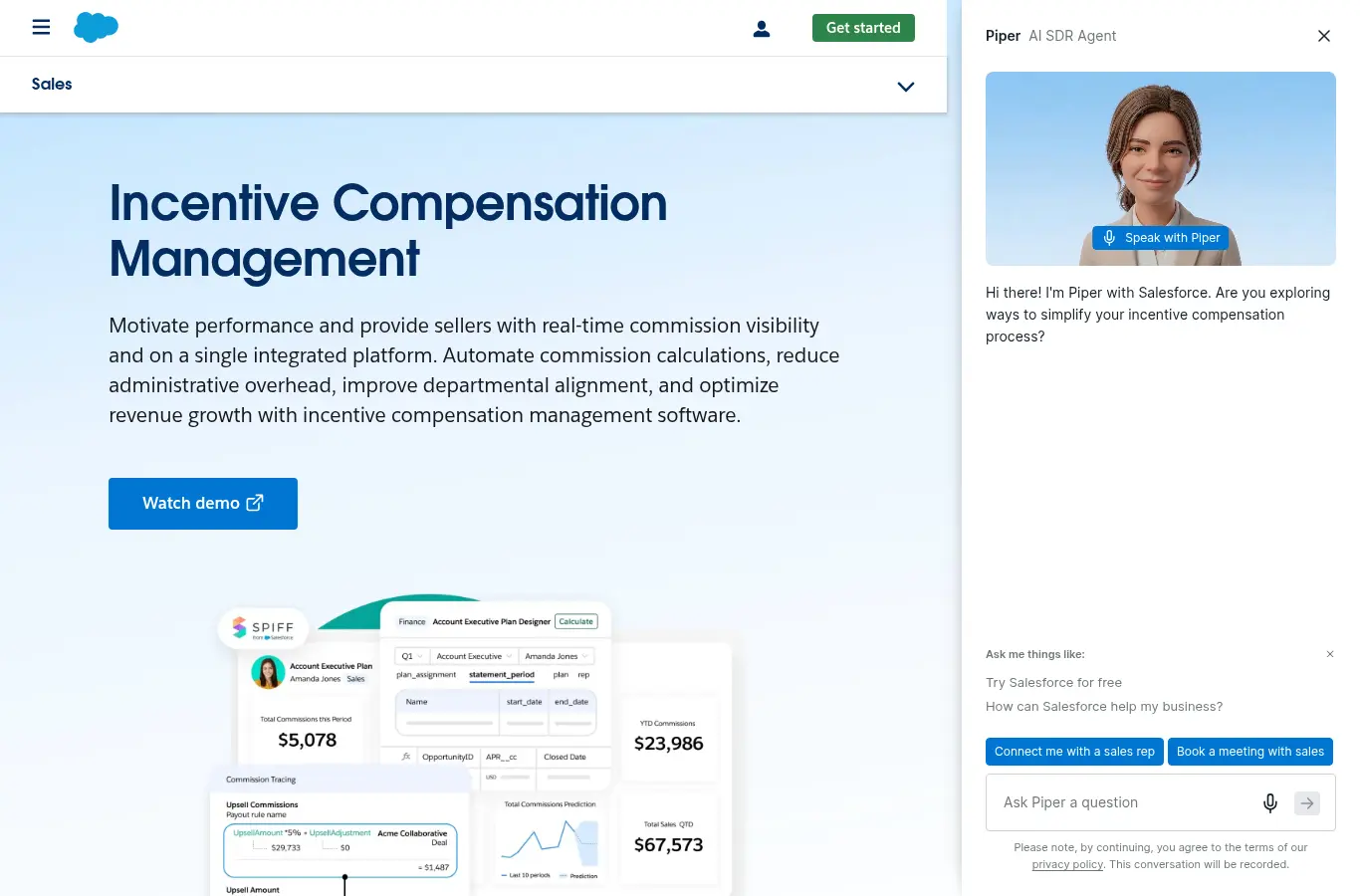
Teams that leave Xactly over rep experience usually land here. Spiff shows commission in real time, statements are legible without a finance decoder ring, and disputes drop as a direct result. Now part of Salesforce, it is the natural pick when the CRM is already your system of record.
It is a payout engine and does not pretend otherwise. Territory, quota, and capacity planning sit outside its scope, so an Xactly deployment that leaned on Plan or Insights will leave a gap Spiff does not fill.
5. Performio: the most configurable ICM
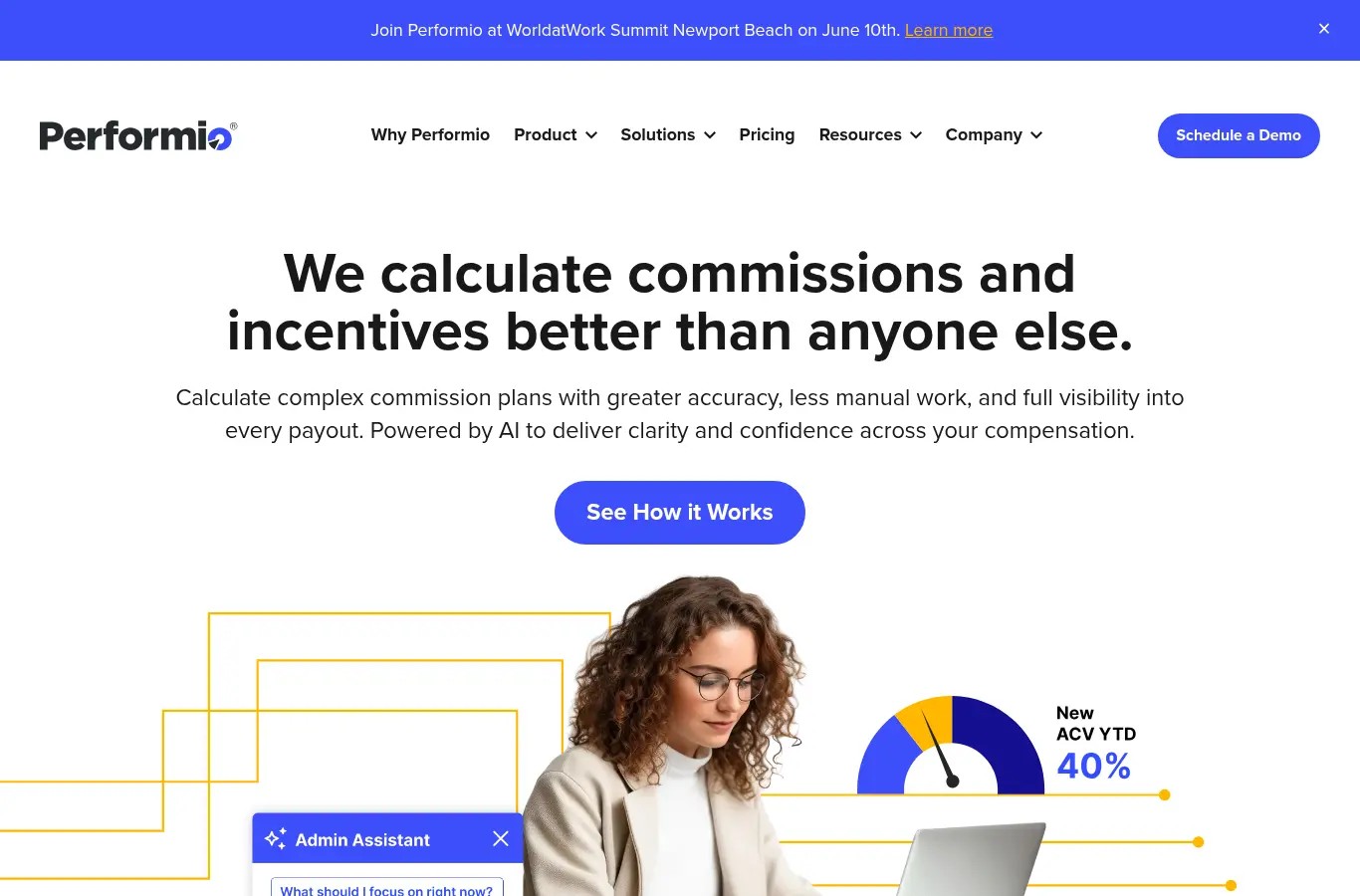
Performio is the right-sizing option. It handles genuinely complex plan logic without carrying enterprise-suite weight, which suits teams that bought Xactly for a scale they never reached and now pay for governance nobody uses.
It is comp administration done well and nothing past it. Quota still gets set somewhere else, and if that somewhere else is a spreadsheet, changing ICM vendor will not change the miss rate.
6. SAP Commissions: the enterprise comp standard
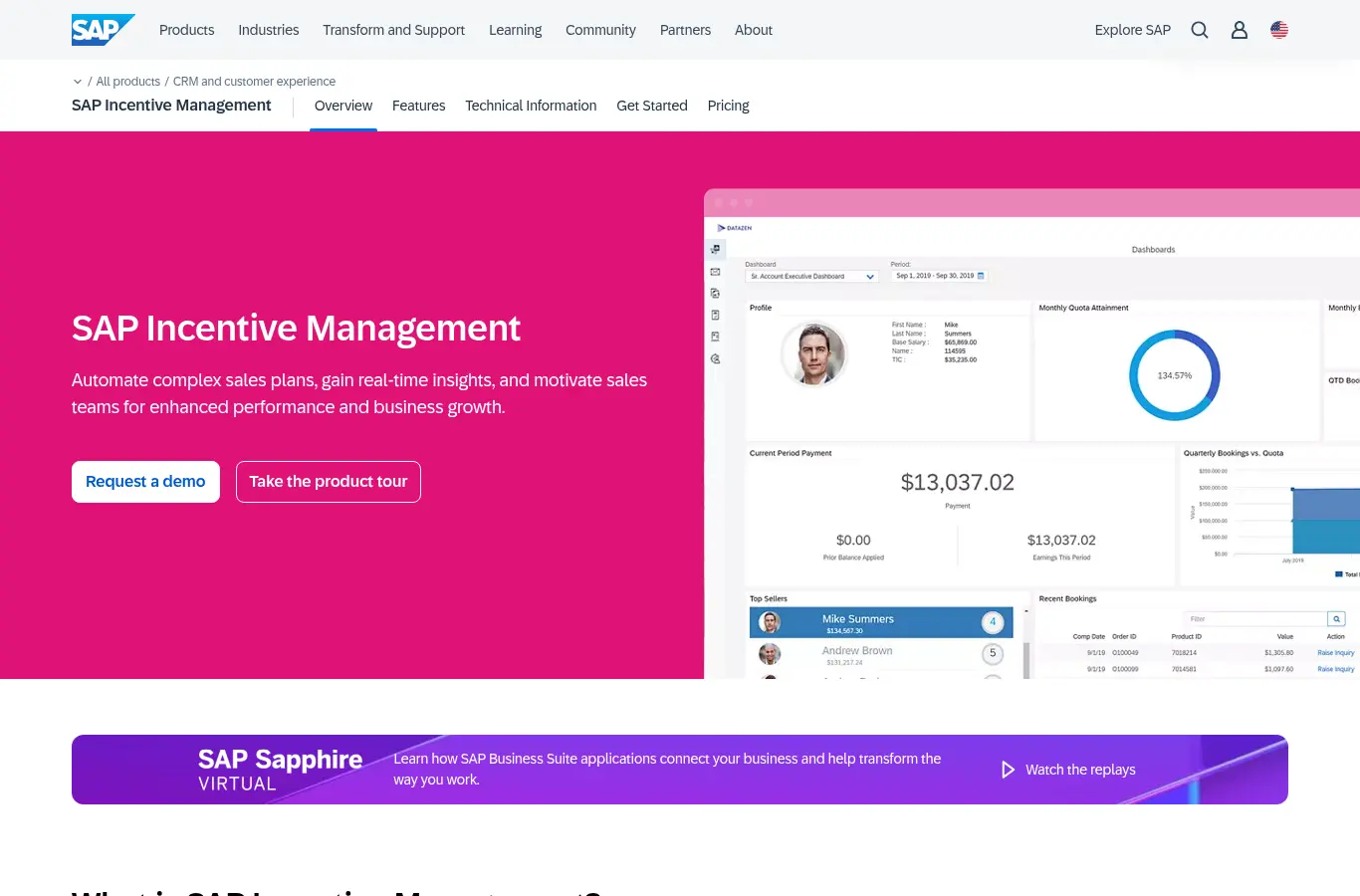
SAP Commissions is the move up rather than the move out. Teams pick it when the comp program has outgrown Xactly on scale or governance, usually large enterprises where audit trails and multi-entity complexity drive the decision more than usability does.
It is comp infrastructure, and it is heavy. Implementation is a project, the SAP ecosystem is the reason most buyers are there at all, and quota-to-capacity planning stays a separate discipline that nobody in this stack owns.
7. Everstage: the best comp engagement

Everstage competes on the part of comp that enterprise suites treat as an afterthought: what the rep actually sees. Dashboards, commission forecasts, and gamification make the plan legible to the people it is meant to motivate, which is a real argument when the comp plan is fine and nobody understands it.
The engine underneath is solid, and the boundary is the same as everything else in this section. It pays a quota. It does not question one.
When to switch, and when to stay
Stay with Xactly, or pick another incentive tool here, when your core job is paying commission accurately across complex plans and you value the benchmark data.
Move to a capacity-first tool like Lative when your misses trace back to quotas set above what the team could carry, when ramp and attrition keep breaking the plan mid-year, or when you want quota tied to capacity before comp ever pays against it. Most teams end up running both: capacity and quota planning upstream, comp administration downstream.
See how the pieces fit on our sales capacity planning hub.
Frequently asked
What is the best Xactly alternative?
It depends on the job. If you need incentive compensation, CaptivateIQ, Varicent, and Salesforce Spiff are the closest like-for-like options. If your real gap is setting quota to what the team can carry, a capacity-first tool such as Lative is the better fit, because it plans the number Xactly would otherwise pay against.
Does Xactly do capacity planning?
Yes. Xactly offers sales planning through Xactly Plan and picked up dedicated capacity planning by acquiring OpsPanda. It is comp-led by design, though, so ramp-adjusted, per-rep capacity is a newer, adjacent capability rather than the native core it is in a purpose-built planning tool.
Is there a cheaper alternative to Xactly?
Most enterprise incentive tools, including Xactly, are custom-quote, so a direct price comparison means talking to each vendor. Some newer comp tools target scaling teams at a lower entry point. Always confirm the current rate for your seat count and plan complexity directly.
What is the difference between Xactly and Lative?
Xactly is an incentive-compensation platform with planning modules alongside it. Lative is a capacity-first sales planning platform that sets quota to ramp-adjusted capacity and does not calculate commissions. Xactly pays on the number; Lative makes sure the number was achievable.
Can you use Lative and Xactly together?
Yes, and many teams do. Lative plans capacity and sets quota to what the team can produce, then Xactly administers and pays commission against that quota. Planning sits upstream, comp administration downstream.
See it in action. Book a Lative demo and see how it sets quota to real, ramp-adjusted capacity before comp ever pays against it.
Werner Schmidt — Werner Schmidt is the CEO and Co-founder of Lative, with over 20 years of experience in Revenue Operations with companies including Forcepoint, Aruba Networks, Citrix, and Sage.