
Salesforce Sales Planning vs Lative is a comparison between native and purpose-built. Salesforce plans territory and quota inside the CRM your reps already use, on data your team already trusts. Lative is a capacity-first planning tool that sets quota to what the team can actually carry.
The choice comes down to whether native and simple is enough, or whether you need the capacity math underneath the quota.
Native planning on trusted data is a real advantage; it still does not guarantee the quota was sized to the team’s ramp-adjusted capacity.
One disclosure up front: Lative is our product, so weigh this with that in mind. We will be straight about where Salesforce is the better call.
The verdict, up front
Short version. Pick Salesforce Sales Planning when your territory and quota work is relatively standard and you want it native to the CRM with no integration project. Pick Lative when quotas keep landing above capacity and you need ramp-adjusted capacity, reconciled top-down and bottom-up, as a native object. If you outgrow both on modeling breadth, Anaplan is the enterprise step up.
- Best for standard territory and quota work inside the CRM: Salesforce Sales Planning
- Best when quotas keep landing above capacity: Lative
- Best if you outgrow both on modeling breadth: Anaplan
Salesforce Sales Planning vs Lative at a glance
| Salesforce Sales Planning | Lative | |
|---|---|---|
| Best for | Native CRM-based planning | Capacity-first quota planning |
| Setup | Native, no integration | Weeks, RevOps-owned |
| Ramp-adjusted capacity | Not native | Native object |
| Top-down and bottom-up | Manual reconciliation | One live model |
| Data source | Salesforce CRM data | CRM plus planning inputs |
| Pricing | Add-on to Sales Cloud | Custom quote, no per-user |
| Standout | Trusted, native data | Quota in ramped equivalents |
Salesforce is an add-on to Sales Cloud; Lative is custom-quote. Confirm current pricing with each vendor.
How we compared them
We compared them on the questions a RevOps lead asks: is planning native to the CRM, does it model ramp-adjusted capacity, does it reconcile the top-down target with bottom-up capacity, and how much build does each need? Salesforce wins on native data and zero integration; Lative wins on capacity math and reconciliation.
The gap Salesforce leaves is sizing quota to capacity, which is where this comparison is judged. See our roundup of the best CRM for sales planning.
How they differ, tool by tool
1. Salesforce Sales Planning: the CRM-native option
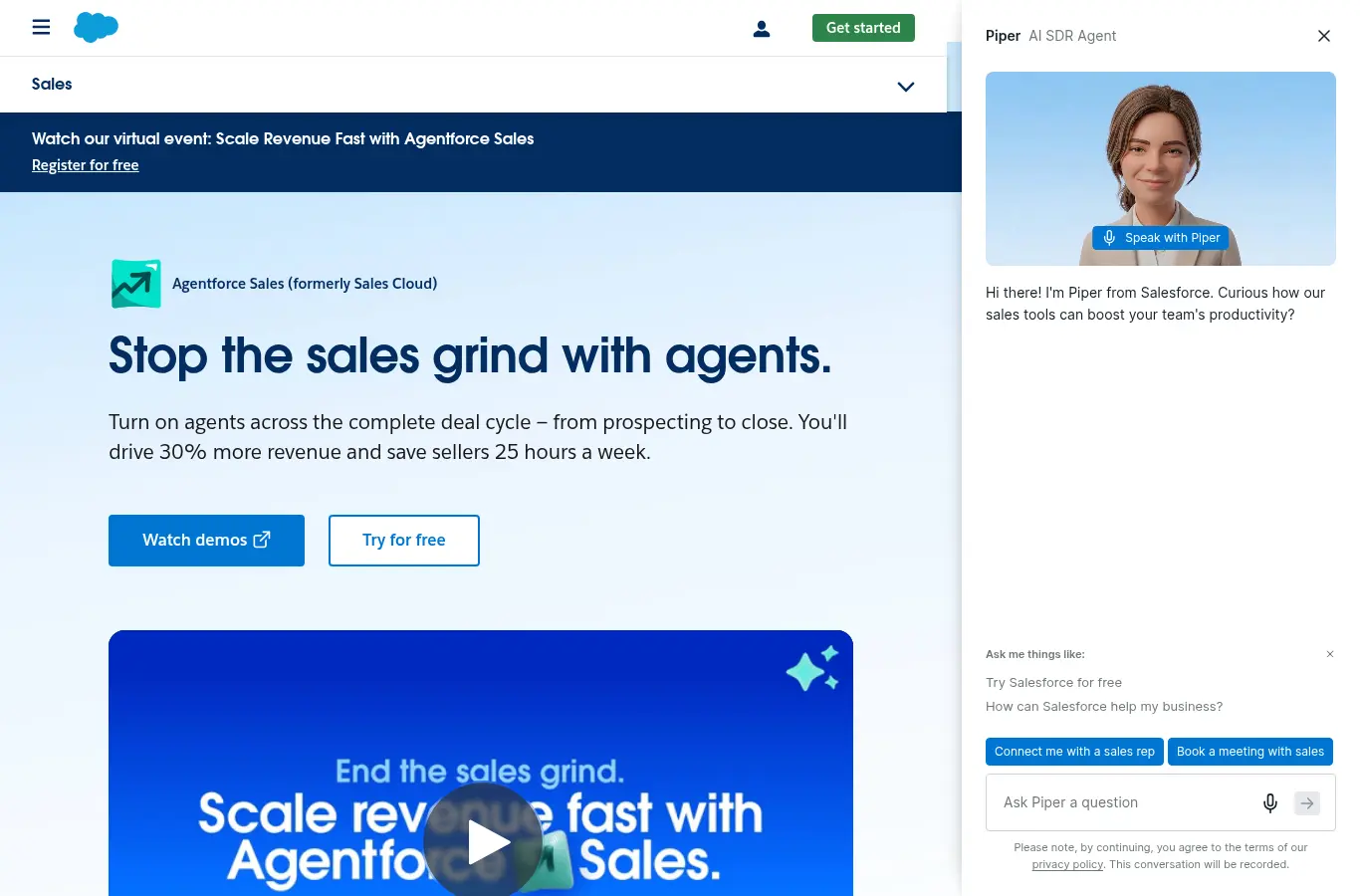
Salesforce Sales Planning puts territory design, quota allocation, and collaborative forecasting inside the CRM, so the plan moves on the same records reps update every day. There is no integration to build and no meeting about whose account list is the real one, which matters more in practice than it sounds on a feature page.
Where it stops is the math behind the quota. Planning here starts from the number finance handed down and distributes it across territories and reps. It does not ask how many ramped selling months the team will actually have next year, or what the allocation should become when a hiring class slips a quarter. Those answers still get worked out in a spreadsheet sitting next to the CRM.
2. Lative: the capacity-first planning tool
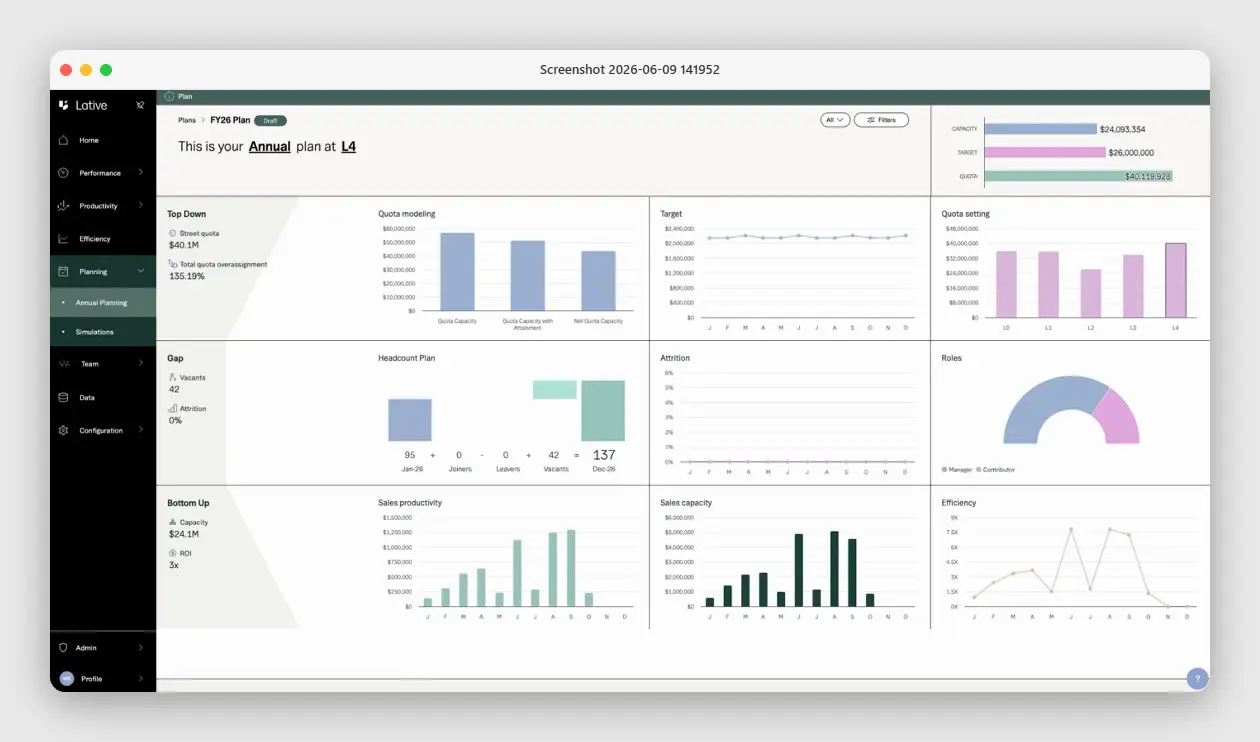
Full disclosure: Lative is our product, so weigh this with the appropriate skepticism. Against Salesforce Sales Planning the difference is depth on one job. Salesforce plans territory and quota natively on CRM data; Lative sets that quota to ramp-adjusted capacity and reconciles the top-down target with bottom-up capacity in one live model, which Salesforce leaves you to do by hand.
The trade-off is scope. Salesforce is native to the CRM and needs no integration; Lative reads the CRM but is a separate planning layer. If your planning is standard and native data is the priority, Salesforce is enough. If quotas keep landing above capacity, Lative is the layer that fixes it, expressed as net quota capacity in fully ramped equivalents.
3. Anaplan: the enterprise step up, if you outgrow both

Anaplan is where teams land when planning outgrows both a CRM add-on and a single-purpose tool. It is connected planning: sales capacity becomes one model beside finance, workforce, and operations, sharing dimensions and rolling into one consolidated view.
That breadth is the reason to choose it and the reason not to. The capacity logic inside Anaplan is whatever your modeling team builds, so the quality of the answer tracks the quality of the build, and the build is months of work followed by a standing maintenance job. If sales planning is the only model you need, you are buying a platform to solve a product-shaped problem.
Which should you choose
Choose Salesforce Sales Planning when you want planning on trusted CRM data with no integration and your territory and quota work is standard. Choose Lative when your attainment keeps landing near half the team and the fix is a quota tied to ramped capacity, not a cleaner CRM view. If you need multi-domain modeling beyond sales, Anaplan is the enterprise step up.
The common setup is Salesforce as the system of record, Lative as the planning layer that sets quota to capacity on top of it. See how they connect on our sales capacity planning hub.
Frequently asked
Is Salesforce Sales Planning good enough on its own?
For standard territory and quota planning on CRM data, often yes. Its advantage is native, trusted data with no integration project. Where it falls short is ramp-adjusted, per-rep capacity and reconciling the top-down target with bottom-up capacity, which are not native and end up in a spreadsheet.
What does Lative do that Salesforce Sales Planning does not?
Lative sets quota to ramp-adjusted capacity as a native object and reconciles the top-down target with bottom-up capacity in one live model. Salesforce plans territory and quota but leaves the capacity math and reconciliation to you.
Do you need Lative if you already use Salesforce?
Only if quotas keep landing above capacity or ramp and attrition break the plan mid-year. Lative reads Salesforce data and adds the capacity and quota layer on top, so it complements the CRM rather than replacing it.
Is Lative a CRM?
No. Lative is a capacity-first planning layer, not a system of record. It reads CRM data from Salesforce or another CRM and uses it to set quota to capacity; it does not manage contacts, opportunities, or pipeline the way a CRM does.
Salesforce Sales Planning vs Lative: which is cheaper?
Salesforce Sales Planning is an add-on to Sales Cloud, so its cost sits alongside your existing CRM spend. Lative is custom-quote with no per-user pricing. A real comparison depends on seat count and scope, so confirm current pricing with each vendor.
See it in action. Book a Lative demo and see how it sets quota to ramp-adjusted capacity on top of the Salesforce data you already trust.
Werner Schmidt — Werner Schmidt is the CEO and Co-founder of Lative, with over 20 years of experience in Revenue Operations with companies including Forcepoint, Aruba Networks, Citrix, and Sage.