
B2B SaaS teams have never owned more revenue tooling, and attainment has never looked worse. The RepVue Q2 2025 Cloud Sales Index, covering roughly 47,000 sales professionals across 246 companies, put average quota attainment at 42.69%. The teams beating those numbers connect their stack into one operating system: the Ebsta x Pavilion 2024 analysis of 4.2 million opportunities found organizations with RevOps-driven planning achieved 87% higher win rates and 21% shorter sales cycles.
One disclosure before the list. Most rankings of RevOps platforms are vendor self-rankings: the publisher’s own product sits at or near the top, and every honest limitation belongs to a competitor. This list is published by a vendor too. Lative is ours. It sits at number one because capacity-aware planning is the criterion this list is built around; it is held to the same scrutiny as the other eleven entries, and we state plainly what it does not do.
Quick picks by use case
If you only need the short answer, here it is.
- Best capacity and quota planning: Lative (full disclosure: ours)
- Best system of record: Salesforce
- Best all-in-one CRM for SMB and mid-market: HubSpot
- Best forecasting and pipeline inspection: Clari
- Best conversation intelligence: Gong
- Best lead-to-account routing: LeanData
- Best incentive compensation: Xactly
- Best sales engagement: Salesloft
- Best territory and GTM policy management: Fullcast
- Best cross-system data unification: Syncari
- Best CRM hygiene for reps: Scratchpad
- Best native analytics on Salesforce data: Salesforce CRM Analytics
Comparison at a glance
| Tool | Best for | Published pricing | Standout |
|---|---|---|---|
| Lative | Capacity and quota planning | Custom quote | Plans quota against productive capacity, not rep count |
| Salesforce | System of record | $25 to $350/user/mo | Deepest ecosystem in the category |
| HubSpot | All-in-one SMB and mid-market | Free; paid from $7/seat/mo | One suite a small ops team can run |
| Clari | Forecasting and pipeline inspection | Custom quote | The weekly forecast cadence at scale |
| Gong | Conversation intelligence | Custom quote | Evidence from real buyer conversations |
| LeanData | Lead routing | Custom quote | Lead-to-account matching that closes funnel leaks |
| Xactly | Incentive compensation | Custom quote | Payout accuracy plus pay benchmarking |
| Salesloft | Sales engagement | Custom quote | Cadences and handoffs across the revenue team |
| Fullcast | Territory and GTM policy | Custom quote | Territory rules that flow into the CRM |
| Syncari | Data unification | Custom quote | One source of truth enforced at the data layer |
| Scratchpad | CRM hygiene | Custom quote | Removes the friction from rep updates |
| Salesforce CRM Analytics | Native Salesforce reporting | From $220/user/mo (add-on) | Full-funnel reporting without ETL |
Pricing verified June 2026. Custom-quote vendors do not publish rates; budget for a sales process with each of them.
How we evaluated
Five criteria, applied to every entry including our own.
- Job-to-be-done clarity: each tool earns its place by owning one seam of the revenue process, and we name that seam instead of listing twenty features.
- Pricing transparency: every pricing line below is either a vendor-published rate or a third-party figure verified in June 2026; where neither exists, we say custom quote instead of guessing.
- Integration fit: how well the tool plugs into the record layer it depends on, and what breaks when it is paired with the wrong CRM.
- Honest limitations: every entry includes the trade-off a sales rep for that vendor would rather skip.
- Capacity awareness: the criterion other lists skip entirely. Does the tool know, or at least respect, how much the team can actually sell? Most of this category inspects pipeline and ignores capacity, and we flag it wherever it matters.
The 12 best RevOps platforms for 2026
1. Lative: best for capacity and quota planning (full disclosure: ours)
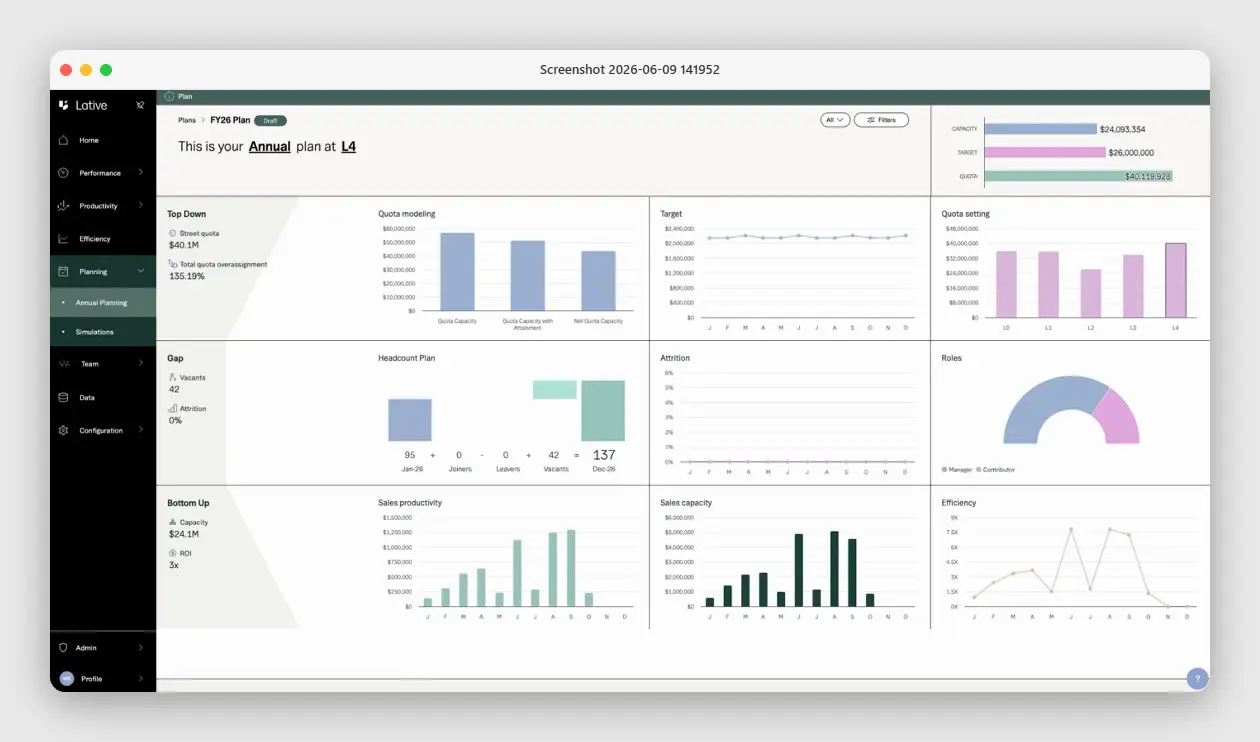
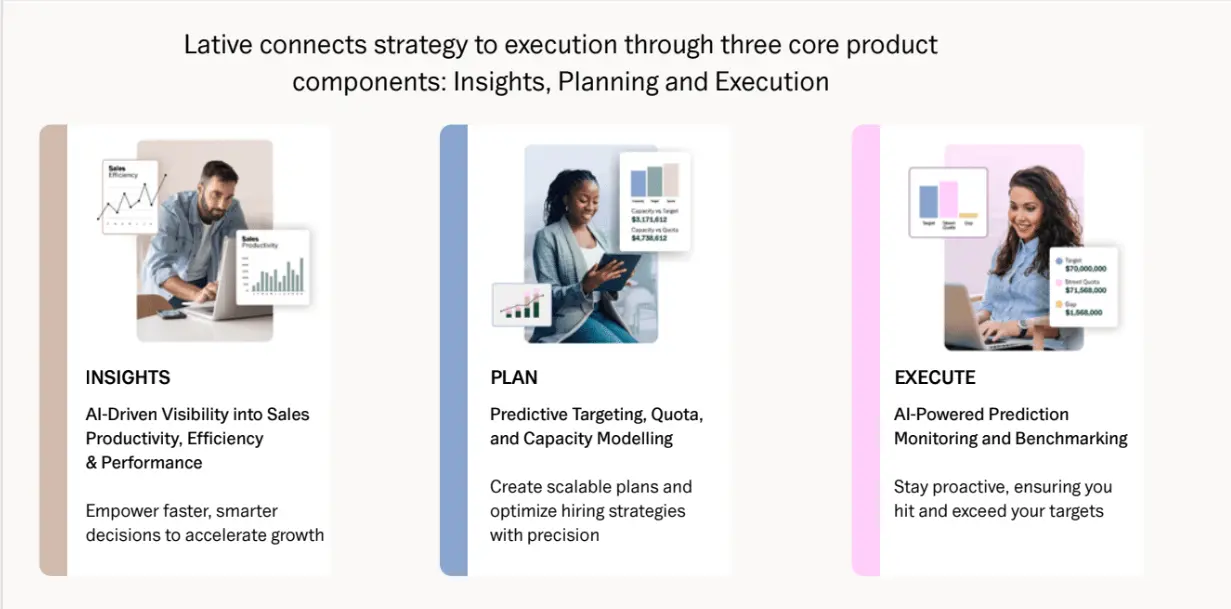
Full disclosure: Lative is our product, so apply the same skepticism here you should apply to every vendor self-ranking in this category. Lative is an AI-native sales planning system covering the layer the rest of this list leaves to spreadsheets. Its Productivity module computes production per rep from closed-won data, tenure-adjusted and sliced by region, segment, product line, and opportunity type. Average Ramping Time derives ramp curves from real cohorts, including time to first deal and per-rep ramp. Annual Planning then reconciles that bottom-up productive capacity against the finance target and quota on one screen, with vacants, joiners, leavers, and attrition modeled in the gap.
Quota Modeling rolls seasonality, ramp schedules, attrition, and the hiring plan into net quota capacity expressed in fully ramped equivalents, Quota Setting automates the rollout and shows where leaders are over-assigned, and Simulations price the what-ifs before anyone commits. Werner Schmidt, Lative’s CEO and co-founder: “Lative was born out of a need to accurately measure sales teams’ true impact on the organisation and turn bottom-up operating data into structured plans to ensure teams hit their targets.”
What Lative is not: it does no deal inspection, so Clari and Gong keep their seats; it is not a CRM; and it is not a full FP&A suite, so expense planning and P&L consolidation stay with finance. G2’s Spring 2025 awards listed Lative as a High Performer with badges for Easiest To Do Business With and Best Support, and teams at Intercom, Wiz, Seismic, and Avalara plan on it. If ramp math is where your model breaks, start with sales ramp time.
- Key features: Productivity module with tenure-adjusted production per rep; Average Ramping Time from real cohorts; Annual Planning with capacity vs target vs quota on one screen; Quota Modeling in fully ramped equivalents; Quota Setting with over-assignment visibility; long-range Simulations
- Pricing: custom quote; no published rates
- Pros: the only entry here that tests whether the plan is deliverable before the year starts
- Cons: a planning layer, not a CRM, forecast inspector, or comp engine; it assumes you keep those
The list runs in stack order rather than rank order: record layer first, then data, flow, intelligence, money, and planning. For what the function itself covers, see what is revenue operations.
2. Salesforce: best for the system of record
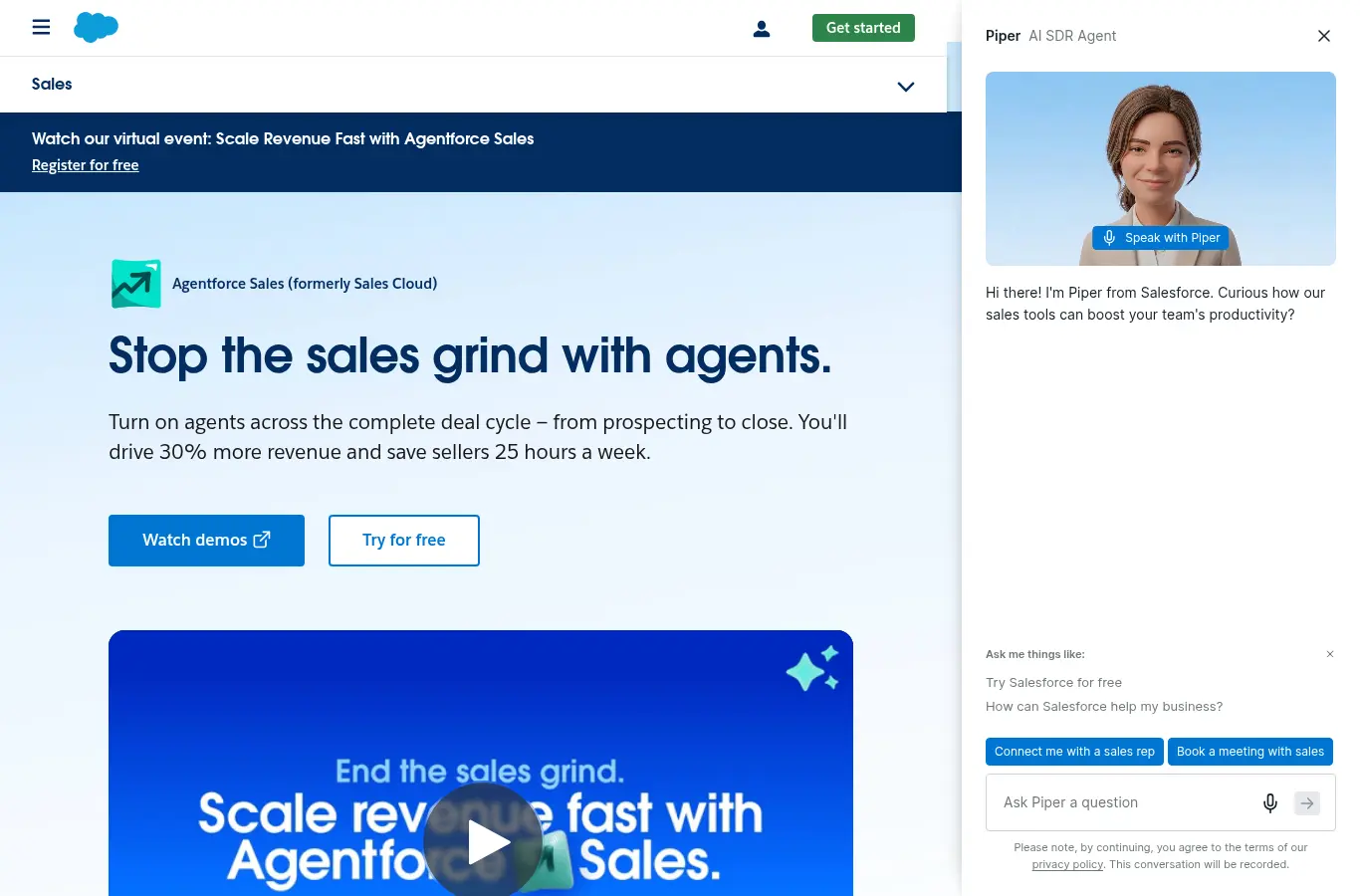
Nearly every RevOps stack is built around a system of record, and Salesforce is the default at mid-market and enterprise. Custom objects, flows, and the AppExchange ecosystem mean almost any revenue process can be modeled, and every other tool on this list integrates with it first. The first RevOps deliverable at most companies is making the Salesforce instance trustworthy.
The honest limitation is total cost and administrative weight. Capability arrives across tiers and add-ons that stack quickly, and the instance is only ever as good as its administration. Planning is also not native: quota and capacity math still happen outside the CRM, usually in spreadsheets.
- Key features: custom objects and automation flows; AppExchange marketplace; forecast hierarchies and territory management; full opportunity and activity data model; Revenue Intelligence add-on for pipeline dashboards
- Pricing: Starter at $25/user/month up to Unlimited at $350/user/month, with Agentforce 1 Sales at $550/user/month, billed annually (verified June 2026)
- Pros: the deepest ecosystem and integration surface in the category
- Cons: cost and admin overhead compound with every tier and add-on
3. HubSpot: best all-in-one for SMB and mid-market
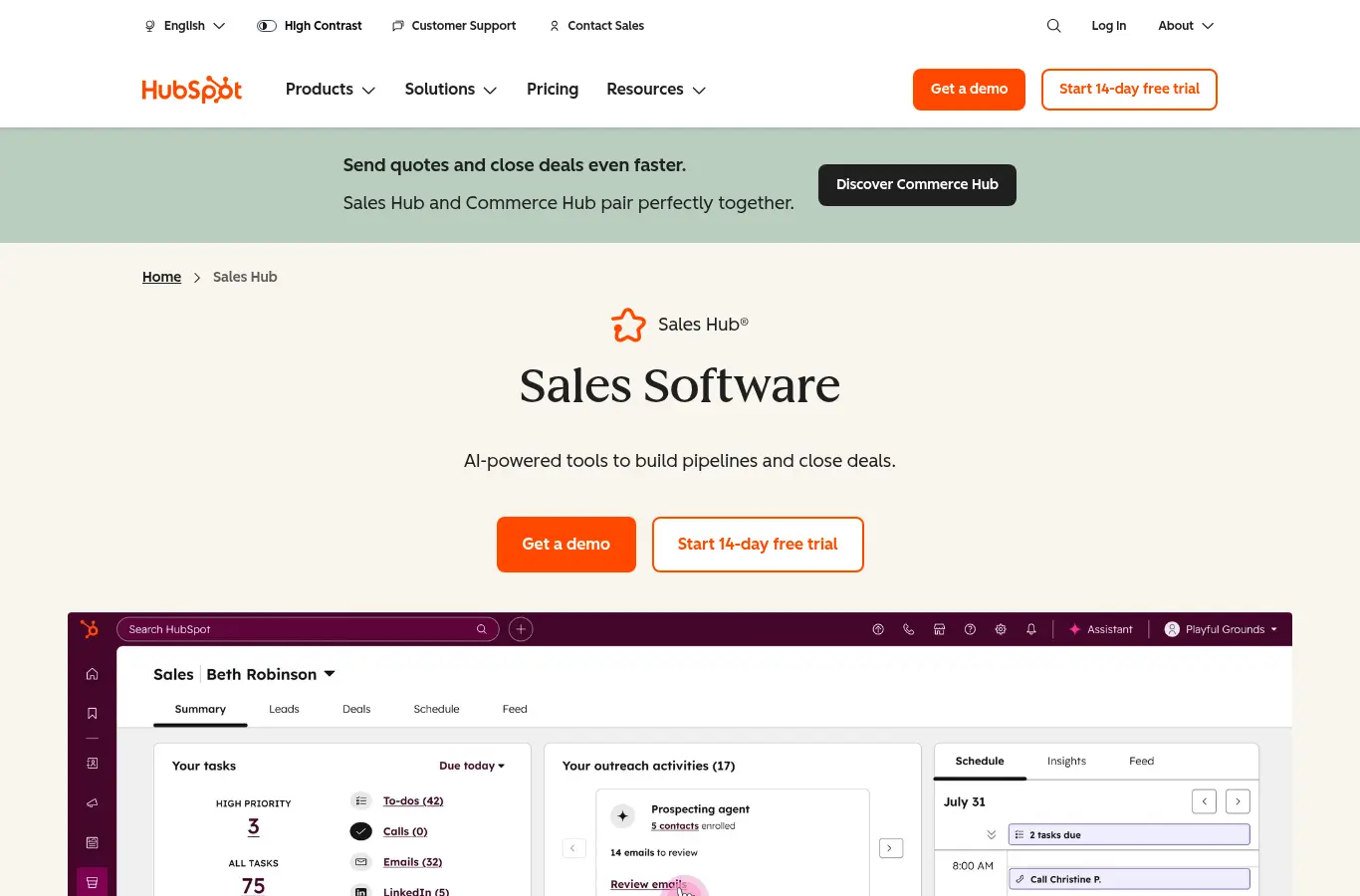
HubSpot consolidates CRM, marketing automation, and reporting into one suite a two-person ops team can genuinely run. For SMB and mid-market RevOps, consolidation usually beats configurability: fewer integrations to govern, one reporting layer, and a free tier that lets teams start without procurement.
The ceiling shows up at enterprise complexity. Multi-entity schemas, heavy custom-object models, and intricate routing strain it, and per-seat costs climb steeply from Starter to Professional to Enterprise. Teams that outgrow it end up migrating the record layer, which is an expensive project to discover mid-growth.
- Key features: unified CRM, marketing, sales, and service hubs; native full-funnel reporting; workflow automation; free tier for up to two users; app marketplace
- Pricing: free tier; Starter from $7/seat/month; Professional from $90/seat/month; Enterprise from $150/seat/month, billed annually (verified June 2026)
- Pros: the fastest path from zero to a working revenue stack
- Cons: configurability ceiling at enterprise scale and schema complexity
4. Clari: best for forecasting and pipeline inspection
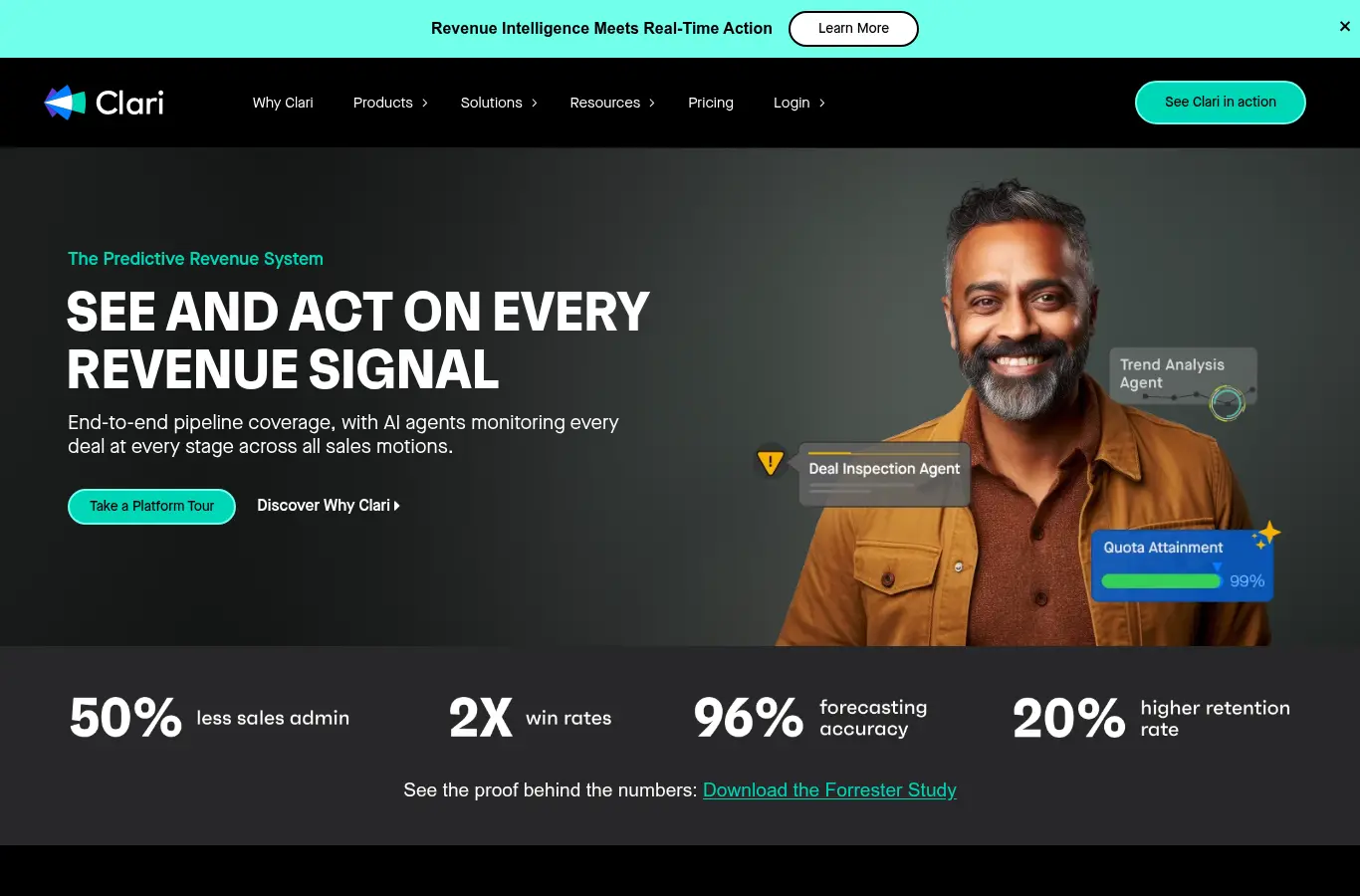
Clari anchors the intelligence layer in many mid-market and enterprise stacks: deal inspection, roll-ups, and the weekly forecast cadence that turns CRM data into a number leadership will commit to. If your forecast process lives in slides today, this is the layer that replaces them. For the discipline underneath the tool, see what is sales forecasting.
Two honest caveats. Pricing is custom quote only, so budget certainty requires a sales cycle. More fundamentally, Clari inspects the pipeline you already have; it does not model whether the team has the capacity to create or work the pipeline the plan requires. Its late-2025 merger with Salesloft also means the combined roadmap is still consolidating, which buyers should price into multi-year commitments.
- Key features: forecast roll-ups by team, geo, and product; deal inspection and risk signals; pipeline creation and conversion analytics; activity capture; forecast call workflows
- Pricing: custom quote; no published rates
- Pros: the strongest weekly forecast operating cadence in the category
- Cons: reads existing pipeline, never future capacity
5. Gong: best for conversation intelligence
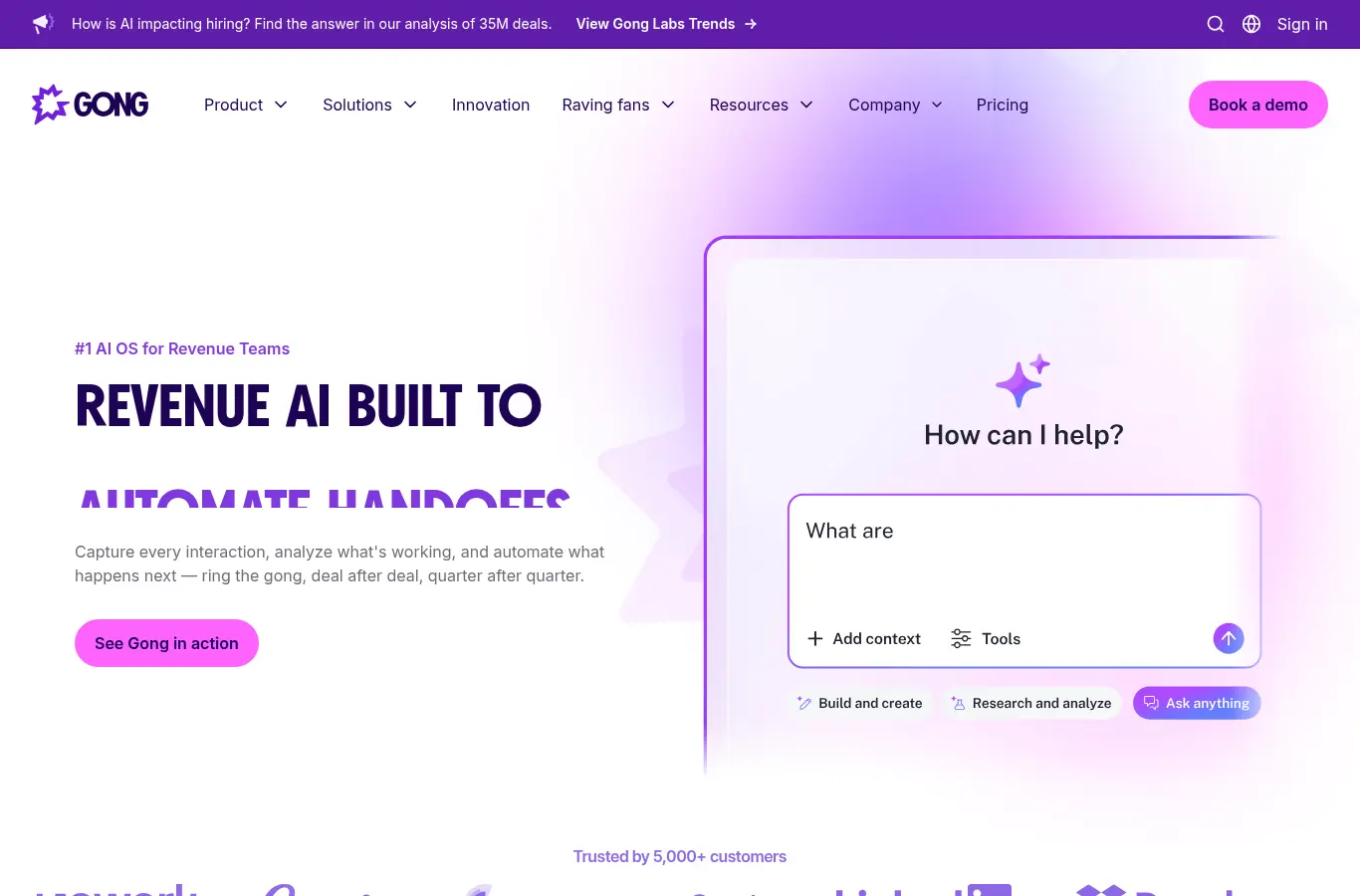
Gong records, transcribes, and analyzes buyer conversations, then converts them into deal risk signals and coaching material. It grounds RevOps decisions in what buyers actually said rather than what reps remembered to log. Gong’s 2025 onboarding research treats new-hire ramp as a measurable, repeatable process, and conversation data is part of how teams compress it.
Pricing is custom: per-user licenses plus a platform fee based on team size (verified June 2026), which adds up fast as the org grows. The deeper limitation is categorical. Conversation intelligence is an evidence layer: it can tell you why deals stall, and it cannot tell you how many reps you need next year.
- Key features: call recording and transcription; deal risk warnings from conversation signals; coaching scorecards; pipeline visibility from buyer interactions; tracking for messaging and initiative rollouts
- Pricing: custom quote: per-user licenses plus a platform fee scaled to team size (verified June 2026)
- Pros: the best evidence base for process and coaching decisions
- Cons: cost scales steeply with team size, and it answers why, not how many
6. LeanData: best for lead routing
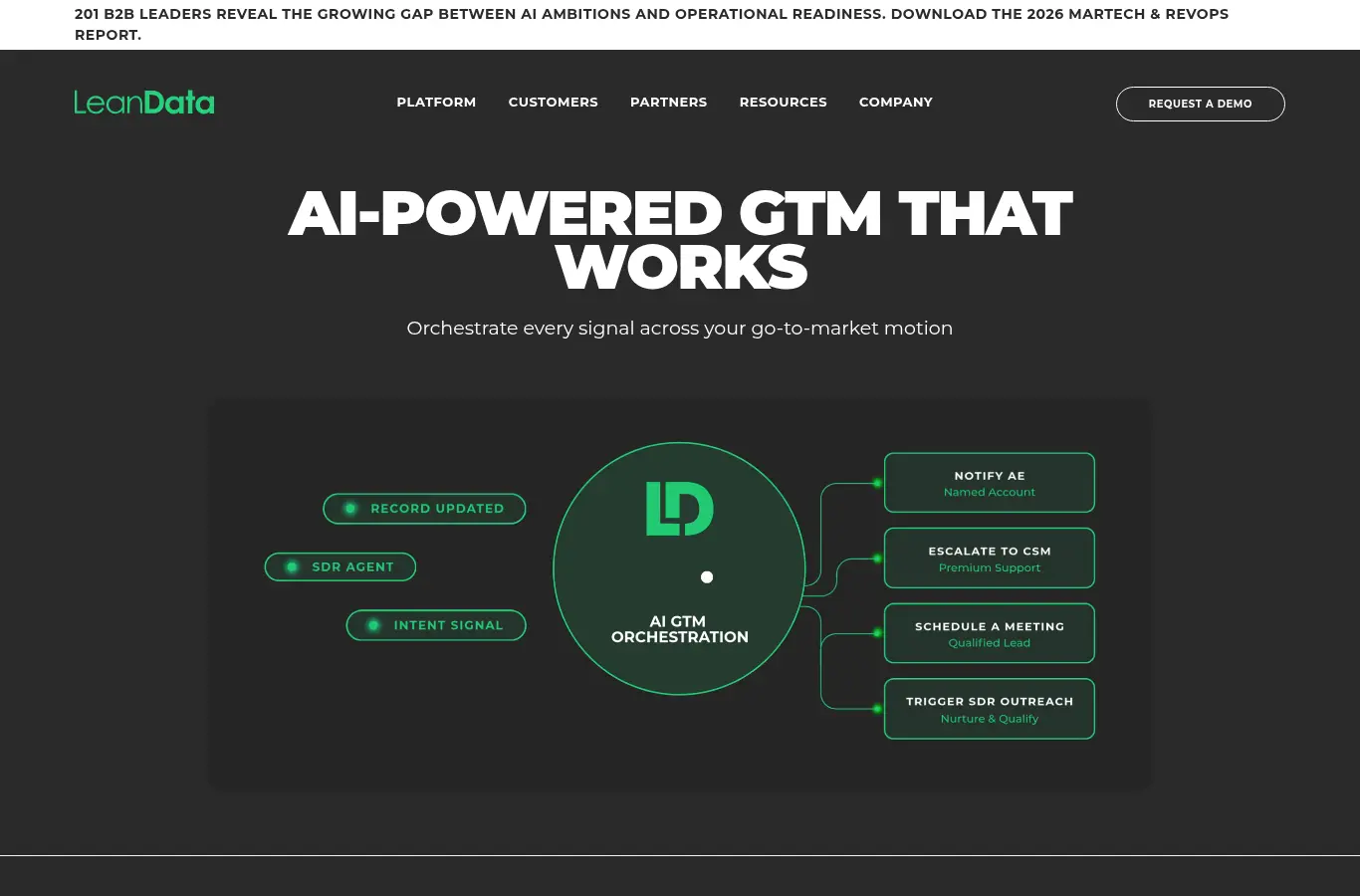
LeanData handles lead-to-account matching and routing inside Salesforce: every inbound record matched to the right account and assigned to the right owner automatically. Unowned records are unworked records, and routing is where that leak gets fixed. For demand-heavy motions it pays for itself in recovered speed-to-lead alone.
It is deliberately narrow. LeanData fixes flow, not data quality and not planning, and it is Salesforce-centric, so HubSpot-based stacks need an alternative. Pricing is custom quote across three editions, so even comparing it against lighter routing options requires a sales conversation.
- Key features: lead-to-account matching; routing flows with audit trails; round-robin and territory-based assignment; holdouts and SLA timers; Salesforce-native administration
- Pricing: custom quote across three editions (Standard, Advanced, and Premium); no published rates (verified June 2026)
- Pros: closes the unowned-record leak that quietly drains funnels
- Cons: scoped to routing, and Salesforce-only in practice
7. Xactly: best for incentive compensation
Xactly is the money layer: comp plan administration, payout accuracy, and pay benchmarking drawn from years of accumulated comp data. Once commission spreadsheets start producing disputes, dedicated incentive compensation management becomes a core RevOps responsibility, and Xactly is the established enterprise choice.
Implementation carries enterprise weight; migrating comp plans is a project, not a setting. And comp administration executes quotas without ever asking whether they were achievable in the first place. Pair it with planning that ties quota to quota attainment math, or it will pay people with perfect accuracy against the wrong number.
- Key features: comp plan design and administration; automated commission calculation; dispute and adjustment workflows; pay benchmarking; incentive analytics
- Pricing: custom quote; no published rates
- Pros: ends the commission-spreadsheet dispute cycle at enterprise scale
- Cons: heavy implementation, and it executes quotas rather than testing them
8. Salesloft: best for sales engagement
Salesloft runs engagement and deal workflows across the revenue team: cadences, handoffs, and the activity layer that keeps deals from dying of disorganization. Consistent cadences also make funnel metrics legible, which is why RevOps usually ends up owning this layer’s configuration.
Pricing is custom across two packages, Advanced and Elite (verified June 2026). The structural caveat is the one engagement always carries: cadences multiply whatever data quality you already have, good or bad. The late-2025 merger with Clari also means overlapping products will get rationalized, so ask pointed roadmap questions before signing.
- Key features: cadence management; email, dialer, and meeting workflows; deal and pipeline views; conversation recording; analytics on touch patterns and outcomes
- Pricing: custom quote across two packages (Advanced and Elite); no published rates (verified June 2026)
- Pros: consistent execution and clean handoffs across the funnel
- Cons: amplifies bad data as efficiently as good data
9. Fullcast: best for territory and GTM policy
Fullcast treats go-to-market planning as living configuration rather than an annual map. Territories, assignment rules, and coverage policies are defined once and flow through to the CRM continuously, so when a rep leaves or a territory splits, the change propagates instead of waiting for next year’s planning cycle.
Its scope is territory and policy, not the full planning problem: it will not compute productive capacity or test whether quotas are deliverable. It is also a smaller vendor with a Salesforce-leaning deployment base, which enterprise procurement teams will want to diligence. Pricing is custom quote with no published rates.
- Key features: territory design and balancing; assignment and coverage policies; routing rules synced to the CRM; org-change propagation; plan-to-execution audit trail
- Pricing: custom quote; no published rates
- Pros: territory changes propagate instead of waiting for annual planning
- Cons: territory and policy only; capacity and quota math live elsewhere
10. Syncari: best for data unification
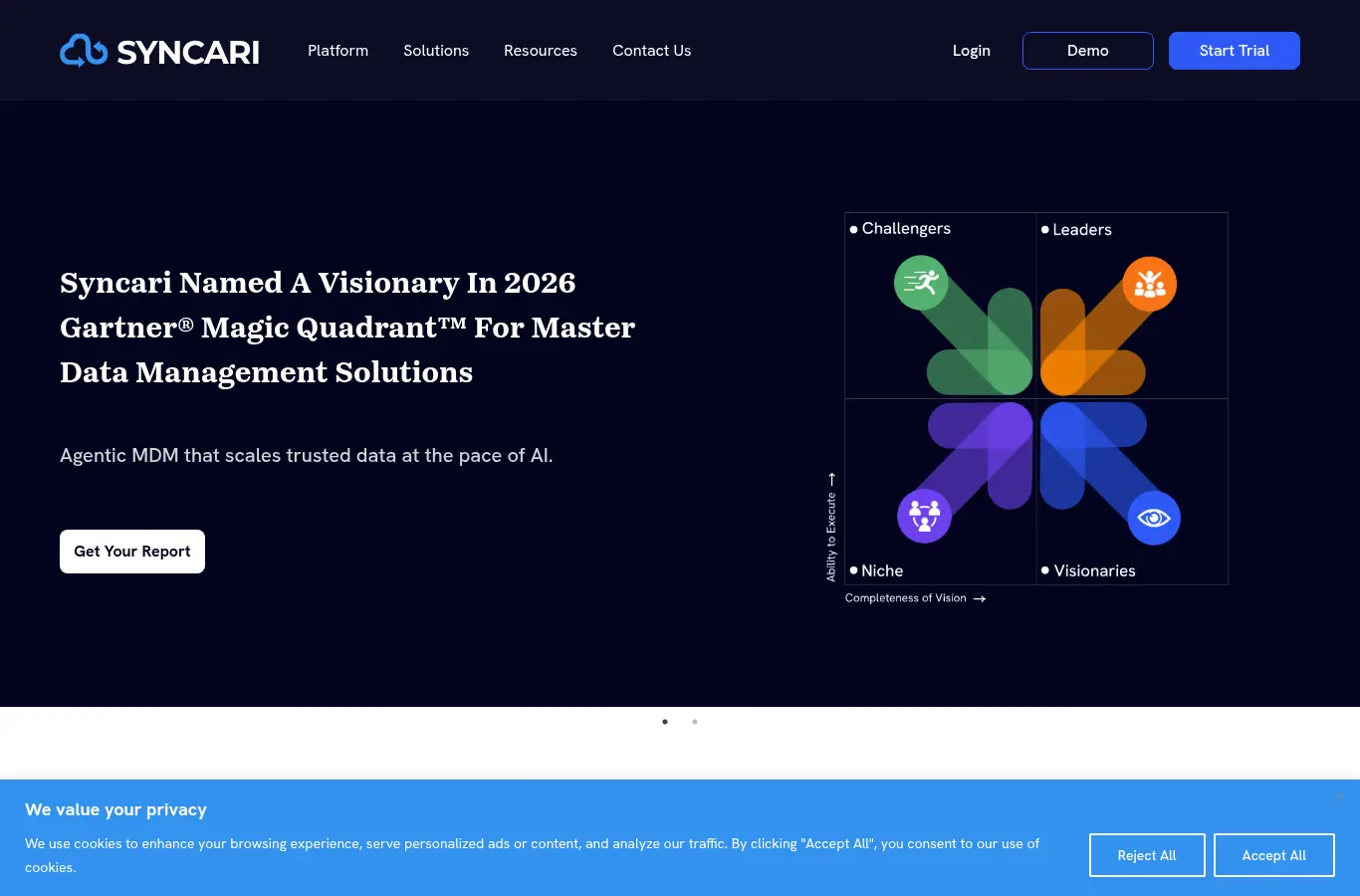
Syncari enforces one source of truth at the data layer, synchronizing and governing records across CRM, marketing automation, billing, and support so the same account looks identical in every system. The stakes are concrete: Salesforce’s State of Sales research finds 39% of reps say poor data quality hinders their ability to forecast.
The honest caveat is organizational. A unification layer requires data ownership maturity: someone has to own the merge rules, survivorship logic, and sync conflicts, or you have simply automated your disagreements. Pricing is custom quote with no published rates.
- Key features: multi-directional sync across CRM, marketing automation, billing, and support; merge and survivorship rules; data quality transformations; unified account and contact records; governance controls
- Pricing: custom quote; no published rates
- Pros: cross-system truth enforced by architecture, not by memo
- Cons: demands a mature data owner, or it automates the chaos
11. Scratchpad: best for CRM hygiene
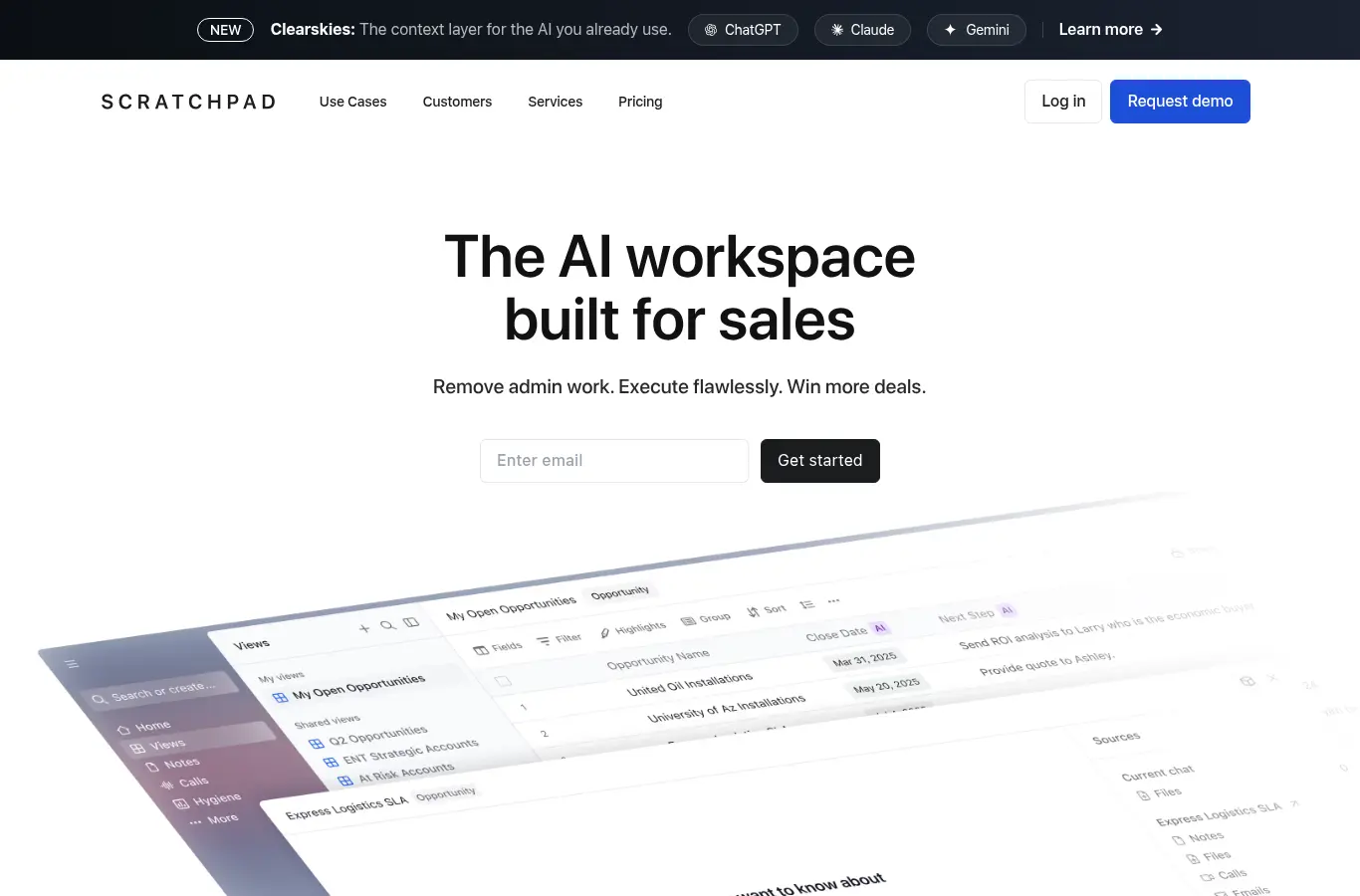
Scratchpad removes the friction from CRM updates: reps manage pipeline, notes, and next steps in a fast workspace that writes back to Salesforce instantly. It is a small tool with an outsized downstream effect, because every forecast, dashboard, and plan in the stack inherits the freshness of rep-entered data.
It is a workflow layer, not a system of record, and its value depends entirely on rep adoption. It is also Salesforce-dependent, and clean entry does not fix a bad schema; governance still has to live somewhere else in the stack. Pricing is custom quote with no published rates.
- Key features: fast inline editing of Salesforce records; pipeline views and notes with instant write-back; process adherence prompts; manager views and deal rooms; lightweight rollout for reps
- Pricing: custom quote; no published rates
- Pros: the cheapest fix for stale CRM data in the whole category
- Cons: lives or dies on rep adoption, and assumes Salesforce
12. Salesforce CRM Analytics: best for native analytics on Salesforce data
CRM Analytics delivers full-funnel reporting directly on Salesforce data, with no warehouse or ETL pipeline required. For stacks already centered on Salesforce, it is the shortest path to funnel dashboards that update with the record layer instead of drifting away from it.
It needs an owner and unified metric definitions before it produces anything trustworthy; without them it renders your ambiguity at higher resolution. It is also bound to Salesforce data, and it is sold within the Revenue Intelligence add-on, so the cost rides on top of edition pricing.
- Key features: prebuilt funnel and pipeline dashboards; custom queries on Salesforce objects; AI-assisted insights; dashboards embedded in CRM records; security inherited from Salesforce permissions
- Pricing: sold within the Revenue Intelligence add-on, from $220/user/month billed annually (verified June 2026)
- Pros: reporting that moves with the record layer, no ETL
- Cons: add-on cost on top of editions, and only as good as your definitions
The blind spot in the RevOps platform category: nobody models capacity
Read this category’s own marketing and you will find record layers, data layers, intelligence layers, engagement layers, and comp layers. What you will almost never find is the planning layer: a system that computes how much the team can actually sell, given ramp, attrition, seasonality, and tenure, and reconciles that number against the target before quotas go out.
The cost of that gap shows up in attainment. The Bridge Group’s 2024 SaaS AE Metrics Report (170+ B2B SaaS companies) found 51% of AEs hit quota, down from 66% in 2022. Quotas set by dividing the board target by rep count produce exactly this pattern, because the number is arithmetic, not capacity.
Finance carries the same blind spot from the other side. OnlyCFO’s headcount planning analysis argues that headcount is the most consequential planning decision a SaaS company makes, and most companies still run it on assumptions disconnected from per-rep production data. The fix is a model, not another meeting: see how to calculate sales capacity and what a sales capacity model contains.
How to choose a RevOps platform
Buy against the seam that is actually leaking, not against the category’s marketing. Four lenses narrow it quickly.
By team size
Under roughly 20 reps, a clean CRM, one routing rule, and a disciplined spreadsheet beat most of this list. Between 20 and 150 reps, the intelligence layer (Clari, Gong) and routing (LeanData) start earning their cost, and planning outgrows the sheet. Above 150 reps, dedicated comp (Xactly), an owned analytics layer (CRM Analytics), and a capacity planning system (Lative) each justify their own line item.
By stack
Salesforce-centric stacks can run everything on this list. HubSpot-centric teams lose the Salesforce-dependent entries (LeanData, Scratchpad, CRM Analytics) and should weight HubSpot-native routing and reporting instead. Whatever the center, buy tools that read your schema rather than impose their own.
By motion
Expansion-heavy businesses should weight planning and comp: High Alpha’s 2025 SaaS Benchmarks (n=800+) found companies above $50M ARR generate roughly 60% of new ARR from expansion, which means capacity planning spans account managers and CS, not just new-logo AEs. High-velocity inbound motions should weight routing and engagement, and check the math against reality: Landbase’s 2026 analysis puts the average B2B win rate at 21% overall and 29% for qualified pipeline, the numbers that determine how much pipeline coverage a plan really needs.
When a spreadsheet is still fine
One segment, one geography, stable hiring, and fewer than about 15 reps: a spreadsheet capacity model is genuinely fine, provided someone owns it and updates it monthly. The trigger to buy is cohort hiring or multi-segment math, the point where the sheet’s update cost exceeds a license.
Common buying mistakes
Buying intelligence before definitions. Forecast and conversation tools render whatever stage definitions you feed them. Without one written dictionary of stages, MQL, SQL, and commit signed by marketing, sales, and CS, the expensive new layer reports your ambiguity at higher resolution.
Mistaking the forecast for the plan. A forecast inspects pipeline that exists; a plan models the capacity to create and work it. Teams that buy Clari or CRM Analytics and call planning done still set quotas by dividing the target by rep count, and attainment tells on them by Q2.
Pricing the tool instead of the stack. Nine of the twelve entries here sell by custom quote, and per-user licenses plus platform fees compound. A 100-rep org licensing four custom-quote tools should model the total annual stack cost before the first contract, not after the third.
Buying tools nobody owns. Every tool needs an owner, a success metric, and a 90-day review. A routing tool without an admin reverts to round-robin chaos within two quarters, and a planning tool without a planner produces a beautifully modeled number nobody defends in the meeting.
Frequently asked
What is a RevOps platform?
Software that supports revenue operations across marketing, sales, and customer success. In practice no single product covers the whole function: real stacks combine a system of record, data unification, routing, engagement, intelligence, compensation, and capacity planning around one set of definitions.
Which RevOps platform is best?
It depends on the seam you are closing. Salesforce and HubSpot anchor the record layer, Clari and Gong lead the intelligence layer, Xactly owns compensation, and Lative (our product) covers capacity and quota planning, the layer most stacks still run in spreadsheets.
How much do RevOps platforms cost?
Published rates as of June 2026: Salesforce runs $25 to $350 per user per month across core tiers, and HubSpot runs from a free tier to $150 per seat per month. Most of the category, including Clari, Gong, Salesloft, LeanData, Xactly, Fullcast, Syncari, and Lative, sells by custom quote only.
How is a RevOps platform different from a CRM?
The CRM is the record layer: it stores accounts, contacts, and opportunities. RevOps platforms add the layers the CRM does not provide natively, including data unification, routing, forecast intelligence, compensation, and capacity planning.
Do small sales teams need a RevOps platform?
Below roughly 15 to 20 reps in a single segment, a clean CRM plus a disciplined spreadsheet model is usually enough. The buying trigger is cohort hiring and multi-segment math, when the spreadsheet’s update cost exceeds a license.
What is the most overlooked RevOps capability?
Capacity planning. Most stacks inspect existing pipeline well and model future capacity not at all, which is why quotas still get set by dividing the target by rep count rather than by what a ramped team can deliver.
The pattern across this category is consistent: strong record, data, and intelligence layers, and a planning hole shaped like a spreadsheet. Start with the full sales capacity planning guide, or book a demo to run your own closed-won data through the model.