
Sales productivity tools promise to give reps their time back, but the category hides a trap: most of them optimize activity, and activity is not capacity. The question that matters at planning time is not how many calls a rep makes, but how much that rep can actually produce.
Start with a selling-time audit before you buy anything. Reps lose a striking share of the week to non-selling work, and the right tool removes one specific bottleneck, prospecting, admin, routing, or measurement, rather than adding another dashboard. The Bridge Group’s 2024 SaaS AE Metrics Report (170+ B2B SaaS companies) found 51% of AEs hit quota, which is often a capacity problem wearing a productivity costume.
One disclosure: Lative is our product, and it appears because it measures the productivity planning depends on, real production per rep, rather than the activity most of this list optimizes. It is judged on the same criteria as everyone else, including a plain statement of what it is not.
Quick picks by use case
- Best measurement and capacity layer: Lative
- Best outbound execution: Outreach
- Best revenue workflow: Salesloft
- Best prospecting data plus engagement: Apollo
- Best LinkedIn prospecting: LinkedIn Sales Navigator
- Best conversation intelligence: Gong
- Best in-quarter forecasting: Clari
- Best CRM-update speed: Scratchpad
- Best inbound speed-to-lead: Chili Piper
- Best enterprise CRM: Salesforce Sales Cloud
- Best SMB and mid-market CRM: HubSpot Sales Hub
- Best analytics plus enablement: Mediafly
Comparison at a glance
| Tool | Best for | Pricing | Standout |
|---|---|---|---|
| Lative | Measuring and planning capacity | Custom quote, no per-user | Real production per rep |
| Outreach | Outbound execution | Custom quote | Sequences and cadences |
| Salesloft | Revenue workflow | Custom quote | Full-funnel cadences |
| Apollo | Data plus engagement | Published; confirm rate | Database plus dialer |
| LinkedIn Sales Navigator | Prospecting | Published; confirm rate | LinkedIn graph search |
| Gong | Conversation intelligence | Custom quote | Call and deal insight |
| Clari | In-quarter forecasting | Custom quote | AI forecast and inspection |
| Scratchpad | CRM-update speed | Published; confirm rate | Fast Salesforce updates |
| Chili Piper | Inbound conversion | Published; confirm rate | Instant routing and scheduling |
| Salesforce Sales Cloud | Enterprise CRM | Enterprise from $175/user/mo | System of record |
| HubSpot Sales Hub | SMB and mid-market CRM | Published; confirm rate | Easy CRM plus reporting |
| Mediafly | Analytics plus enablement | Custom quote | Reporting plus content |
Pricing verified on vendor pricing pages in June 2026 where published; custom-quote vendors do not list rates. Always confirm current pricing directly.
How we evaluated
Three questions decide whether a productivity tool earns its seat cost. Which bottleneck does it remove? Prospecting, admin, routing, and measurement are different problems with different tools, and buying the wrong one adds friction instead of removing it. Does it save selling time or just report on it? A dashboard that shows the problem is not the same as a tool that removes it. And does it connect to capacity? Time saved only matters if it becomes productive capacity against the number, which is where measurement beats raw activity.
The 12 best sales productivity tools in 2026
1. Lative: best measurement and capacity layer
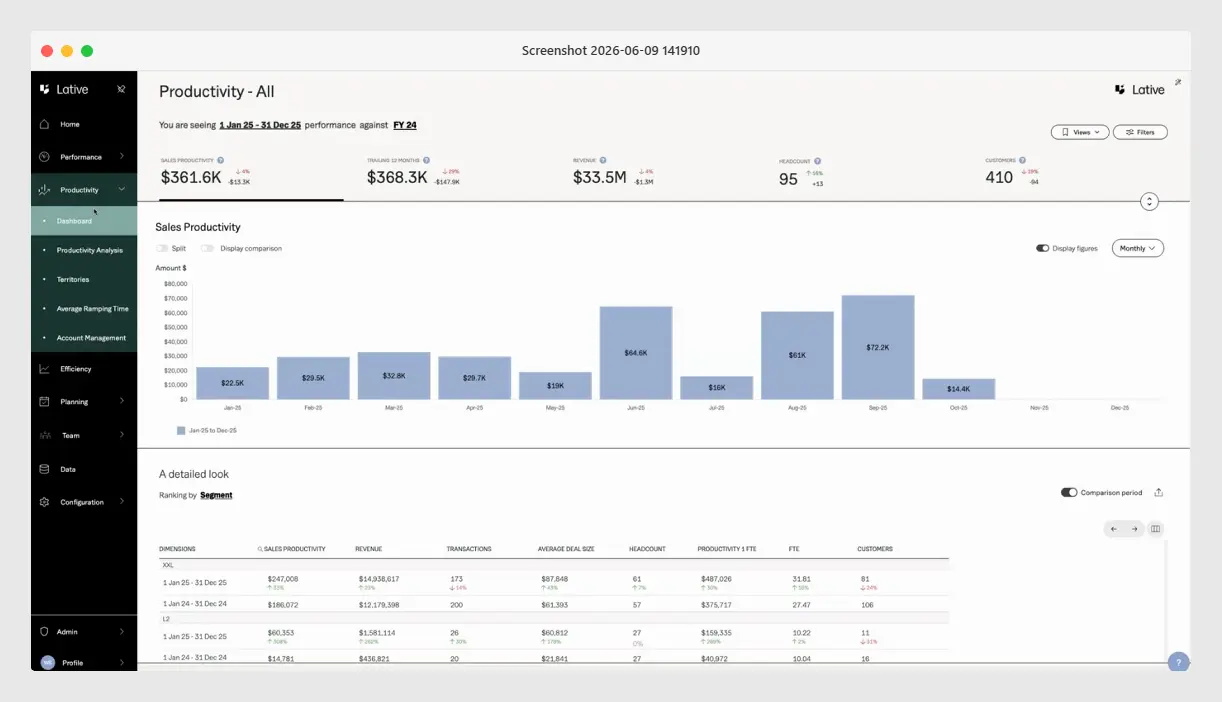
Full disclosure: Lative is our product, so weigh this with the skepticism every vendor self-ranking deserves. It earns a place because the productivity question most of this list skips is the one that matters at planning time: not how busy reps are, but how much they can actually produce. The Productivity module measures production per rep from closed-won data, tenure-adjusted and segmented, so you see real output rather than dials and emails.
It is not an engagement or dialer tool; it will not make reps busier. It measures and plans the capacity behind the activity, then reconciles it against target and quota. If your bottleneck is activity volume, pair it with an execution tool and let Lative measure whether the extra activity actually lifts capacity.
2. Outreach: best outbound execution
A sales engagement platform that structures outbound: sequences, cadences, and AI guidance that keep reps executing consistently. Strong for teams whose bottleneck is activity volume and consistency.
It optimizes execution, not planning: it makes reps more productive within a plan, but does not model capacity, quota, or the headcount behind the number.
3. Salesloft: best revenue workflow
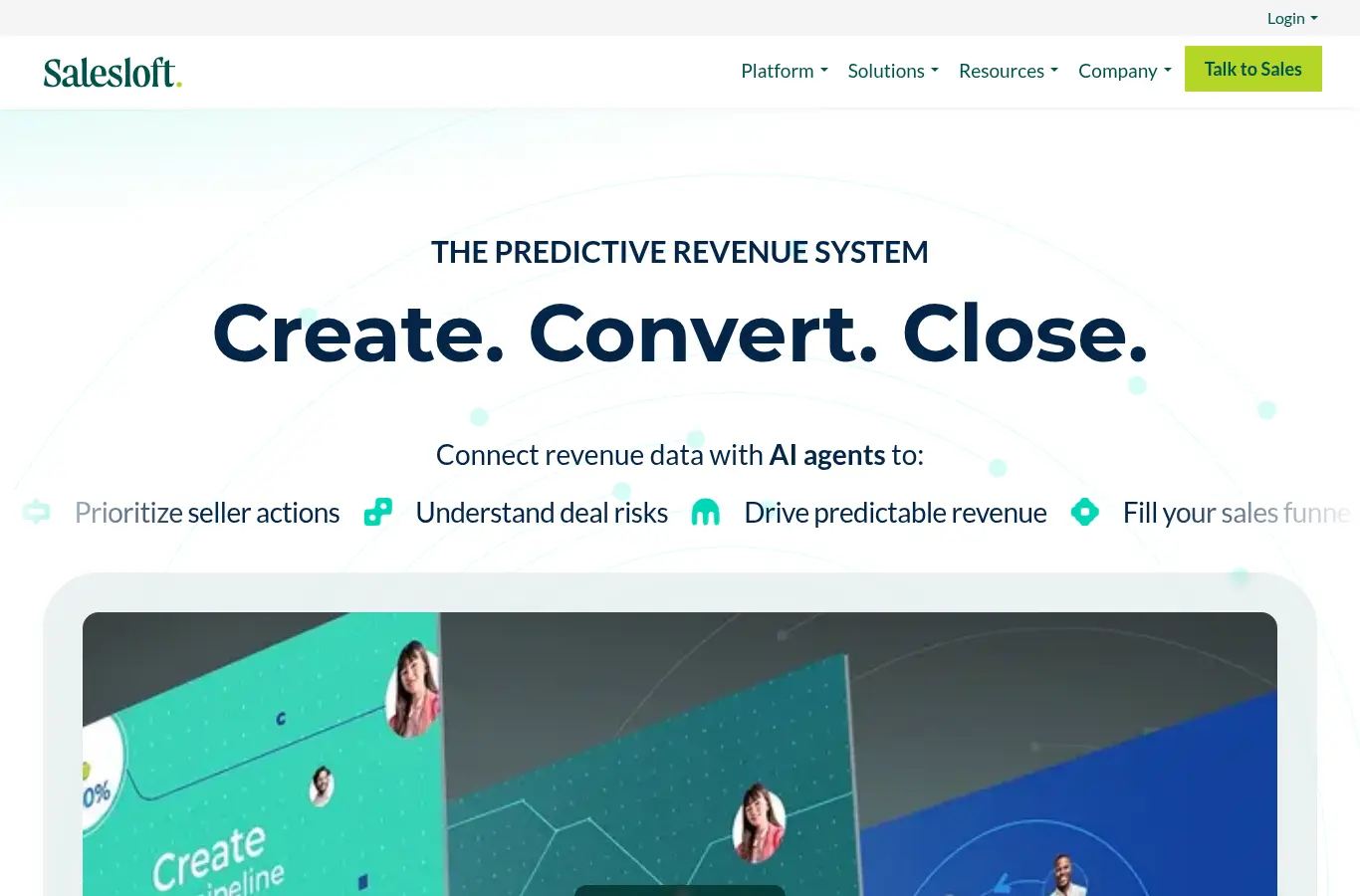
A sales engagement and revenue-workflow platform built around cadences, dialer, and deal management. Comparable to Outreach, with a broad workflow footprint across the funnel.
Like all engagement tools, it drives execution rather than planning. It improves how reps work the plan, not the capacity and quota math behind it.
4. Apollo: best prospecting data plus engagement

A combined prospecting database and engagement platform: contact data, sequences, and dialer in one place, priced for SMB and mid-market teams building pipeline efficiently.
It is a top-of-funnel productivity tool, not a planning system. It fills the pipeline; it does not model whether the team has the capacity to work it.
5. LinkedIn Sales Navigator: best LinkedIn prospecting
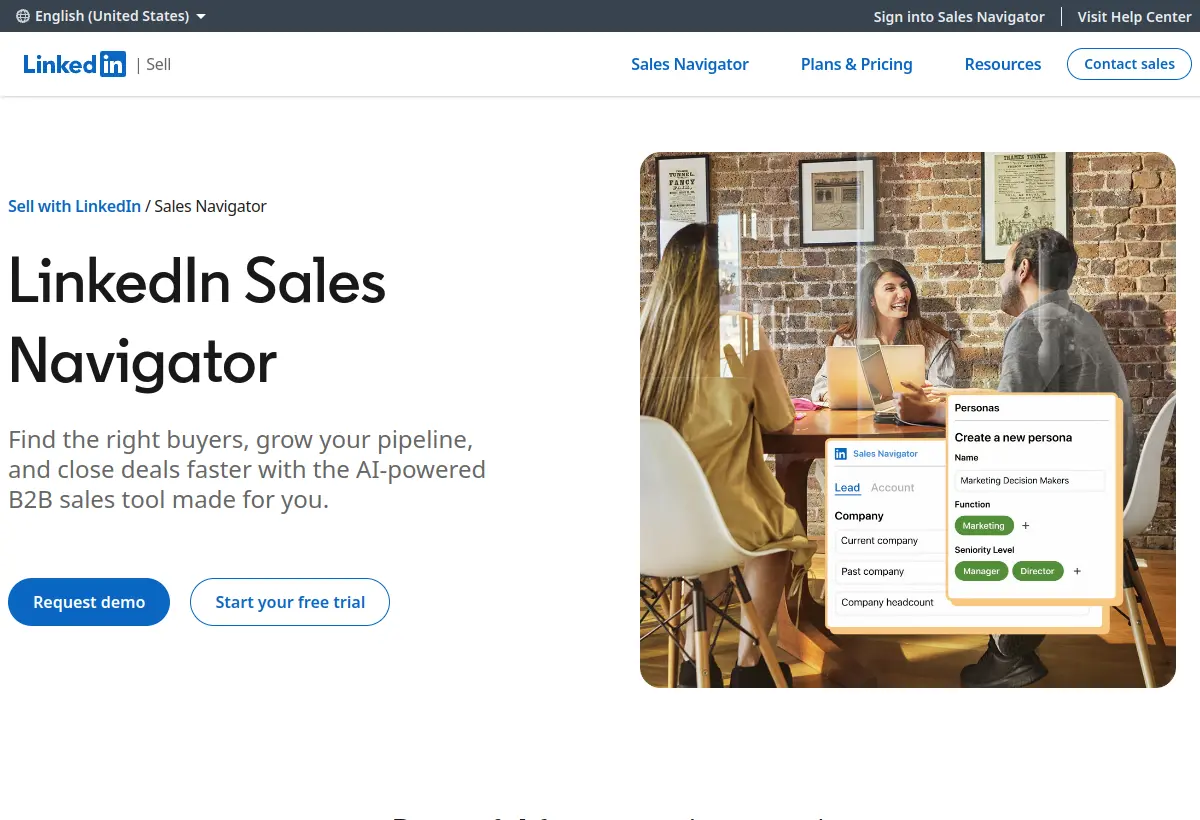
The prospecting and relationship-intelligence layer on top of LinkedIn’s graph: advanced search, lead recommendations, and warm-path intelligence reps use to find and reach buyers.
It is a sourcing tool, not a planning one. It helps reps find opportunity; it says nothing about capacity, quota, or coverage math.
6. Gong: best conversation intelligence
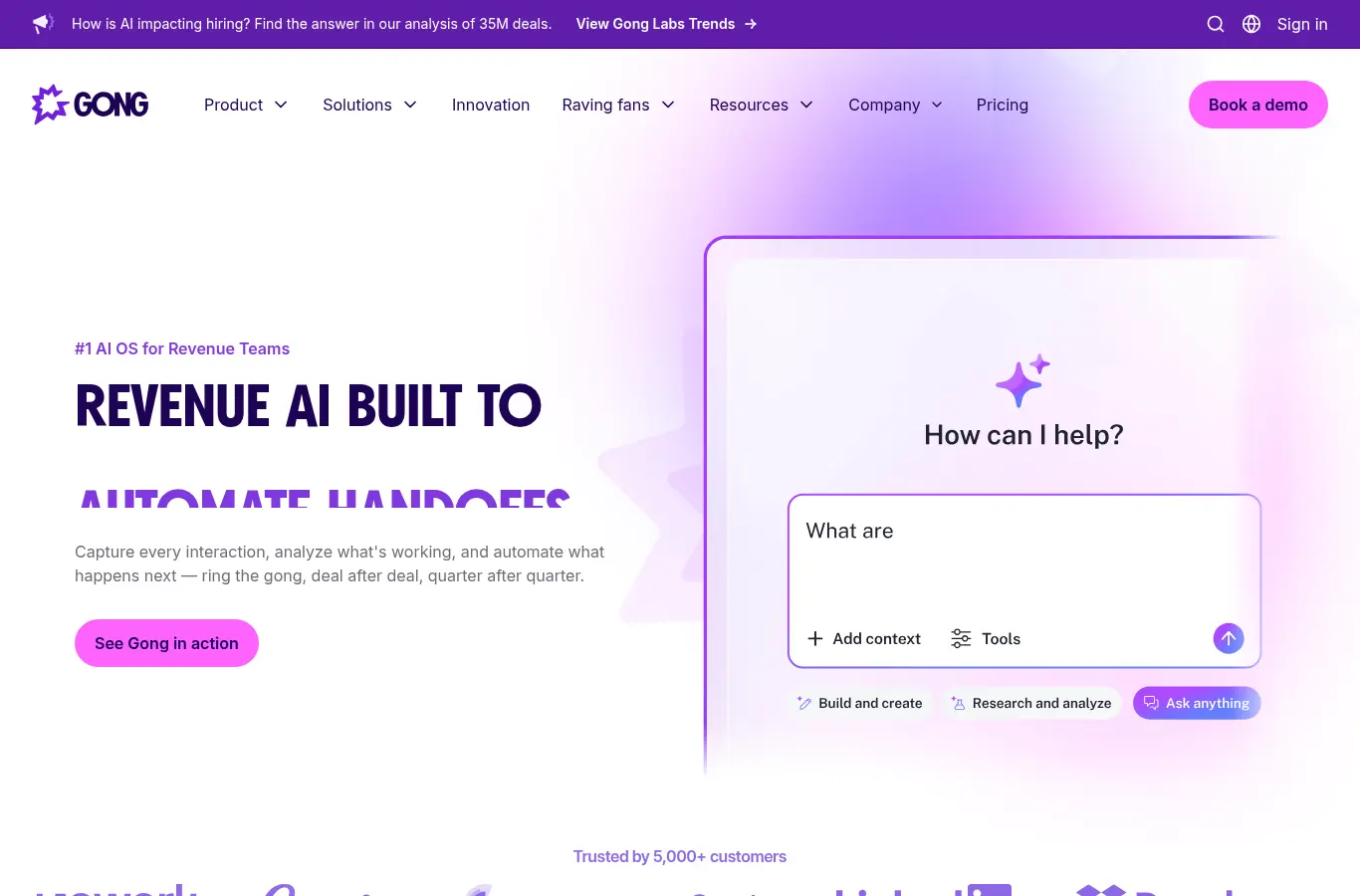
Revenue intelligence built on conversation and activity data, with forecasting and deal-risk insight layered on top. Gong reads what is actually happening in deals, calls, and emails.
It is intelligence-led rather than planning-led: excellent at explaining the pipeline and coaching reps, lighter on modeling the capacity and quota that produce next year’s number.
7. Clari: best in-quarter forecasting
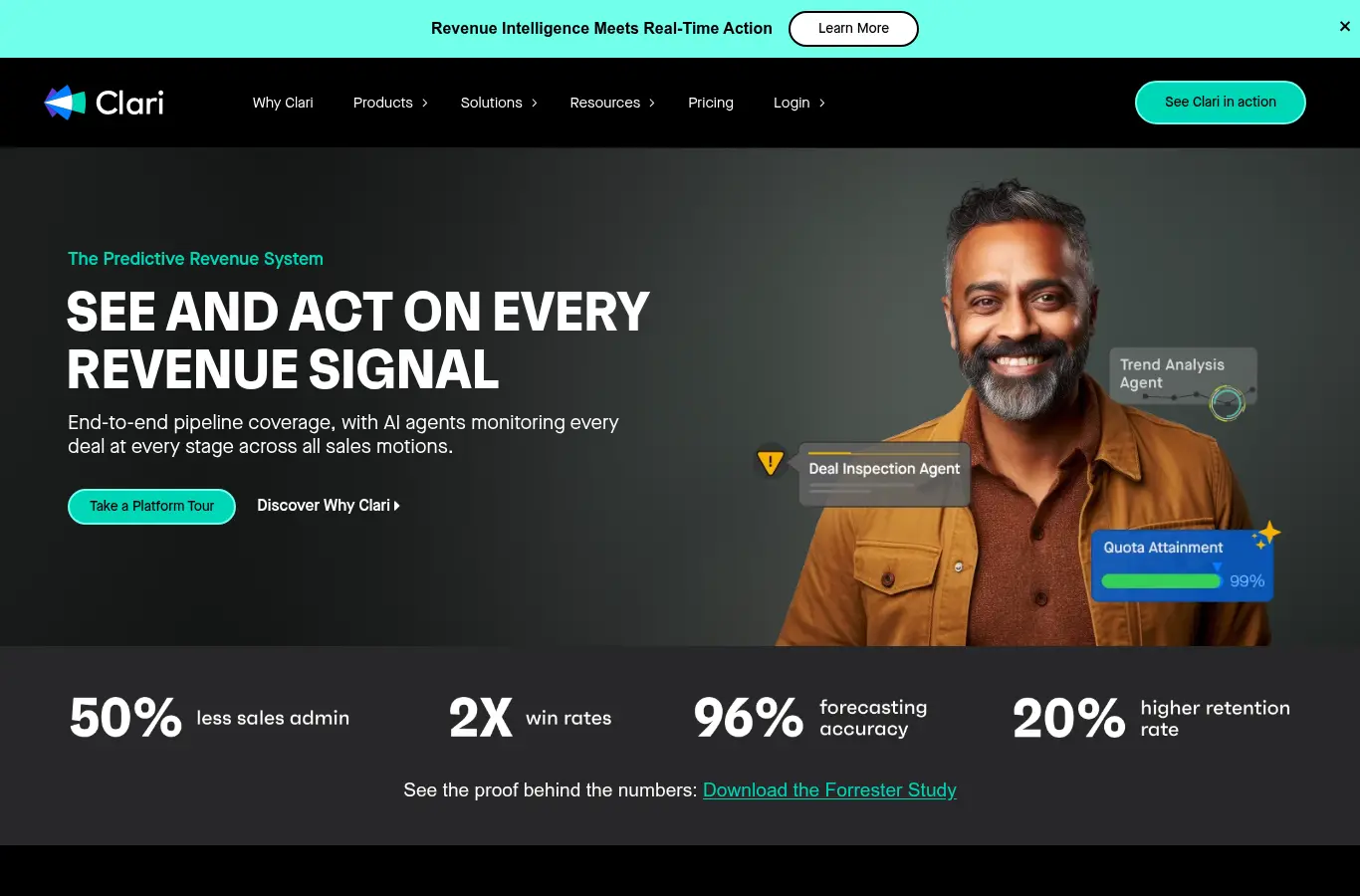
A revenue platform built around AI forecasting, deal inspection, and pipeline management for the in-quarter motion. Strong at calling the number and surfacing risk in deals already in flight.
It works on the pipeline that exists rather than the capacity that produces it. It answers whether you will hit this quarter, not how many ramped reps next year requires. Pair it with a capacity layer.
8. Scratchpad: best CRM-update speed
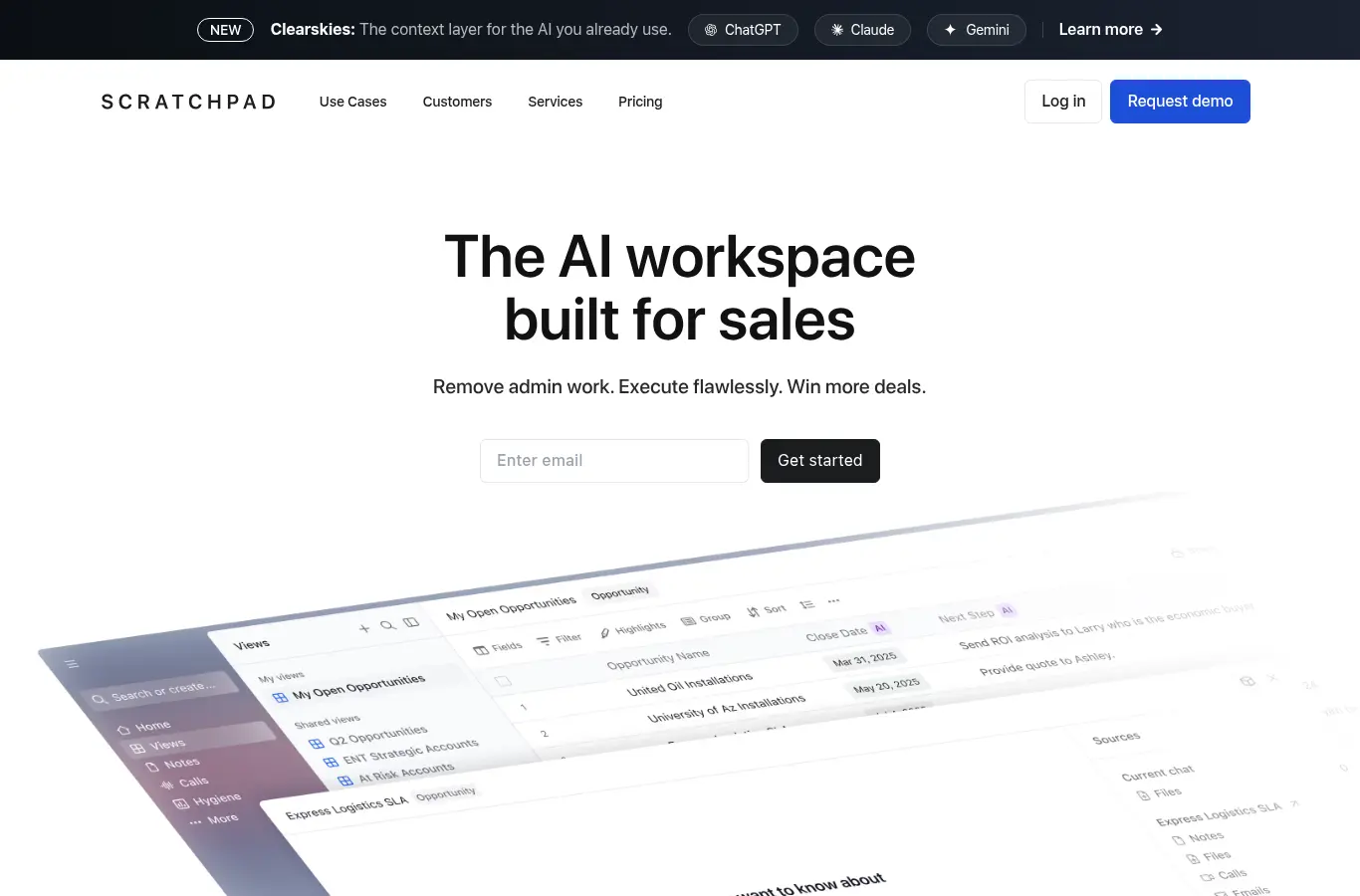
A fast workspace layer over Salesforce that makes CRM updates painless, so pipeline hygiene improves and reps spend less time in the CRM. Good where dirty pipeline data is the bottleneck.
It improves the data quality planning depends on, but it is not itself a planning tool. It keeps the inputs clean; something else models capacity and quota from them.
9. Chili Piper: best inbound speed-to-lead
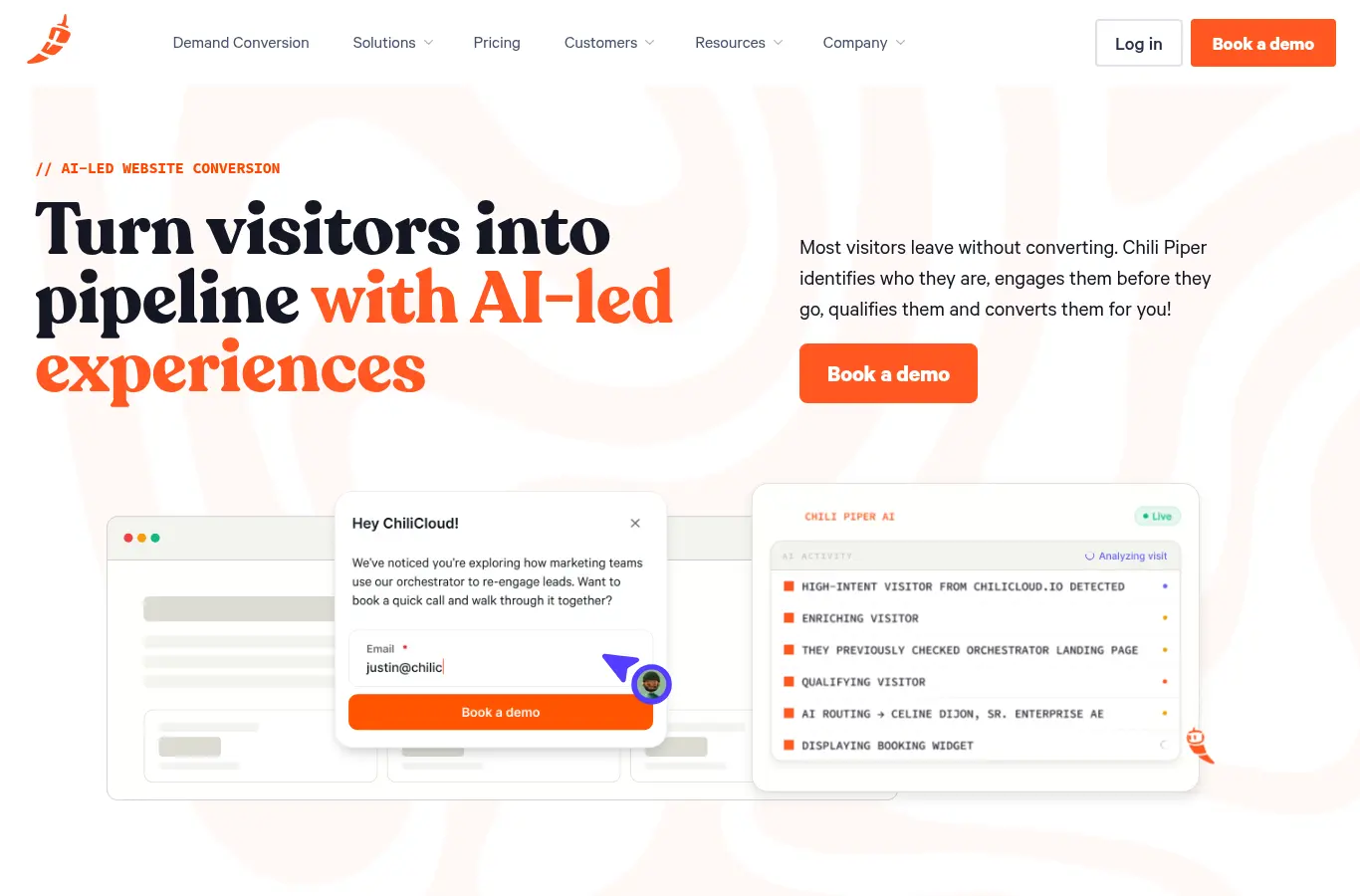
Inbound conversion software: instant lead routing, qualification, and scheduling that book meetings the moment a lead converts. Strong where speed-to-lead is leaking pipeline.
It optimizes the handoff, not the plan. It gets the right rep in front of the right lead fast; it does not model capacity or quota.
10. Salesforce Sales Cloud: best enterprise CRM
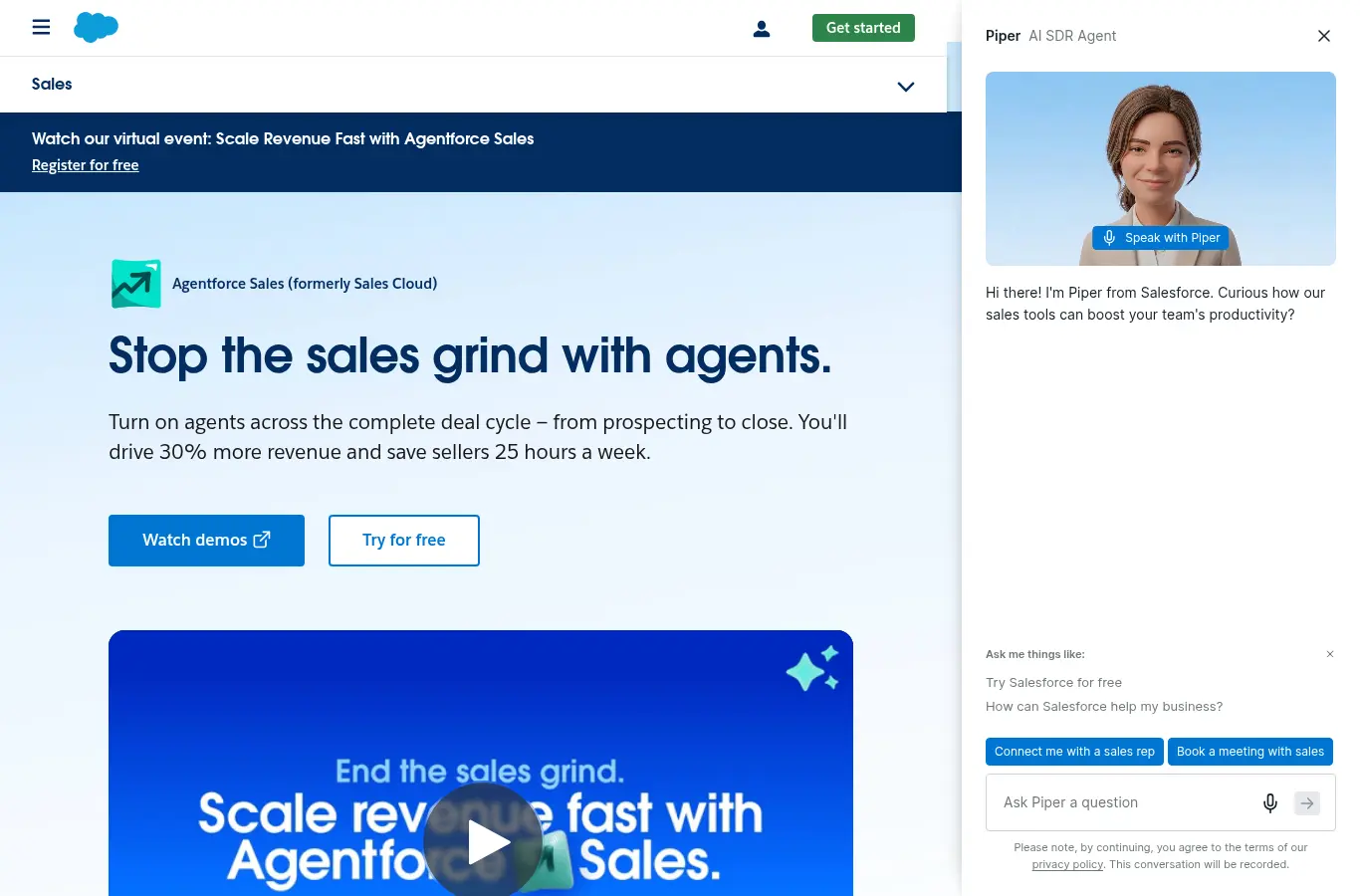
The enterprise CRM standard and the system of record most revenue stacks build around. Deep customization, a vast app ecosystem, and native reporting make it the default for orgs that can invest in admin capacity.
Its breadth is also its cost: it needs configuration and an admin to stay clean, and specialized jobs like ramp-adjusted capacity or opportunity scoring live in add-ons rather than the core.
11. HubSpot Sales Hub: best SMB and mid-market CRM
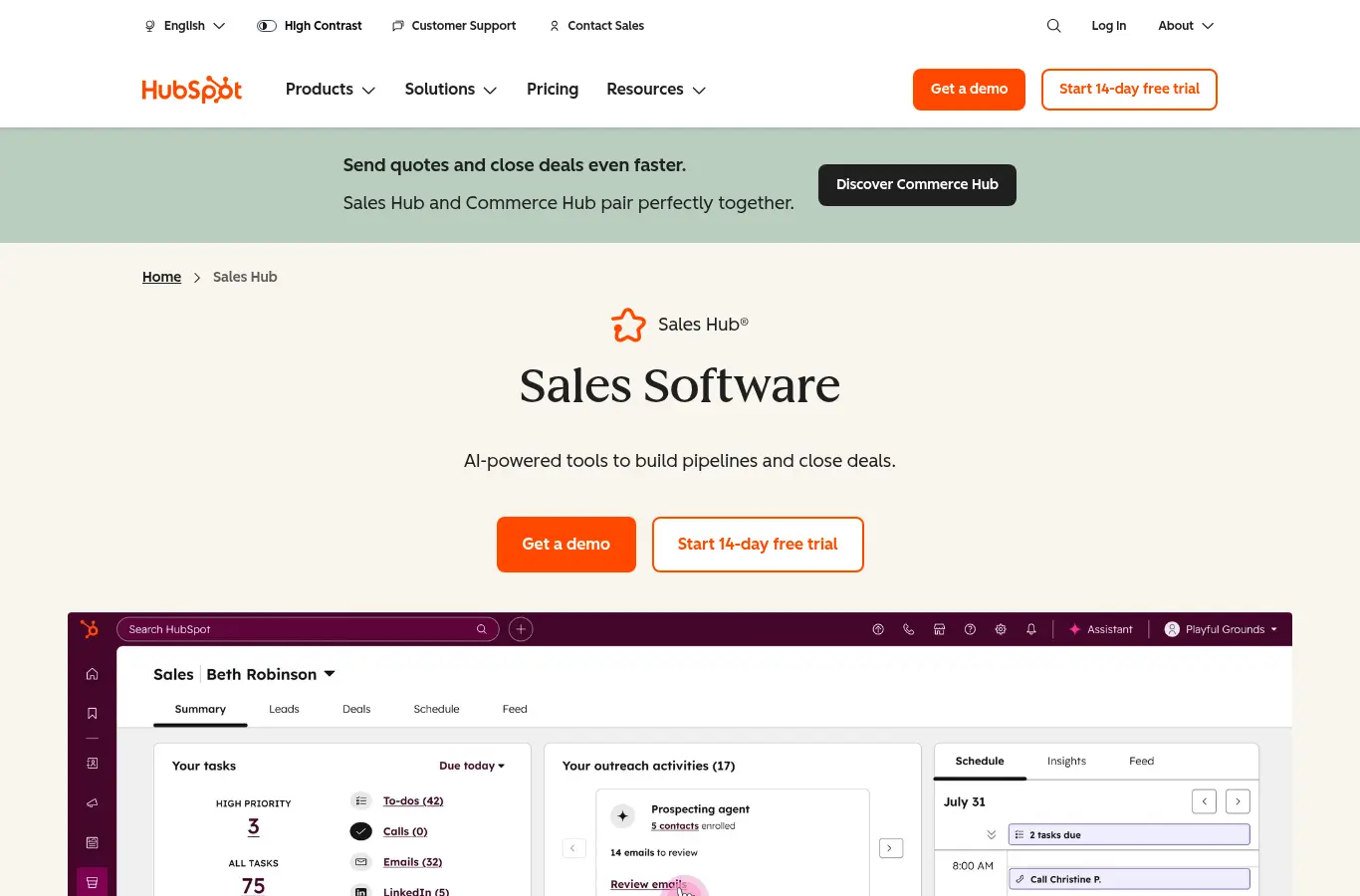
An approachable CRM and sales workspace with strong native reporting, popular with SMB and mid-market teams that want fast time to value without heavy administration.
It scales well until planning gets specialized: ramp-adjusted capacity, cohort math, and opportunity scoring are not native, so growing orgs add a planning layer on top of the CRM.
12. Mediafly: best analytics plus enablement
A revenue intelligence and enablement platform (formerly InsightSquared) that combines forecasting and pipeline analytics with sales content and enablement in one suite.
It reports and enables rather than plans capacity. It is strong on analytics and content; ramp-adjusted capacity and quota modeling are not its core.
How to buy for your bottleneck
- Outbound-heavy, pipeline-starved. Engagement (Outreach, Salesloft) plus prospecting data (Apollo, Sales Navigator). Add measurement early so activity gains are checked against revenue per rep.
- Complex deals, opaque pipeline. Conversation intelligence (Gong) and inspection (Clari), with Scratchpad to keep the CRM honest underneath.
- Admin-drowned reps. Friction killers first: Scratchpad and Chili Piper return hours this week, before any strategic tooling pays back.
- Scaling and efficiency-pressured. A measurement layer (Lative), so you know whether more activity is producing more revenue, and where the next dollar of productivity investment should go.
A worked example: pricing a productivity gain
Take a hypothetical eight-rep mid-market team at $750K average production per ramped rep, roughly $390 of revenue per selling hour if live selling runs 24 hours a week per rep. A friction stack (Scratchpad plus Chili Piper, call it $150 per rep per month) that returns three selling hours per rep per week is worth about $1,170 of weekly selling capacity per rep at historical conversion, against $35 a week of cost.
Even if only a fifth of recovered time converts to incremental production, the stack pays for itself several times over. Run the same math on an activity platform and the answer depends entirely on whether pipeline is the constraint, which is exactly what the measurement layer tells you.
Price every productivity tool this way: recovered hours or incremental production, against your own revenue per selling hour, not against the vendor’s case study.
The 90-day proof window
Give every new productivity tool a 90-day proof window with the success metric written down before rollout: recovered selling hours for friction tools, qualified pipeline per rep for activity tools, tenure-adjusted revenue per rep for the stack overall.
At day 90, the tool either moved its metric or it churns. Teams that skip this discipline accumulate overlapping subscriptions that each seemed reasonable alone, and the stack itself becomes the productivity drag, one more login, one more place to update, one more dashboard nobody reconciles.
Common buying mistakes
Stacking activity tools on a measurement gap. If you cannot see revenue per rep by tenure and segment, you cannot tell whether the new sequencer helped. Instrument first, then accelerate.
Confusing adoption with impact. High login counts are not productivity. The test is whether tenure-adjusted revenue per rep moved in the two quarters after rollout.
Ignoring the data substrate. Every intelligence and measurement tool inherits CRM quality. Stage hygiene and clean close dates are the cheapest productivity investment on this list.
Buying tools instead of removing work. The fastest productivity gain is usually subtraction: fewer required fields, fewer internal meetings, fewer reports. Tools that remove work beat tools that add workflows.
Frequently asked
What are sales productivity tools?
Software that increases revenue output per rep, by driving activity, surfacing deal intelligence, removing administrative friction, or measuring whether output per rep is actually improving.
What is the difference between activity and productivity?
Activity is input: calls, emails, meetings. Productivity is output per input: revenue per rep, per selling hour. Rising activity with flat revenue means productivity is falling. See what is sales productivity.
Which productivity tool should a team buy first?
The one that fixes the current bottleneck: friction killers for admin-drowned teams, engagement for pipeline-starved ones, and a measurement layer as soon as headcount makes intuition unreliable.
How do you measure whether productivity tools work?
Tenure-adjusted revenue per rep, trended across the quarters before and after rollout. Tool-level metrics (sequences sent, calls logged) measure usage, not value.
Do productivity tools replace capacity planning?
No. Tools raise output per rep; capacity planning determines whether the roster can hit the target at all. Strong teams run both.
More tools do not equal more productivity. Buy for the bottleneck you actually have, instrument the result, and let revenue per rep, not feature lists, decide what stays. See the full sales capacity planning guide, or book a demo to see tenure-adjusted productivity measured live.