
Most sales forecasts are wrong, and the inputs explain why. Salesforce’s State of Sales research found 39% of sales reps say poor data quality undermines their forecasting accuracy, and RepVue’s Q2 2025 Cloud Sales Index measured average quota attainment of 42.69% across roughly 47,000 rep ratings, which tells you how much of those confident quarterly commits was ever going to land. Sales forecasting software exists to replace the optimistic roll-up with a number derived from data, and the good tools genuinely deliver: teams that move off manual forecasts reclaim the four to five hours a week reps and managers spend maintaining them, per Forecastio’s 2026 market analysis.
One thing to know about this category before you read any ranking, including this one: most “best forecasting software” lists are written by vendors who rank themselves first. We sell sales planning software, and Lative sits at number one because capacity-checked forecasting is the criterion this list is built around; it is judged on the same criteria as everyone else, with a clear note on what it does not do. Here are the 12 tools worth knowing in 2026, with verified pricing where vendors publish it, honest limitations for every entry, and the one evaluation criterion every other list on this page of Google skips.
Quick picks by use case
- Best for capacity-checked forecasting: Lative
- Best for enterprise forecast cadence: Clari
- Best for deal-level truth from conversations: Gong
- Best Clari alternative for inspection control: BoostUp
- Best for AI-model-driven enterprise forecasting: Aviso
- Best if you live in Salesforce: Salesforce Sales Cloud
- Best for SMB and mid-market on one platform: HubSpot Sales Hub
- Best for finance-led, multi-domain planning: Anaplan or Pigment
- Best lightweight dedicated tool: Forecastio
- Best for forecasts inside the financial plan: Drivetrain
- Best when comp and forecasting share a vendor: Xactly
Comparison at a glance
| Tool | Best for | Published pricing | Standout |
|---|---|---|---|
| Lative | Capacity-checked forecasting | Custom quote, no per-user pricing | Forecast reconciled against capacity |
| Clari | Enterprise revenue cadence | Custom quote | Forecast roll-ups + deal inspection |
| Gong | Conversation-grounded deals | Custom quote | Forecasts informed by call data |
| BoostUp | Configurable inspection | Custom quote | Flexible forecast models |
| Aviso | AI-led enterprise forecasting | Custom quote | Claims 98% forecast accuracy |
| Salesforce | Salesforce-native teams | Enterprise from $175/user/mo | Native + Einstein predictions |
| HubSpot | SMB and mid-market | Pro from $100/seat/mo | Forecasting inside the CRM |
| Anaplan | Enterprise connected planning | Custom; ~$30K+/yr typical entry | Multi-domain modeling |
| Pigment | Modern finance-led planning | Custom quote | Fast scenario modeling |
| Forecastio | Lightweight dedicated forecasting | From $249/mo (annual) | Fast setup on HubSpot/Salesforce |
| Drivetrain | FP&A-connected forecasts | Custom quote | Driver-based financial models |
| Xactly | Comp + forecasting together | Custom quote | Benchmark data from comp history |
Pricing verified against vendor sites and published market analyses in June 2026; custom-quote vendors do not publish rates. Always confirm current pricing directly.
How we evaluated
Five criteria, applied to every tool including ours. Forecast mechanics: does the tool derive stage weights and probabilities from your trailing conversion data, or ship folklore defaults? Data foundation: continuous CRM sync versus exports. Accuracy feedback: does it track forecast-versus-actual so the model learns your bias? Capacity awareness: can it tell you when the forecast exceeds what the ramped roster can physically close, the most common cause of high misses and a question no other ranking on this SERP even asks? And time to value: weeks or quarters. Where vendors publish pricing we cite it with a date; where they do not, we say so instead of guessing.
The 12 best sales forecasting software tools in 2026
1. Lative: best for capacity-checked forecasting
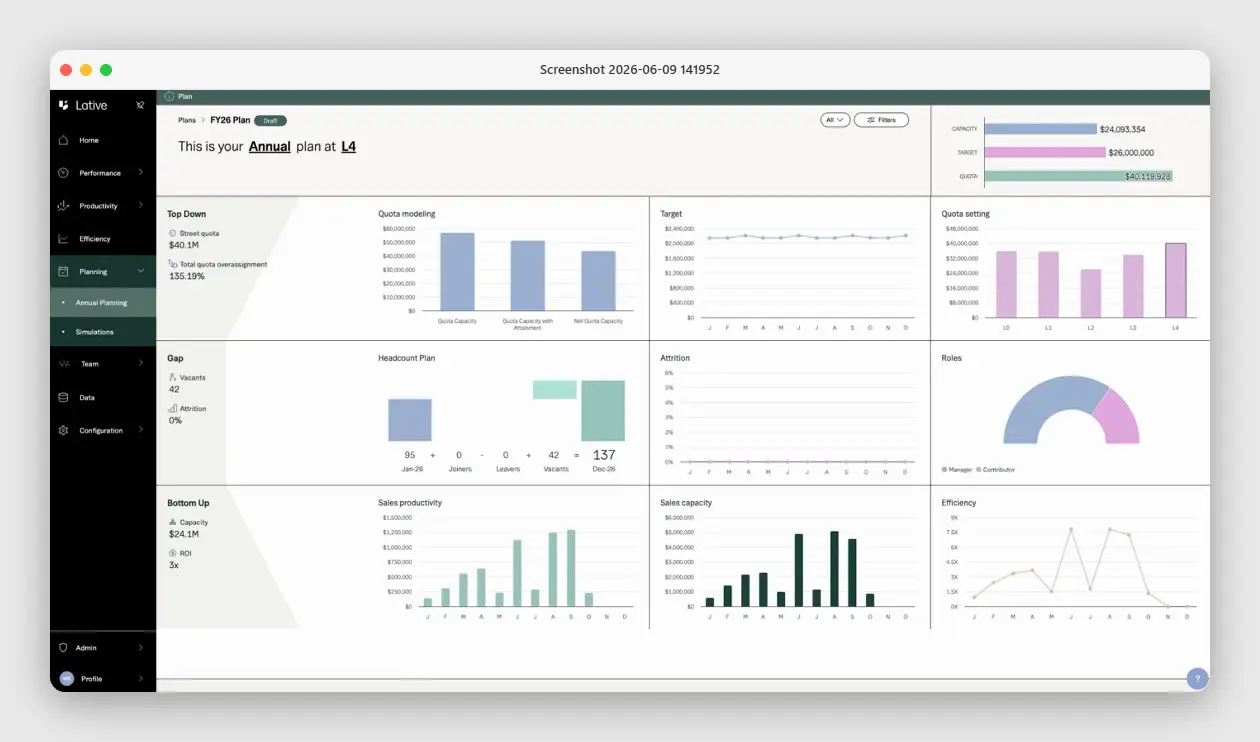
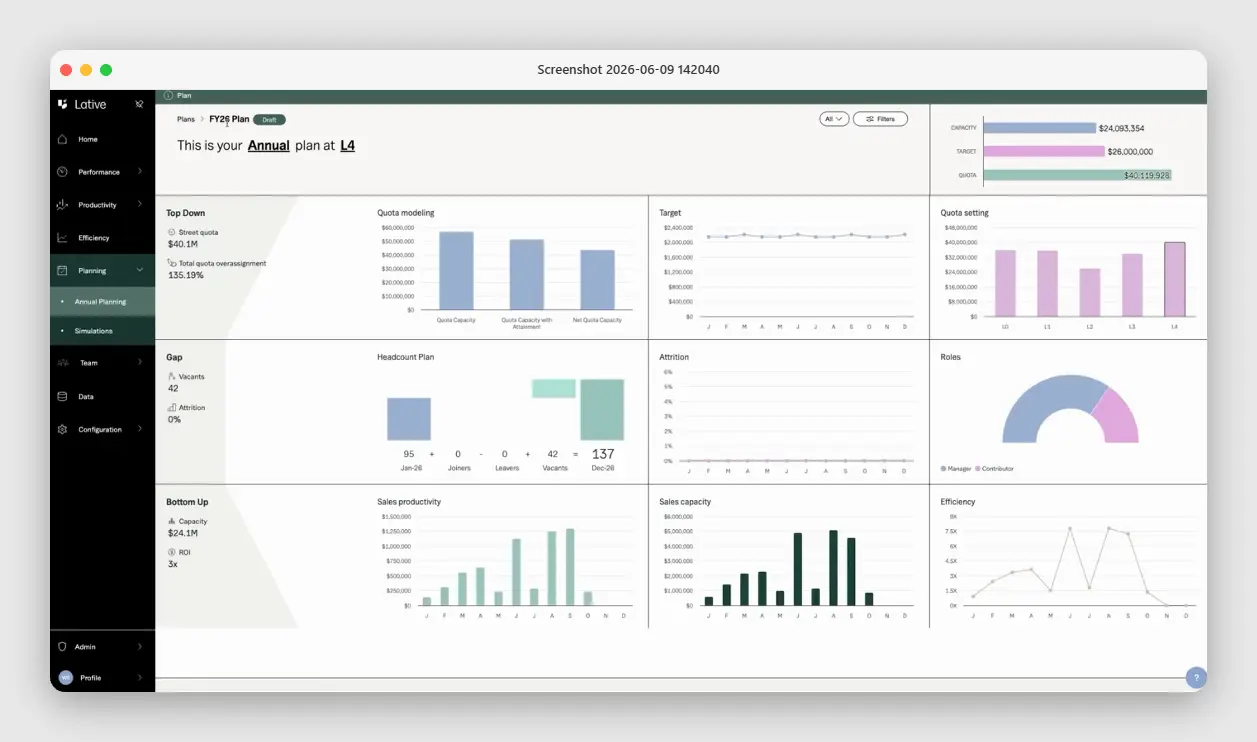
Full disclosure: Lative is our product, so apply the same skepticism here you should apply to every vendor self-ranking in this category. What earns it the top spot is the criterion the rest of this list cannot fill: every tool below forecasts the pipeline, and none of them forecasts the team. Lative’s Productivity module establishes what each rep actually produces from closed-won data, tenure-adjusted and segmented; Average Ramping Time derives ramp curves from your real hire cohorts; and the Annual Planning view holds the forecast, productive capacity, target, and quota on one screen, so a forecast the roster cannot physically deliver is flagged the week it appears, not in the post-mortem.
What it is not: a deal-inspection tool or a conversation platform. It does not replace Clari or Gong; it answers the question they cannot, which is whether the number being rolled up was ever achievable. Werner Schmidt, Lative’s CEO and co-founder, has described the founding logic directly: “Lative was born out of a need to accurately measure sales teams’ true impact on the organisation and turn bottom-up operating data into structured plans to ensure teams hit their targets.”
- Key features: ramp-adjusted capacity modeling, tenure-adjusted productivity per rep, quota modeling in fully ramped equivalents, forecast-versus-capacity reconciliation, long-range what-if simulations.
- Pricing: custom quote; no per-user pricing, so finance, RevOps, and sales leadership share one model without seat negotiations.
- Pros: the only capacity-aware forecast check in this list; fast serverless deployment. Cons: not a deal-inspection tool; sales-planning scope rather than full FP&A.
2. Clari: best for enterprise forecast cadence
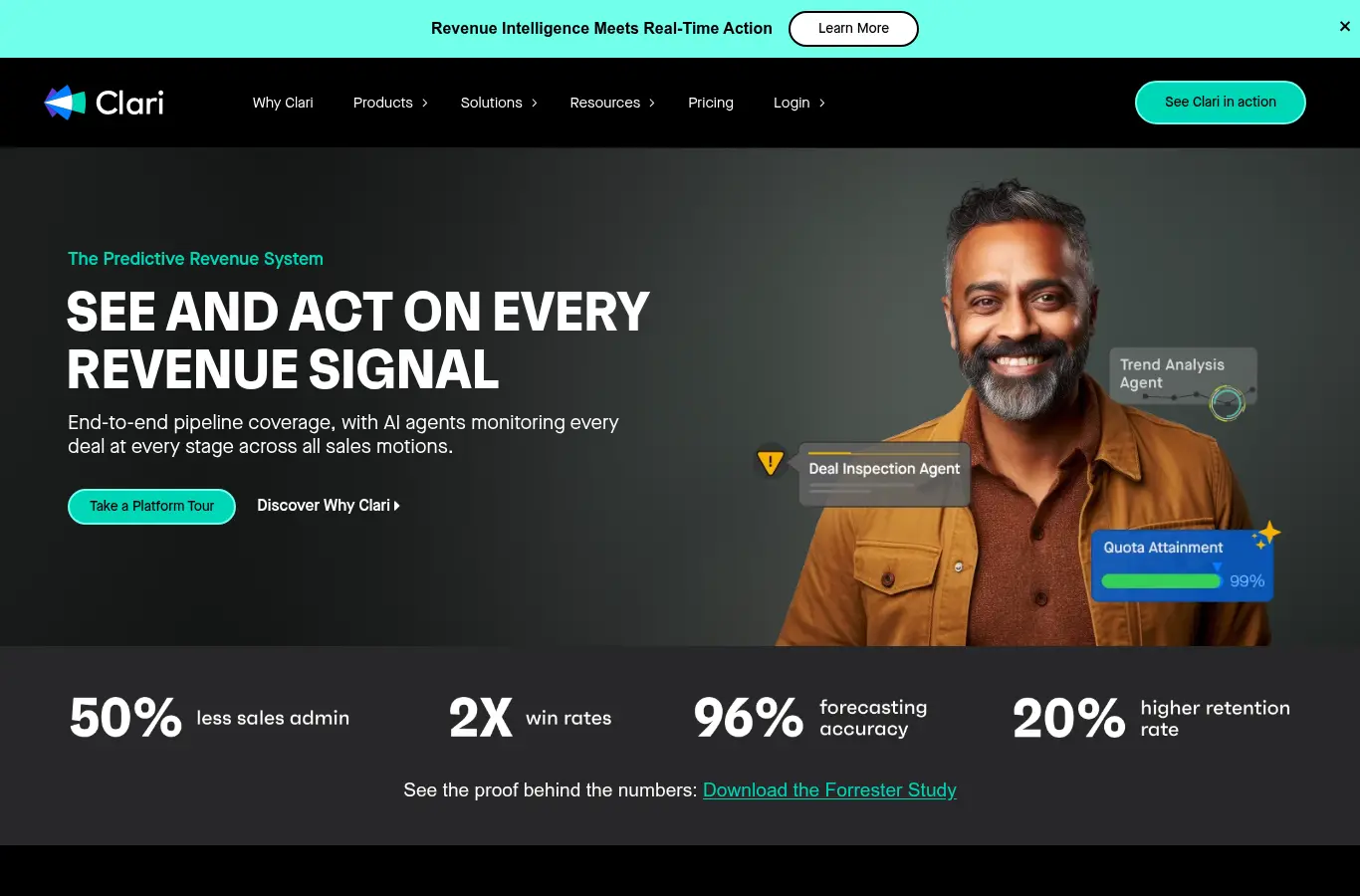
Clari is the category’s reference point for running the weekly forecast at scale. It pulls CRM and activity data into roll-ups across any hierarchy, flags deal risk automatically, and gives revenue leaders one cadence for commit, best case, and pipeline. For enterprises with multiple segments and hundreds of reps, the process discipline it enforces is often worth more than any single feature.
The honest limitation: Clari forecasts the pipeline you have, not the team you have. It will not tell you that two of six reps are mid-ramp and the commit is physically unworkable, and its enterprise pricing plus real implementation lift make it heavy for teams under roughly $20M ARR.
- Key features: forecast roll-ups by hierarchy and segment, AI deal-risk scoring, pipeline inspection, activity capture, forecast versioning and audit trail.
- Pricing: custom quote; no published rates.
- Pros: the strongest operating cadence in the category; deep Salesforce integration. Cons: enterprise cost and rollout; no capacity or headcount math.
3. Gong: best for conversation-grounded forecasts
Gong’s forecasting sits on top of its conversation intelligence: every call, email, and meeting feeds deal-health signals, so the forecast reflects what buyers actually said rather than what reps logged. Forecast reviews change character when the evidence is a call clip instead of a stage field, and Gong remains the best at producing that evidence.
The limitation is the flip side: Gong models deal truth, not team math. Many teams run Gong for inspection and pair it with a dedicated forecasting or planning layer, which is also the configuration Gong’s own customers most often describe.
- Key features: conversation capture and analysis, AI deal-health scoring, forecast submissions and roll-ups, pipeline warnings, coaching workflows.
- Pricing: custom quote, priced per user plus platform fee; no published rates.
- Pros: unmatched deal evidence; high rep adoption. Cons: forecasting is an extension, not the core; cost scales quickly with seats.
4. BoostUp: best Clari alternative for inspection control
BoostUp competes directly with Clari on deal inspection and forecast roll-ups, and wins deals on configurability: forecast models, hierarchies, and inspection views bend further to your process than Clari’s more opinionated cadence. Mid-market and enterprise RevOps teams that want control over the forecast logic tend to shortlist it.
The limitation: a smaller ecosystem and services bench than the category leader, and the same structural blind spot as every inspection tool, no concept of rep capacity or ramp.
- Key features: configurable forecast models, deal and pipeline inspection, time-series pipeline analytics, activity capture, RevOps dashboards.
- Pricing: custom quote; no published rates.
- Pros: flexibility; strong analytics depth. Cons: smaller ecosystem; capacity-blind like its rivals.
5. Aviso: best for AI-model-driven enterprise forecasting
Aviso bets the furthest on AI of any tool here: its models score deals, call the number, and flag risk early, and the company publicly claims up to 98% forecast accuracy. For large organizations with long deal history and clean stage data, the predictive layer genuinely earns its keep.
The honest read on that claim: model accuracy depends entirely on input quality, and a team with ambiguous stages or auto-rolled close dates will not see anything like 98%. Aviso also has no CRM of its own, so it is always a layer on top of an existing stack.
- Key features: AI forecast calls, deal win-probability scoring, scenario forecasting, pipeline risk alerts, relationship intelligence.
- Pricing: custom quote; 30-day free trial has been offered.
- Pros: strongest pure-AI forecasting bet; early risk detection. Cons: accuracy claims assume pristine data; enterprise-only economics.
6. Salesforce Sales Cloud: best if you live in Salesforce
If Salesforce is your system of record, native Collaborative Forecasts plus Einstein predictions cover a lot of ground with zero integration work: quota tracking, forecast categories, hierarchy roll-ups, and AI-predicted close likelihood, all where the deals already live. For many teams this is genuinely enough, and it is the right place to start before buying a dedicated layer.
The limits show at scale: stage probabilities default to folklore unless an admin derives real ones, forecast accuracy tracking is thin, and there is no concept of capacity, ramp, or whether the roster can deliver the number being rolled up.
- Key features: collaborative forecasts, Einstein predictive scoring, quota and attainment tracking, hierarchy roll-ups, custom forecast types.
- Pricing: forecasting features ship with Enterprise edition, from $175/user/month billed annually (vendor-published, July 2026).
- Pros: no new vendor; deep configurability. Cons: needs real admin investment; defaults mislead.
7. HubSpot Sales Hub: best for SMB and mid-market
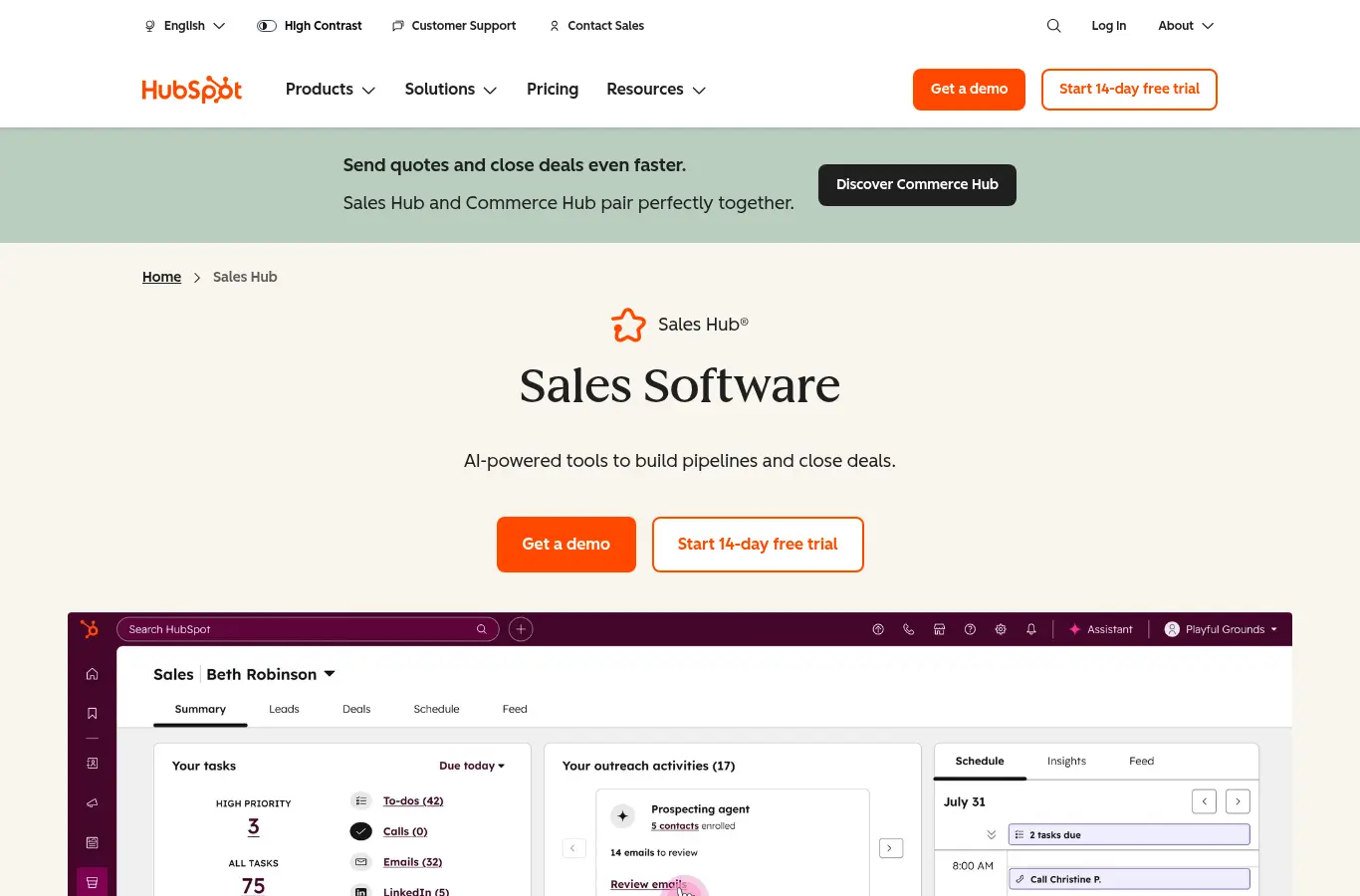
HubSpot’s forecasting lives inside Sales Hub: clean weighted-pipeline and category forecasts, manager submissions, and goal tracking, in a UX reps actually keep current, which quietly matters more for forecast quality than any algorithm. For SMB and mid-market teams already on HubSpot, it is the obvious starting point.
The limitation is depth: no real accuracy-feedback loop, light scenario tooling, and like every CRM-native forecast, no awareness of capacity or ramp. Teams tend to outgrow it somewhere past 30 to 40 reps.
- Key features: weighted and category forecasts, manager roll-ups, goals and quota tracking, pipeline snapshots, native reporting.
- Pricing: forecasting requires Sales Hub Professional, from $100/seat/month (vendor-published, June 2026).
- Pros: adoption-friendly; fast time to value. Cons: shallow for multi-segment enterprises; no capacity math.
8. Anaplan: best for enterprise connected planning
Anaplan treats the sales forecast as one face of an enterprise planning model that also covers territories, quotas, headcount, and finance. For large companies with a dedicated planning team, that connectedness is the draw: change a hiring assumption and watch the revenue line move.
The cost is weight. Implementations run months, the model needs a permanent owner, and entry economics, commonly cited around $30,000 per year minimum and often far above, put it out of SMB reach. It is a planning platform that forecasts, not a forecasting tool.
- Key features: connected planning models, scenario engines, hierarchy and territory modeling, workforce planning, finance integration.
- Pricing: custom; third-party analyses cite roughly $30K+/year entry (June 2026).
- Pros: one model for everything; serious scenario power. Cons: build and maintenance cost; overkill for forecasting alone.
9. Pigment: best modern finance-led planning
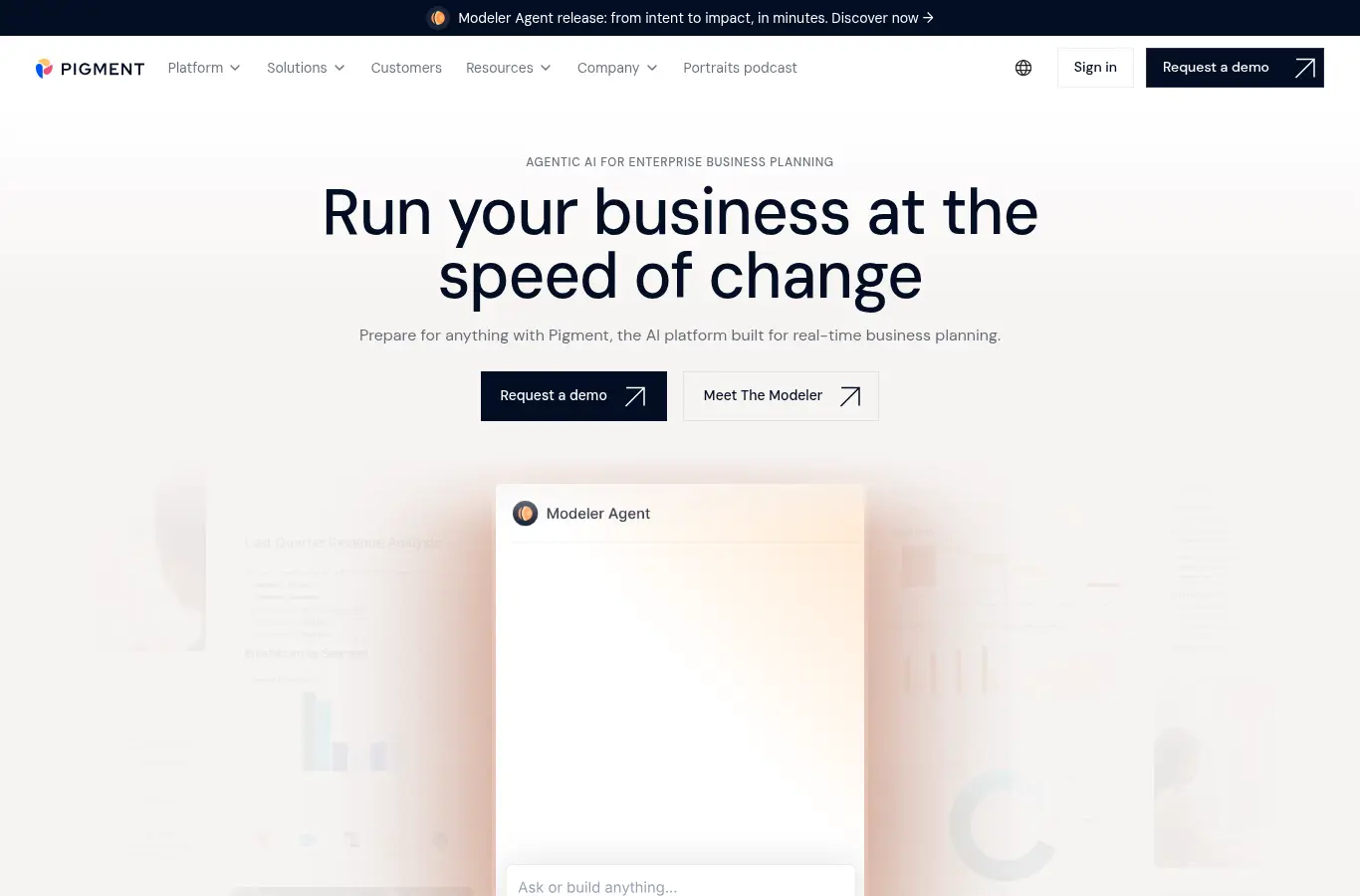
Pigment is the modern alternative in the same category: finance-grade planning models with a dramatically better build experience, fast scenario runs, and a growing GTM planning practice. Scaling companies that find Anaplan heavy increasingly land here.
Like Anaplan, it is platform-first: the sales forecasting logic, stage weights, rep-level attainment, ramp, is whatever your team builds, which means the quality ceiling is your modeling bench, not the product.
- Key features: flexible planning models, real-time scenarios, dashboards and boards, workforce and revenue planning, strong spreadsheet interop.
- Pricing: custom quote; no published rates.
- Pros: modeling power without legacy friction. Cons: sales logic is build-your-own; needs a model owner.
10. Forecastio: best lightweight dedicated tool
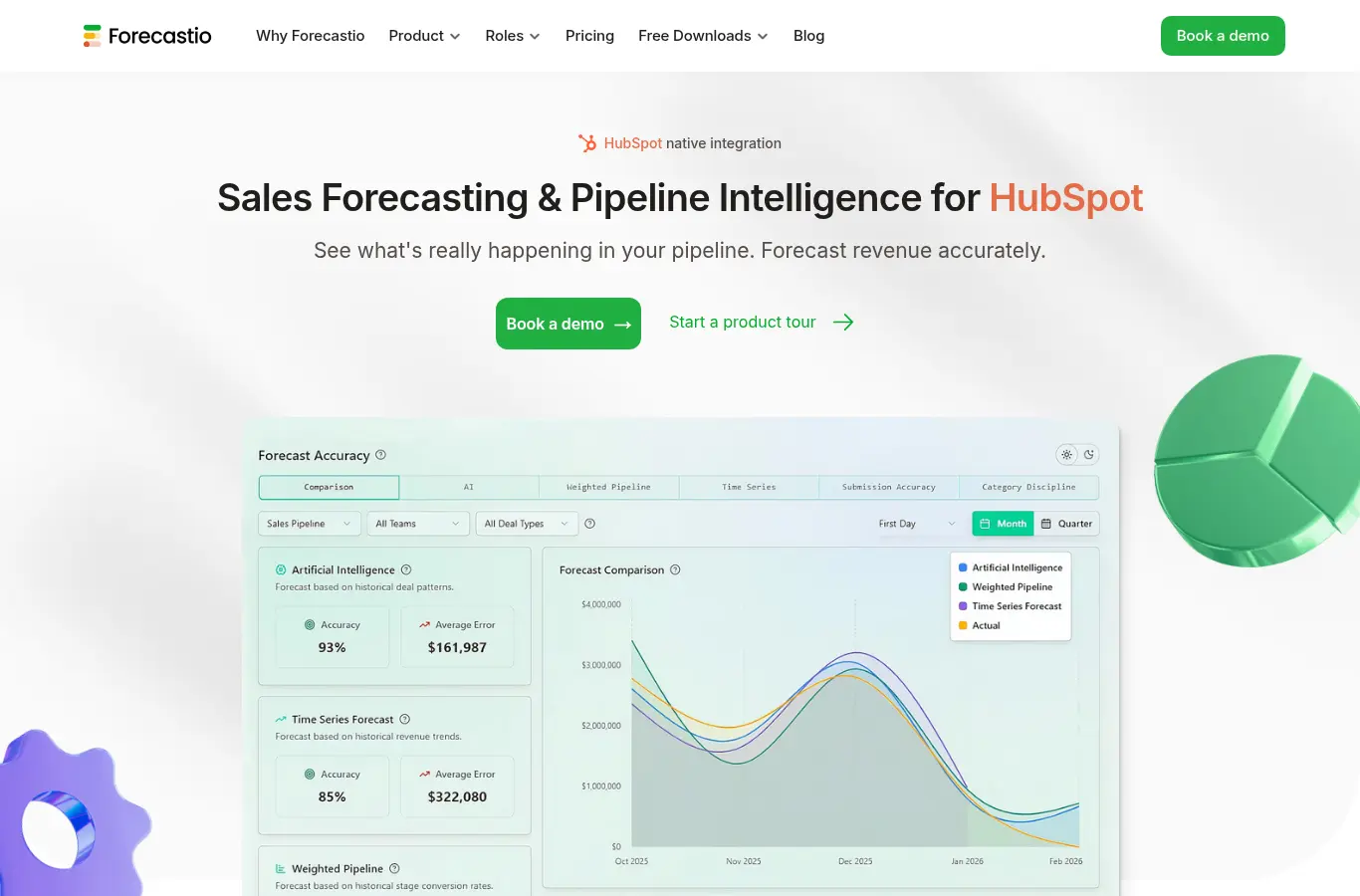
Forecastio is what most of this list is not: a focused, affordable forecasting layer for SMB and mid-market teams on HubSpot or Salesforce. Setup is days, the models cover weighted pipeline and quota pacing, and the price point undercuts the enterprise platforms by an order of magnitude.
The trade is ceiling: lighter scenario tooling, a young product, and a single-purpose scope. For a 10-to-40-rep team drowning in spreadsheet forecasts, that scope is exactly the point.
- Key features: pipeline and quota forecasts, pacing dashboards, HubSpot and Salesforce sync, variance tracking, goal management.
- Pricing: from $249/month billed annually, scaling with team size (vendor-published, June 2026).
- Pros: fast, affordable, purpose-built. Cons: limited depth for enterprise complexity.
11. Drivetrain: best for forecasts inside the financial plan
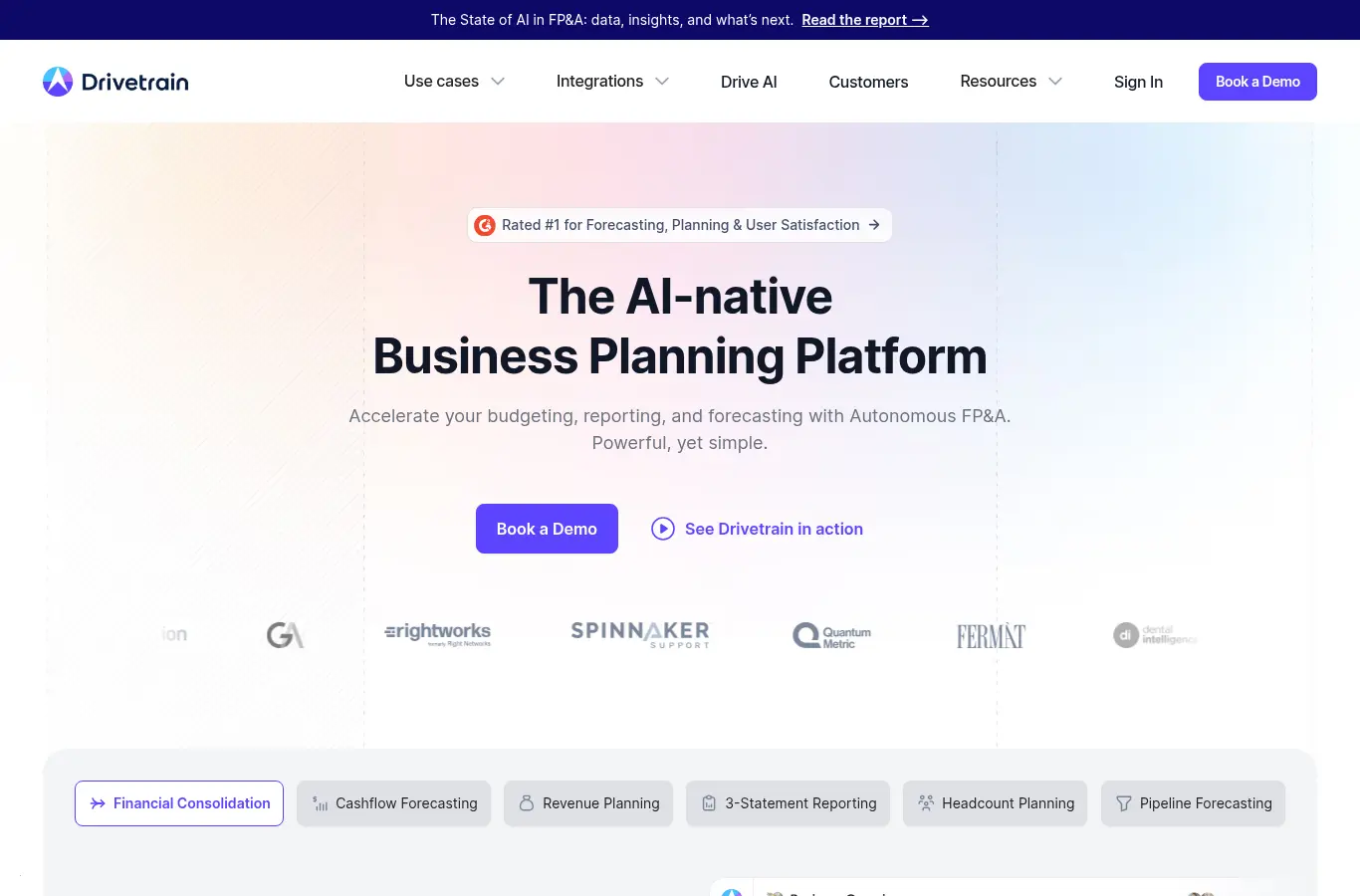
Drivetrain folds the sales forecast into a connected, driver-based financial plan: revenue, headcount, and spend in one model, with the sales line derived from drivers rather than a growth-rate guess. Finance teams that want the forecast to tie out to the P&L pick it for exactly that.
The limitation mirrors the FP&A category: per-rep detail like ramp curves and segment-level attainment is custom modeling work, not a native object, so the sales side stays as deep as finance builds it.
- Key features: driver-based models, scenario planning, budget-versus-actuals, SaaS metrics, CRM and ERP connectors.
- Pricing: custom quote; no published rates.
- Pros: forecast and financial plan in one place. Cons: sales-specific depth is build-your-own.
12. Xactly: best when comp and forecasting share a vendor
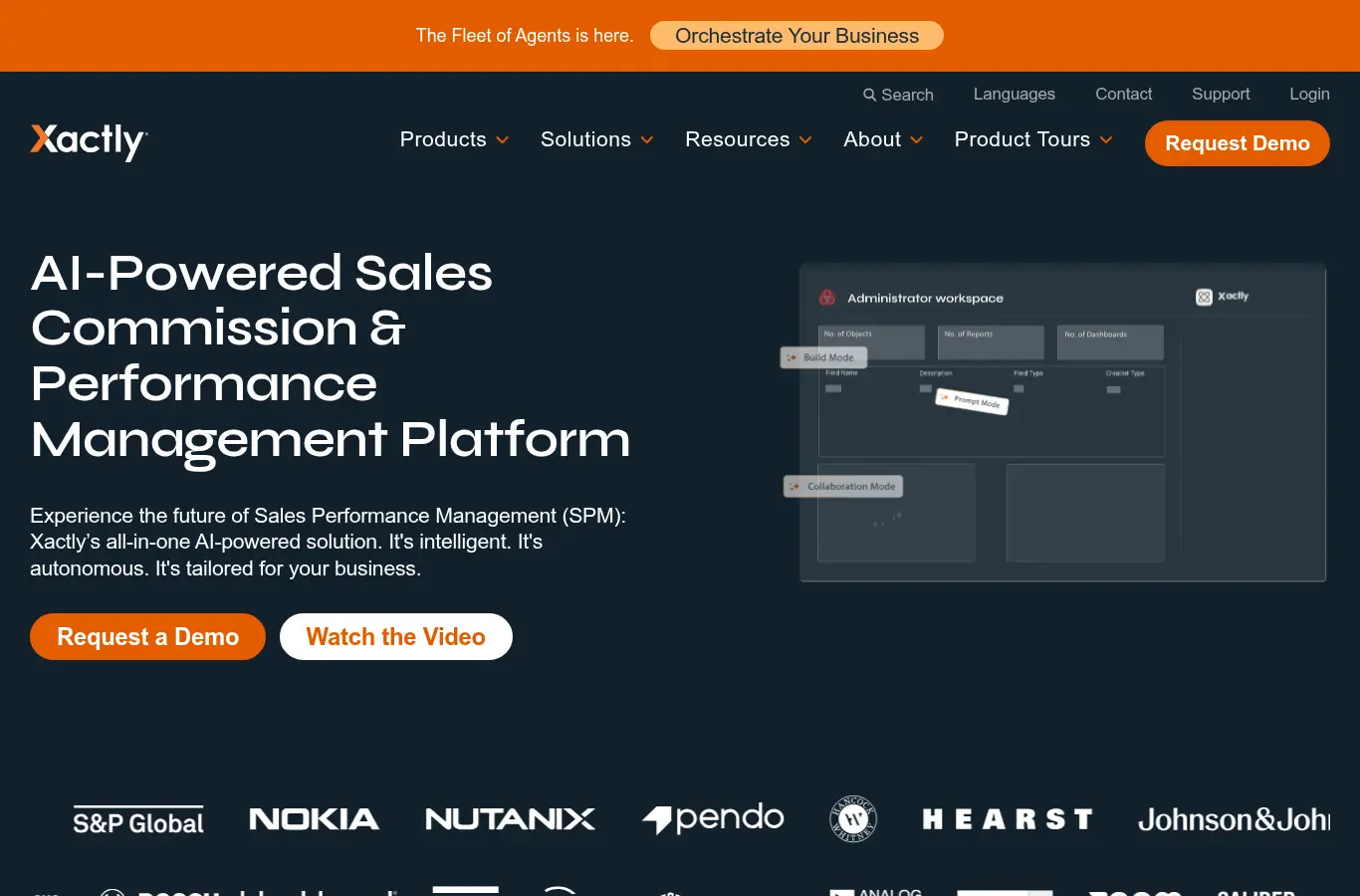
Xactly’s center of gravity is incentive compensation, and its forecasting offer leans on a unique asset: years of cross-industry comp and attainment data that power benchmarks nobody else has. For organizations that want comp administration and forecast intelligence from one vendor, the pairing is genuinely convenient.
The honest read: forecasting serves the comp engine, not the other way around, and teams whose primary pain is forecast accuracy rather than payout accuracy usually find deeper tooling elsewhere on this list.
- Key features: incentive comp management, forecasting module, attainment benchmarks, quota and territory tools, payout analytics.
- Pricing: custom quote; no published rates.
- Pros: comp-plus-forecast consolidation; benchmark data. Cons: comp-led design; forecasting is secondary.
The blind spot every forecasting tool shares
Here is the argument none of the top-ranking pages for this keyword make. Pipeline-based forecasts answer one question: what should current demand yield? They are structurally silent on the other half: can the team you actually have, at its actual ramp positions and actual attainment, close that number? A $4M weighted pipeline against a $3M target reads as covered in every pipeline-based tool on this list, and if two of your six reps started last quarter, it is not covered, it is a miss scheduled for week eleven. The Bridge Group’s 2024 SaaS AE Metrics Report, covering more than 170 B2B SaaS companies, found 51% of AEs hit quota in 2024, down from 66% in 2022, and a meaningful share of that gap is forecasts that exceeded capacity from day one. Whatever tool you buy from this list, run the capacity check next to it: how to calculate sales capacity walks through the math, and what is sales forecasting covers where each method fits.
Signs you need forecasting software
- Forecast variance consistently exceeds 15 to 20% of actuals, the threshold market analyses flag as the move-off-spreadsheets signal.
- Reps and managers spend hours weekly maintaining manual roll-ups.
- The Monday number and the CRM number disagree, and nobody can say why.
- You have crossed roughly five-plus reps or a second segment, where accuracy degrades sharply without tooling.
- Misses keep surprising you in the back half of the quarter, the signature of forecasts that ignore capacity and ramp.
How to choose for your team
- By size: under ~$10M ARR, CRM-native (HubSpot, Salesforce) or Forecastio. $10M to $100M, a dedicated layer: inspection (Clari, BoostUp, Gong) if misses trace to deals, capacity-aware planning (Lative) if they trace to staffing. $100M+, enterprise platforms (Anaplan, Pigment, Aviso) with named model owners.
- By CRM: Salesforce-native teams get the widest choice; HubSpot teams should shortlist HubSpot-native and Forecastio first; CRM-agnostic stacks favor the platform tools.
- By motion: transactional, high-velocity teams need pacing and volume views; long-cycle enterprise motions need deal inspection plus trailing-twelve-month accuracy tracking, single quarters are nearly meaningless at low deal counts.
- And honestly: a disciplined spreadsheet with derived stage weights still beats bad software adoption for teams under five reps. Buy when the spreadsheet costs more hours than it saves.
Common buying mistakes
Buying inspection when the problem is capacity. If misses trace to ramping reps and thin staffing rather than bad deals, deal inspection will faithfully inspect a pipeline the team cannot work. Diagnose the miss pattern first.
Automating dirty data. AI forecasting trained on inflated stages produces a confident version of the same wrong number. Budget the CRM cleanup before the rollout.
Ignoring the feedback loop. Whatever you buy, log week-one forecast against quarter-end actual by segment from day one. Tools improve forecasts; measurement improves forecasters.
Trusting undated pricing. Half the comparison content for this category cites pricing that is years stale. Verify rates on vendor sites before budgeting; ours are dated June 2026 above.
Frequently asked
What is sales forecasting software?
Software that predicts future revenue from pipeline, historical performance, and team data, replacing manual roll-ups with continuously updated, data-derived forecasts.
What is the most accurate sales forecasting method?
For scaling teams, a stage-weighted pipeline forecast checked against a capacity-based bottom-up beats either alone: one catches demand problems, the other catches staffing problems.
How much does sales forecasting software cost?
Published entry points range from $249/month (Forecastio) through $100 to $175 per user/month for CRM-native tiers (HubSpot, Salesforce), to custom enterprise quotes (Clari, Gong, Aviso, Anaplan) commonly starting in five figures annually.
Do AI forecasting tools actually improve accuracy?
Yes, on clean data. Vendor claims of 95 to 98% accuracy assume pristine stage hygiene; models trained on dirty CRM data automate the dirt.
When should a team buy forecasting software?
When forecast variance consistently exceeds 15 to 20%, manual roll-ups consume hours weekly, or the team passes roughly five reps or a second segment.
Why do forecasts miss even with good software?
Most often because the forecast exceeded the team’s ramp-adjusted capacity, a dimension pipeline tools do not model. Check the forecast against capacity every cycle.
Match the tool to where your forecast actually breaks, then run the capacity check beside it. See the full sales capacity planning guide, or book a demo to see a forecast reconciled against your own roster’s capacity.