
Editor’s note: This essay was originally published by Mperativ in 2021. It has been updated and republished by Lative following the acquisition of Mperativ and the integration of Marketing Intelligence into Lative’s AI-native GTM platform.
Key takeaways
- Revenue-first marketing rebuilds the marketing operating model around opportunities and accounts, not leads, so marketing’s numbers come from the same records the CRO and CFO already trust.
- The marketing credibility gap is structural, not communicative. It closes when the data layer is shared across marketing, sales, and finance.
- CMO accountability shifts from MQL volume to marketing-sourced pipeline, pipeline coverage, and influenced revenue, the metrics the rest of the executive suite already uses.
- Lead-centric attribution cannot support predictive forecasting. A unified opportunity model can, which is what makes GTM alignment a measurable outcome instead of a quarterly debate.
- The 2026 board scrutiny on marketing budgets rewards CMOs who report in revenue terms and penalizes those who defend MQL counts.
Spencer Stuart’s 2026 data puts average CMO tenure at 4.1 years, nearly a full year below the 5.0-year C-suite average. The gap reflects a structural problem: marketing has been measuring itself in terms no one else in the executive suite understands or trusts. MQLs, lead conversion rates, marketing-sourced pipeline: these are marketing terms.
The CFO thinks in CAC and payback period. The CRO thinks in pipeline coverage and win rate. The CEO thinks in revenue growth and scalability. When marketing presents its results in its own language to a room that speaks a different one, credibility erodes, regardless of performance.
- Individuals vs. accounts: Lead-centric tracks engagement by person; revenue-first tracks engagement by buying committee and account.
- Qualified leads vs. qualified opportunities: MQLs give sales a person to call; opportunity-centric marketing gives sales a pipeline stage with a buyer group behind it.
- Lead conversion metrics vs. revenue metrics: Lead counts require a conceptual leap to revenue; opportunity values speak directly to the CFO’s model.
- Current snapshots vs. time-series data: CRMs show what is true now; revenue-first marketing requires how pipeline has moved over eight quarters.
- Static dashboards vs. interactive analysis: One-dimensional activity dashboards versus drill-down views from strategic to opportunity-level detail.
- Siloed operations vs. unified operations: Disconnected marketing metrics versus shared opportunity records, conversion definitions, and pipeline models across all three functions.
- Past statistics vs. predictive forecasts: Fragmented CRM snapshots versus ML models that forecast pipeline coverage and surface at-risk objectives in real time.
Individuals vs. accounts
Closing the gap requires marketing to rebuild its operating model around the same framework the rest of the business uses: revenue, opportunities, and accounts. Seven dimensions separate lead-centric marketing from a revenue-first operating model:
Forrester’s 2021 B2B buying research found that 94% of B2B sales involve buying groups of three or more people across two or more departments. By treating initial engagement as an individual event, lead-centric marketing gives up on the complexity of the actual buying decision and hands the problem to sales to resolve later.
Revenue-first marketing thinks of engagement in terms of the target account from the first touch, which means marketing and sales are aligned on the unit of measurement before the opportunity is ever created.
Qualified leads vs. qualified opportunities
The lead-centric model creates an opportunity when sales qualifies it. Revenue-first marketing tracks the entire funnel as an opportunity journey from first engagement, with leads functioning as data points about where the opportunity stands, not as the primary unit of measurement.
The result is a continuous view of pipeline development that does not have a seam at the MQL-to-SAL handoff where marketing’s visibility ends and sales’ begins.
Lead conversion metrics vs. revenue metrics
Explaining campaign performance in terms of leads converted requires your CFO to make a conceptual leap to revenue contribution.
A revenue-first model values every stage of the demand engine in revenue terms from the start: a pre-qualified opportunity is worth the median sales price; a marketing-influenced opportunity that closes is worth the closed-won revenue. Marketing’s contribution is expressed in dollars, not in lead counts.
Current snapshots vs. time-series data
CRMs are built for real-time snapshots. They show what is true now.
Revenue-first marketing requires time-series data: how pipeline has been moving, when conversion rates shifted, what the trend in marketing-influenced opportunities looks like over the last eight quarters. That historical view is what distinguishes a forecast from a guess and what allows marketing to demonstrate not just what it is producing today but what it has consistently produced over time.
Static dashboards vs. interactive analysis
Lead-centric dashboards produce one-dimensional views of marketing activity. Revenue-first analysis allows high-level strategic views with supporting opportunity-level detail, so your CFO who asks what drove the Q2 pipeline miss gets a specific answer with the individual opportunities behind it, not a dashboard screenshot that requires further interpretation.
Siloed operations vs. unified operations
Lead-centric marketing has driven a structural wedge between marketing and revenue operations. When marketing metrics are disconnected from the opportunity data sales and finance use, alignment is a communication exercise rather than a structural reality.
Revenue-first marketing rebuilds that connection at the data layer: same opportunity records, same conversion definitions, same pipeline model across all three functions.
Past statistics vs. predictive forecasts
A revenue-first model with clean, unified data becomes the foundation for predictive marketing: ML models that forecast pipeline coverage by segment, identify at-risk objectives in real time, and surface the account-level signals that predict conversion before the opportunity is created.
Lead-centric analytics, built on fragmented data and CRM snapshots, cannot support that forecasting layer. Revenue-first analytics, built on the same data model as sales and finance, can.
CMO accountability in a revenue-first model
The structural shift from lead-centric to revenue-first marketing changes the definition of CMO accountability. In a lead-centric model, the CMO is accountable for MQL volume, lead conversion rates, and cost per lead, metrics that have no direct counterpart in the CFO’s or CRO’s operating model. In a revenue-first model, the CMO is accountable for marketing-sourced pipeline, marketing-influenced revenue, and pipeline coverage by segment, the same metrics that anchor the sales forecast and the budget review.
This is the GTM alignment that closes the credibility gap in practice. When the CMO reports pipeline coverage alongside the CRO, and CAC payback alongside the CFO, marketing stops being a function the board has to translate. The conversation moves from “defend the marketing line” to “here is what the program mix produced against the revenue plan.”
The CMOs who survive the 2026 tenure compression are the ones who restructure their dashboards before the next board cycle, not after. The shift is not cosmetic. It is the difference between a CMO who is invited to the budget conversation and a CMO who is summoned to defend one.
What closing the gap looks like in 2026
The marketing credibility gap is structural. Lead-centric marketing has isolated marketing’s systems, metrics, and models from the rest of the revenue engine, and the gap that isolation creates shows up in every board meeting, every budget cycle, and every joint pipeline review where marketing and sales are looking at the same pipeline from different instruments.
The board scrutiny on marketing budgets in 2026 is higher than it has been in years. AI-driven attribution skepticism is real: executives who have watched AI generate confident-sounding analysis on unreliable data are not going to take marketing’s attribution claims on faith.
You can close the credibility gap permanently when you can show your CFO and CRO that marketing’s numbers come from the same opportunity records that finance and sales use to build their forecasts. Not a separate model. Not a connected export. The same records.
When Benchling‘s marketing team made this shift, the quarterly debate about whose pipeline number was right stopped. The CMO, CRO, and CFO moved to a single shared view of opportunity records, and the budget conversation changed from “defend marketing’s attribution” to “here is what the data shows the program mix produced.”
What Marketing Intelligence Delivers in Practice
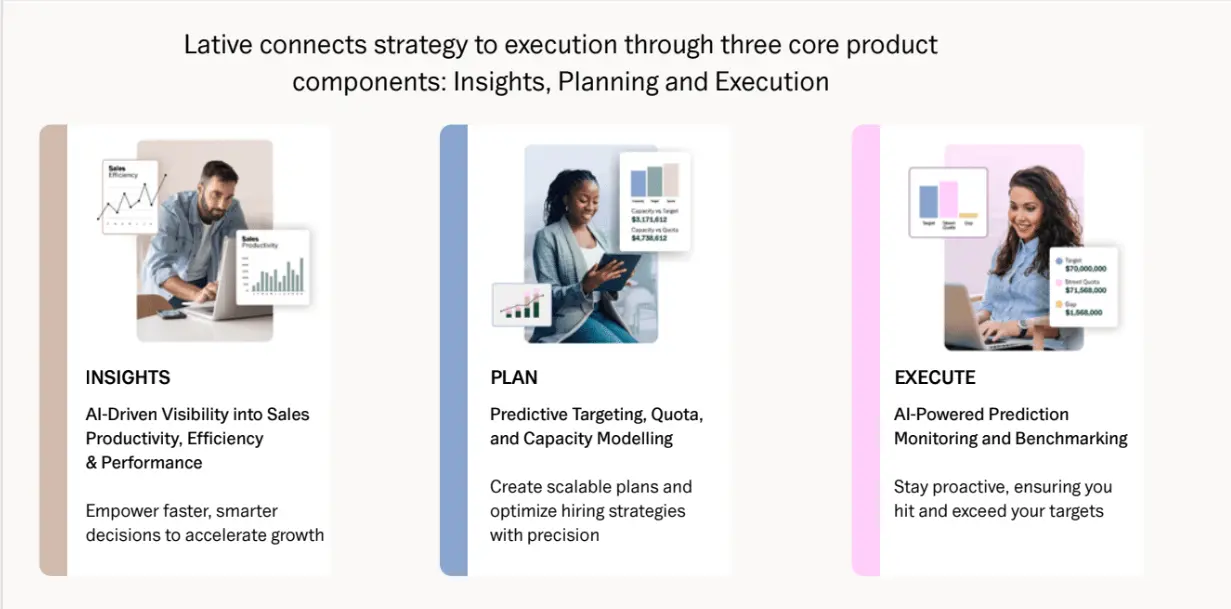
That is what Lative’s Marketing Intelligence module delivers: marketing analytics built on the same GTM data foundation as sales capacity planning and revenue forecasting. The marketing credibility gap closes not because marketing communicates better, but because the data structure makes two versions of the truth structurally impossible.
For the 2026 principles that define what revenue-first marketing looks like in practice, see the 2026 GTM Marketing Manifesto. For the operational framework that operationalizes these principles at the demand engine level, see How to Build a World-Class Demand Engine.
Closing the credibility gap for good means tying marketing’s numbers to the capacity behind them, which is why Lative connects marketing intelligence to sales capacity planning on one platform.
If your organization is still measuring marketing in lead counts while the CFO measures revenue in opportunity values, the structural gap this essay describes is already costing you budget. See how Lative’s Marketing Intelligence closes the credibility gap permanently.
Frequently asked questions about revenue-first marketing
What is revenue-first marketing?
Revenue-first marketing is an operating model in which marketing measures itself in opportunity values, marketing-sourced pipeline, and influenced revenue, using the same opportunity records sales and finance use. The contrast is lead-centric marketing, which measures MQLs and lead conversion rates that require a conceptual leap to revenue before the CFO or CRO can act on them.
How does revenue-first marketing change CMO accountability?
CMO accountability moves from lead volume and campaign engagement to pipeline coverage, marketing-sourced pipeline, and revenue attribution against the company forecast. The CMO reports in the same terms as the CRO and CFO, which is what makes marketing’s contribution legible at the board level and what stabilizes CMO tenure against the credibility gap that drives early exits.
Why is GTM alignment easier under a revenue-first model?
GTM alignment is easier because marketing, sales, and finance share one set of opportunity records, one set of conversion definitions, and one pipeline model. Alignment becomes a structural property of the data, not a recurring communication exercise. Disagreement about whose number is right gets resolved before the meeting, because there is only one number.
Werner Schmidt — Werner Schmidt is the CEO and Co-founder of Lative, with over 20 years of experience in Revenue Operations with companies including Forcepoint, Aruba Networks, Citrix, and Sage.