
Pipeline management software is where deals live between created and closed, and the whole category assumes one thing that is often false: that the pipeline in front of you is enough to hit the number. Coverage looks healthy right up until you check whether the team has the capacity to actually work it.
The Bridge Group’s 2024 SaaS AE Metrics Report (170+ B2B SaaS companies) found 51% of AEs hit quota in 2024. A large share of every miss cohort was covered on paper and doomed in practice, because 3x pipeline against thin capacity is not real coverage.
One disclosure: Lative is our product, and it appears because it sets the coverage target from real productive capacity, the input most pipeline tools take on faith. It is judged on the same criteria as everyone else, including what it is not.
Quick picks by use case
- Best pipeline-to-capacity layer: Lative
- Best enterprise CRM pipeline: Salesforce Sales Cloud
- Best SMB and mid-market CRM: HubSpot Sales Hub
- Best simple visual pipeline: Pipedrive
- Best high-velocity inside sales: Close
- Best low-cost broad CRM: Zoho CRM
- Best forecasting and inspection: Clari
- Best conversation intelligence: Gong
- Best revenue intelligence: BoostUp
- Best cadence-driven pipeline: Salesloft
- Best CRM-update speed: Scratchpad
- Best enterprise AI forecasting: Aviso
Comparison at a glance
| Tool | Best for | Pricing | Standout |
|---|---|---|---|
| Lative | Coverage tied to capacity | Custom quote, no per-user | Coverage from real capacity |
| Salesforce Sales Cloud | Enterprise CRM | Enterprise from $175/user/mo | System of record |
| HubSpot Sales Hub | SMB and mid-market CRM | Published; confirm rate | Easy CRM plus reporting |
| Pipedrive | Simple visual pipeline | Published; confirm rate | Visual deal tracking |
| Close | High-velocity inside sales | Published; confirm rate | Built-in calling |
| Zoho CRM | Low-cost broad CRM | Published; confirm rate | Broad features, low cost |
| Clari | Forecasting and inspection | Custom quote | AI forecast and deal risk |
| Gong | Conversation intelligence | Custom quote | Call and deal insight |
| BoostUp | Revenue intelligence | Custom quote | Forecast and pipeline risk |
| Salesloft | Cadence-driven pipeline | Custom quote | Full-funnel cadences |
| Scratchpad | CRM-update speed | Published; confirm rate | Fast Salesforce updates |
| Aviso | Enterprise AI forecasting | Custom quote | Predictive revenue insight |
Pricing verified on vendor pricing pages in June 2026 where published; custom-quote vendors do not list rates. Always confirm current pricing directly.
How we evaluated
Four criteria separate real pipeline management from a prettier deal list. Stage discipline: does the tool enforce clear, exit-criteria-based stages, or let reps park deals wherever feels good? Coverage math: does it show coverage against a target grounded in capacity, or just a raw 3x that ignores whether reps can work it? Risk visibility: does it surface slipping and stalled deals early, or only at quarter end? And data hygiene: does it keep the pipeline current without turning updates into rep punishment? The second criterion is where covered-and-doomed pipelines hide.
The 12 best pipeline management tools in 2026
1. Lative: best pipeline-to-capacity layer
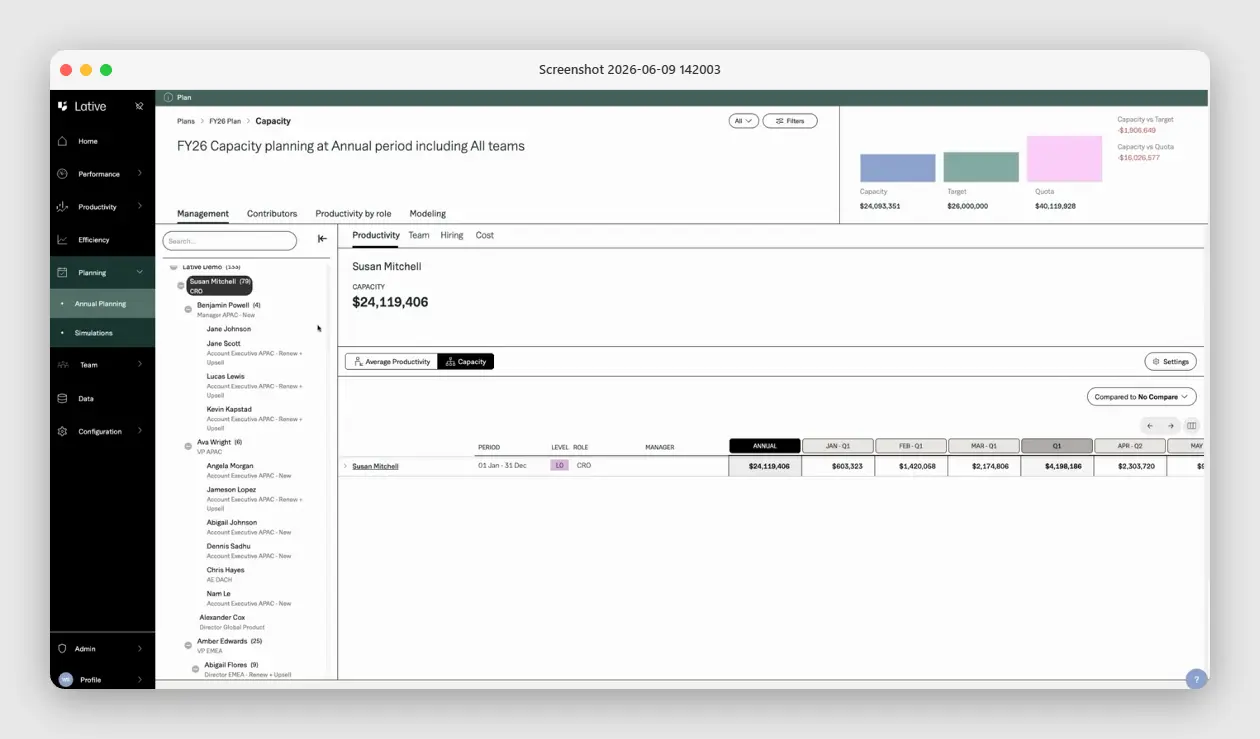
Full disclosure: Lative is our product, so weigh this with appropriate skepticism. It sits here because pipeline is only half the question: coverage means nothing if the team lacks the capacity to work it. Lative sets the coverage ratio from real productive capacity, ramp-adjusted per rep, so a healthy-looking 3x is checked against whether the team can actually cover it.
It is not a CRM or a deal-inspection tool; it does not manage individual opportunities or call risk. It plans the capacity and quota the pipeline has to cover, then reconciles the two, so coverage targets are grounded rather than assumed. Pair it with your CRM and forecasting tool.
2. Salesforce Sales Cloud: best enterprise CRM pipeline
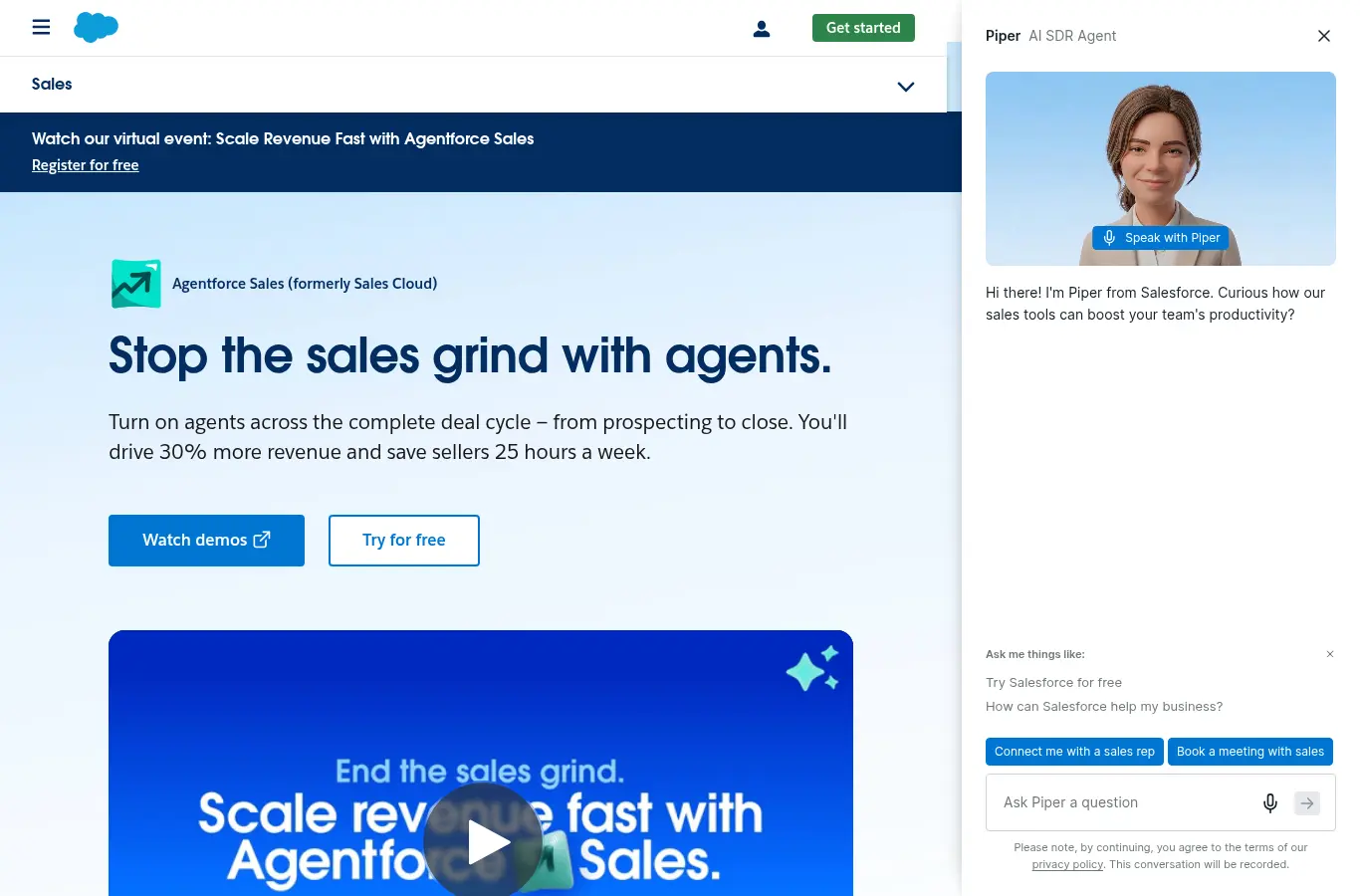
The enterprise CRM standard and the system of record most revenue stacks build around. Deep customization, a vast app ecosystem, and native reporting make it the default for orgs that can invest in admin capacity.
Its breadth is also its cost: it needs configuration and an admin to stay clean, and specialized jobs like ramp-adjusted capacity or opportunity scoring live in add-ons rather than the core.
3. HubSpot Sales Hub: best SMB and mid-market CRM
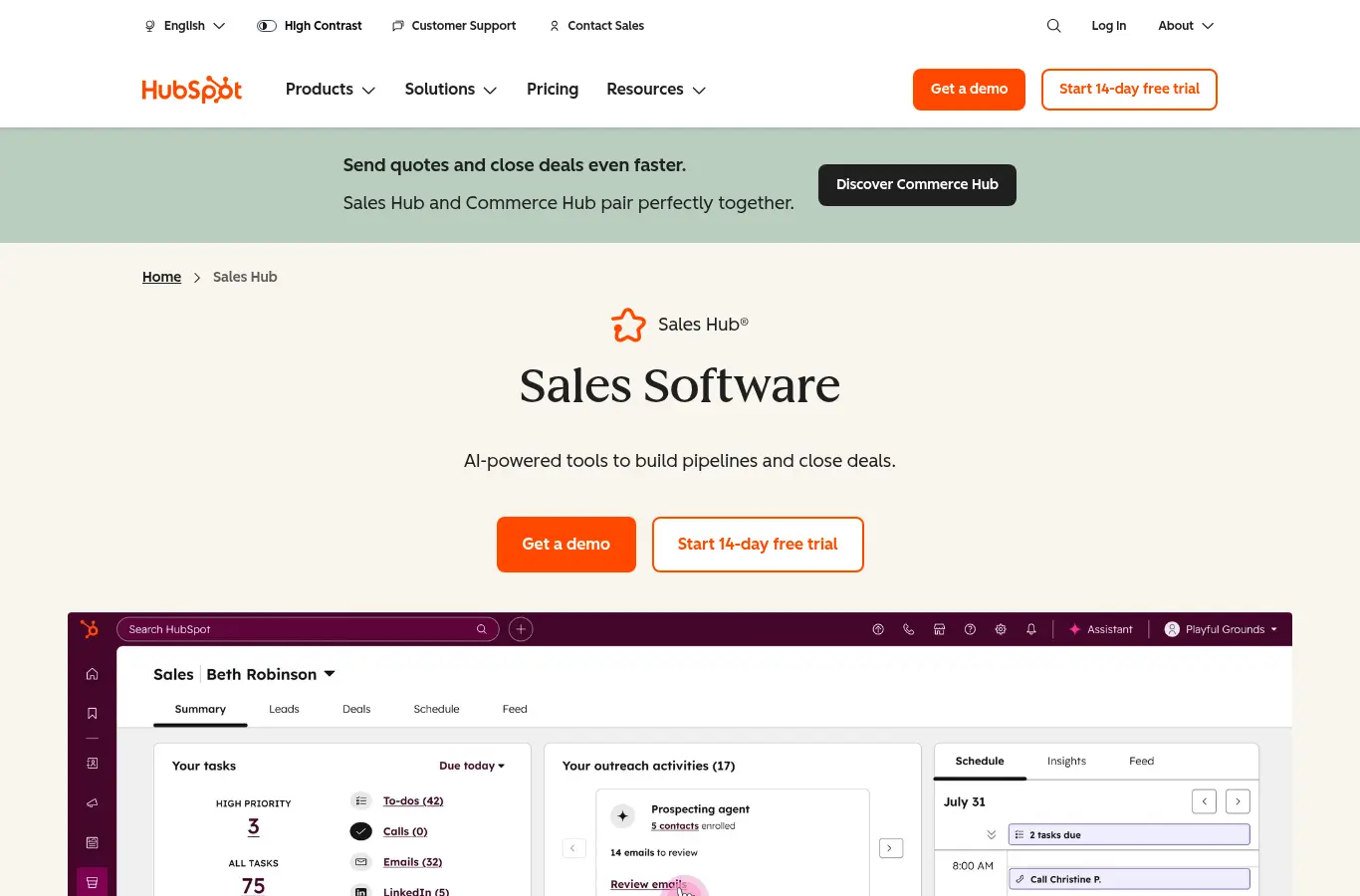
An approachable CRM and sales workspace with strong native reporting, popular with SMB and mid-market teams that want fast time to value without heavy administration.
It scales well until planning gets specialized: ramp-adjusted capacity, cohort math, and opportunity scoring are not native, so growing orgs add a planning layer on top of the CRM.
4. Pipedrive: best simple visual pipeline
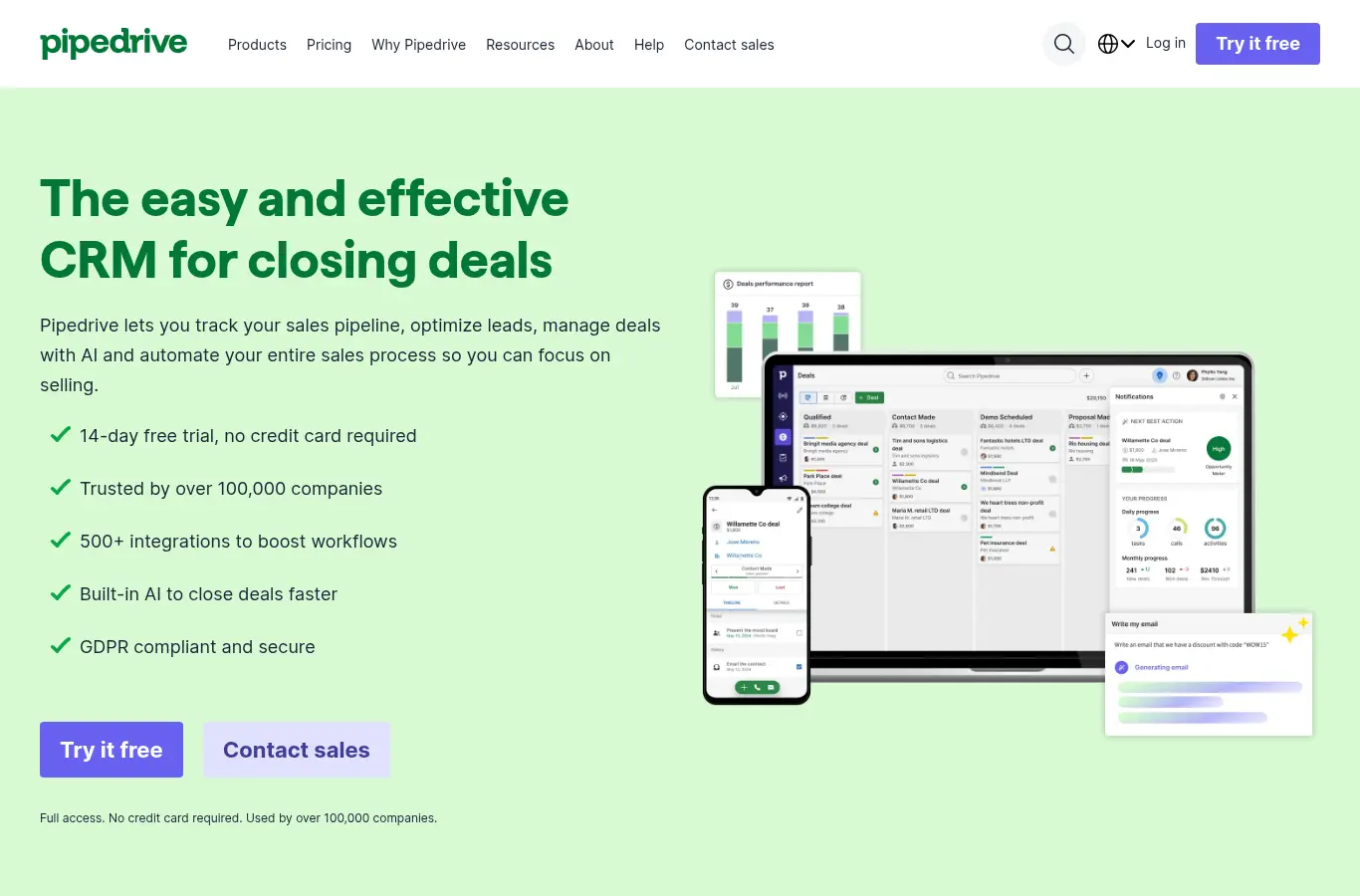
A lightweight, visual pipeline CRM designed for small sales teams that want deal tracking without administrative overhead. Fast to adopt and easy to run.
Its simplicity is the ceiling: reporting and planning are basic, and capacity or quota modeling are not part of the picture. Growing teams outgrow it.
5. Close: best high-velocity inside sales
A CRM built around built-in calling and emailing for high-velocity inside-sales teams. It keeps reps in one screen for outreach and pipeline, which suits SMB sales motions.
It is execution-focused: strong for working deals fast, light on analytics and planning. Capacity and quota modeling are not its remit.
6. Zoho CRM: best low-cost broad CRM
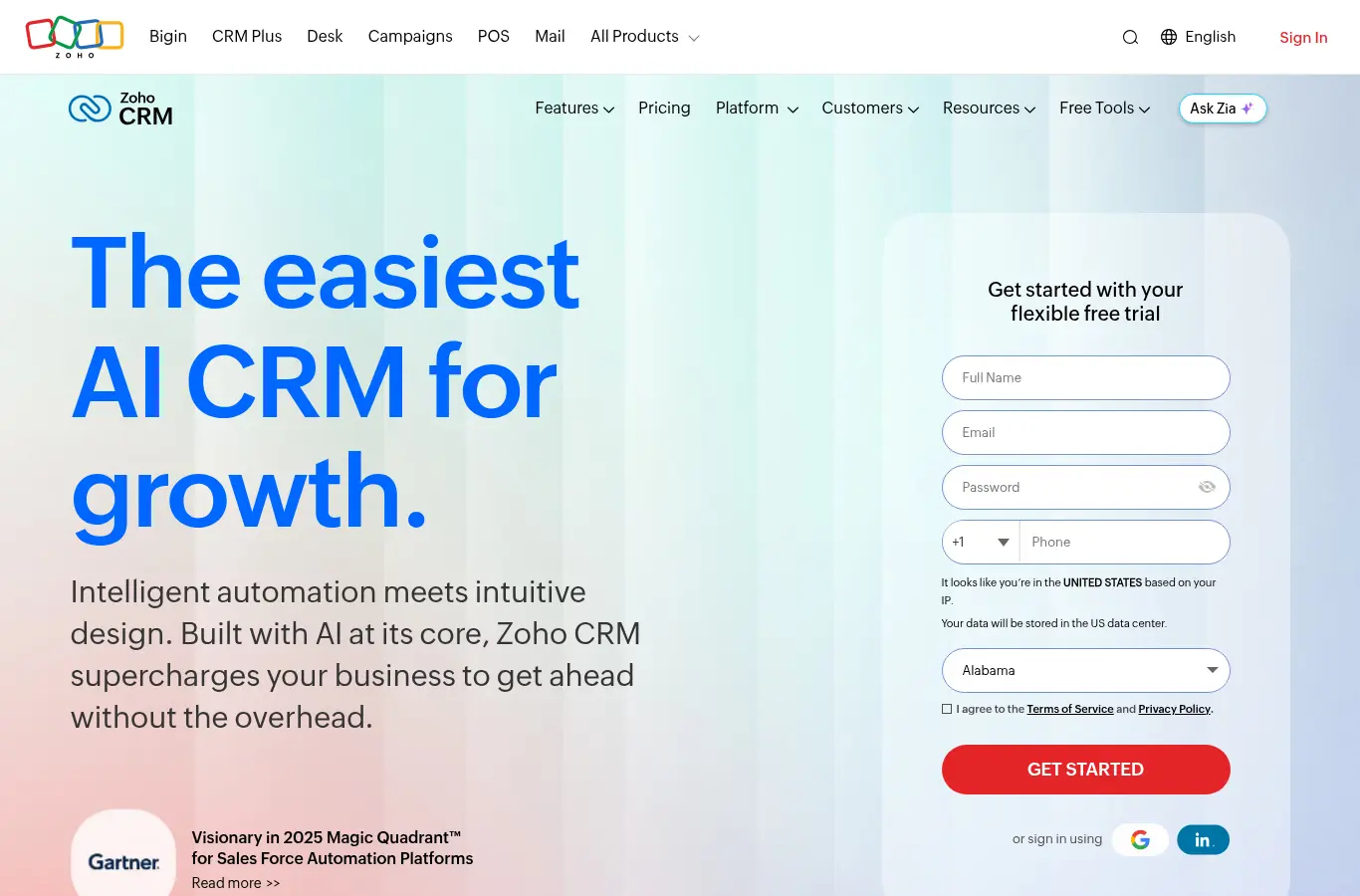
A full-featured, low-cost CRM popular with SMB and cost-conscious teams, with a wide suite of adjacent business apps in the Zoho ecosystem.
It covers pipeline management well for the price, but specialized sales planning, capacity, and quota modeling are outside its scope.
7. Clari: best forecasting and inspection
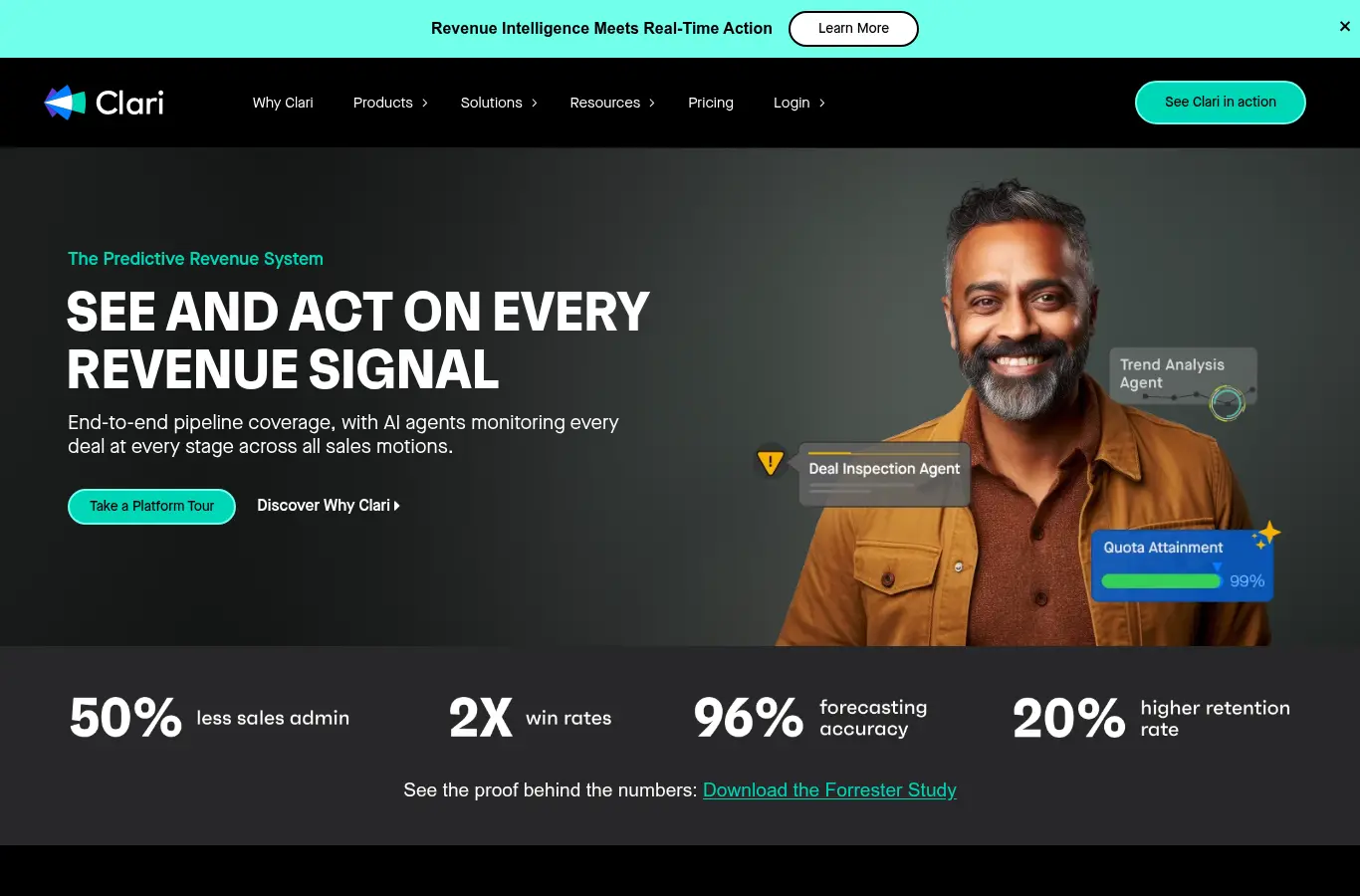
A revenue platform built around AI forecasting, deal inspection, and pipeline management for the in-quarter motion. Strong at calling the number and surfacing risk in deals already in flight.
It works on the pipeline that exists rather than the capacity that produces it. It answers whether you will hit this quarter, not how many ramped reps next year requires. Pair it with a capacity layer.
8. Gong: best conversation intelligence
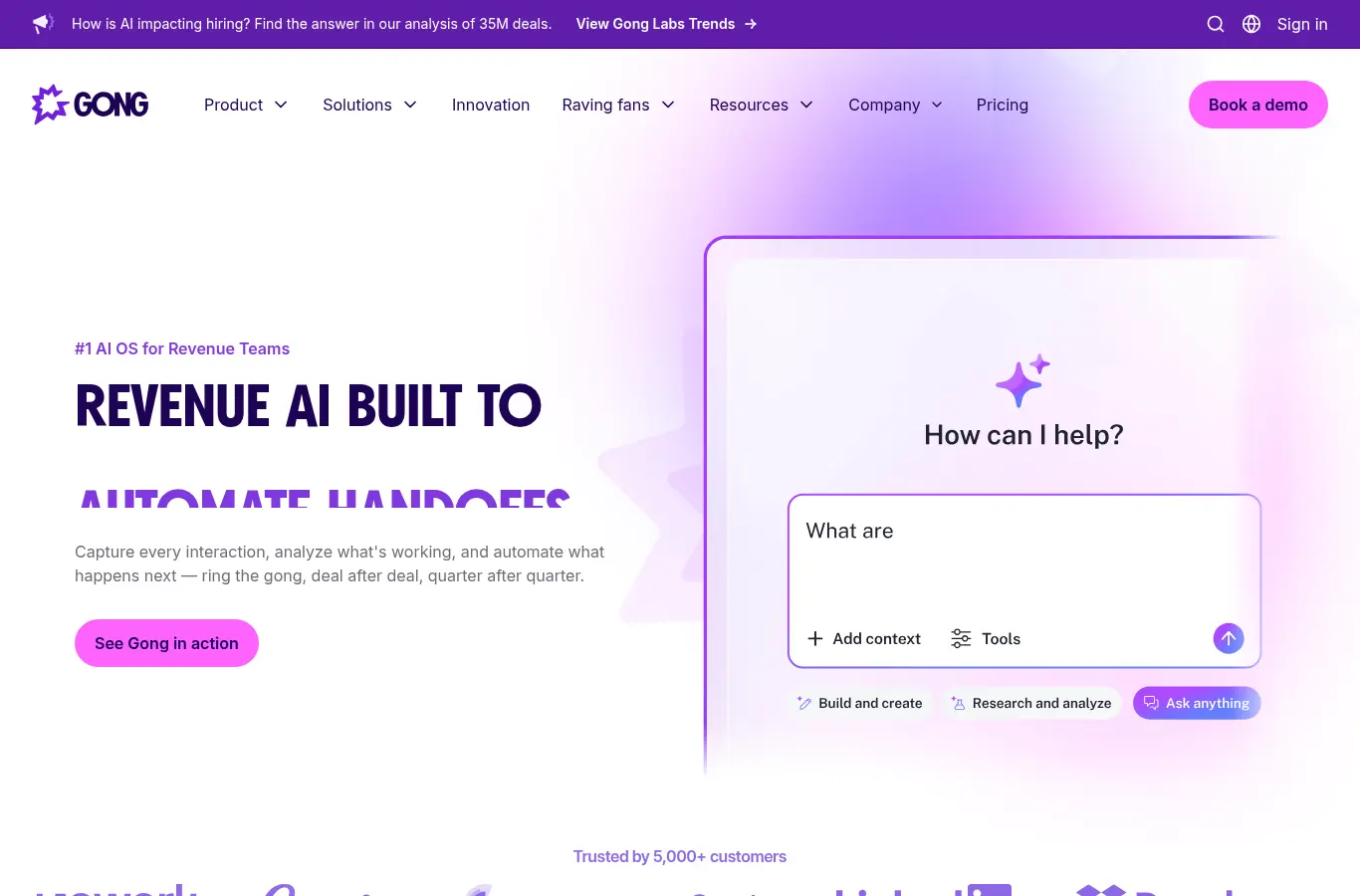
Revenue intelligence built on conversation and activity data, with forecasting and deal-risk insight layered on top. Gong reads what is actually happening in deals, calls, and emails.
It is intelligence-led rather than planning-led: excellent at explaining the pipeline and coaching reps, lighter on modeling the capacity and quota that produce next year’s number.
9. BoostUp: best revenue intelligence
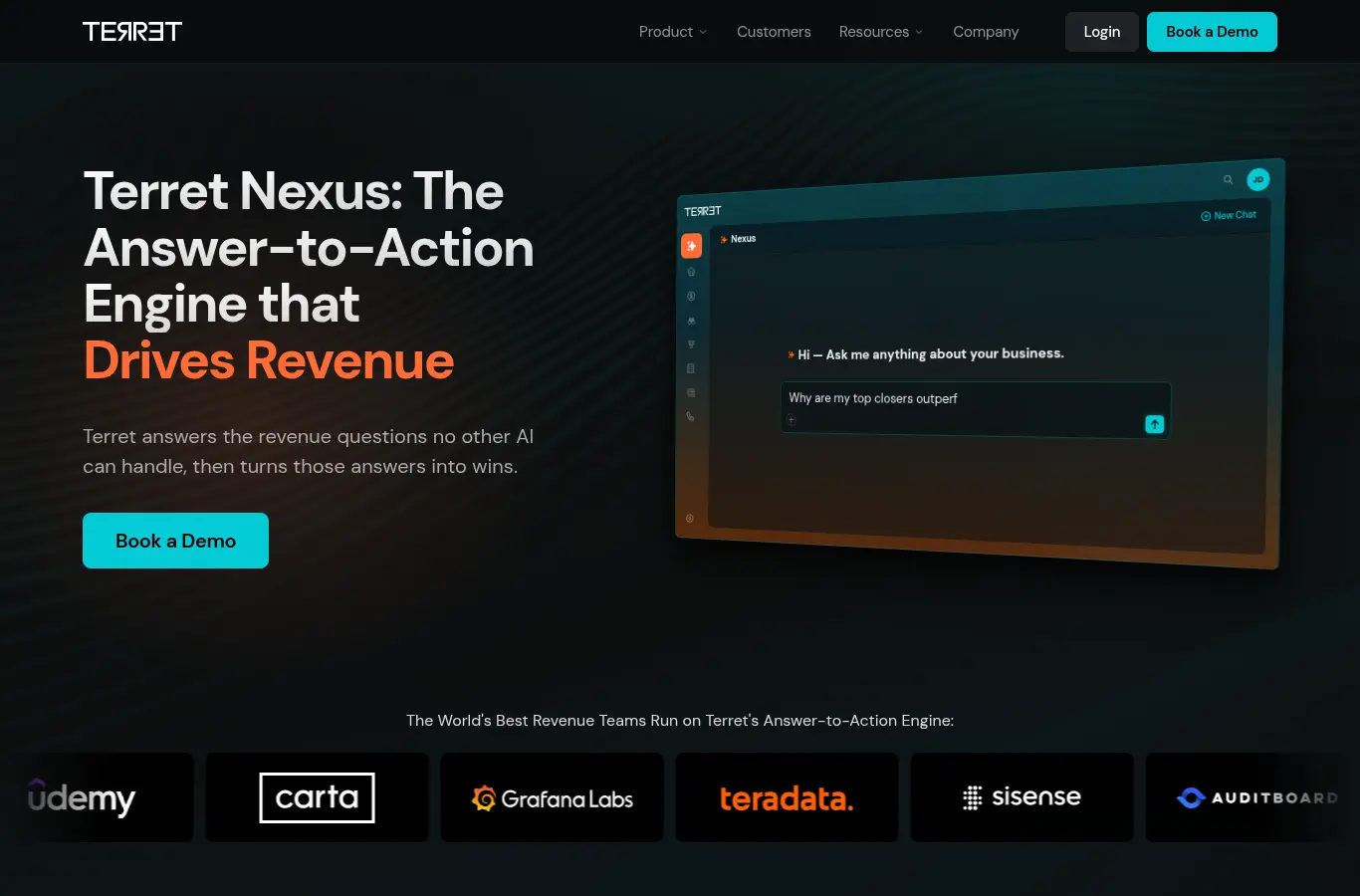
A revenue intelligence and forecasting platform focused on pipeline visibility, deal risk, and forecast accuracy across the revenue motion.
Like other RI tools it explains and predicts the pipeline you have rather than modeling the capacity that creates it. Buy it for forecast accuracy, not capacity planning.
10. Salesloft: best cadence-driven pipeline
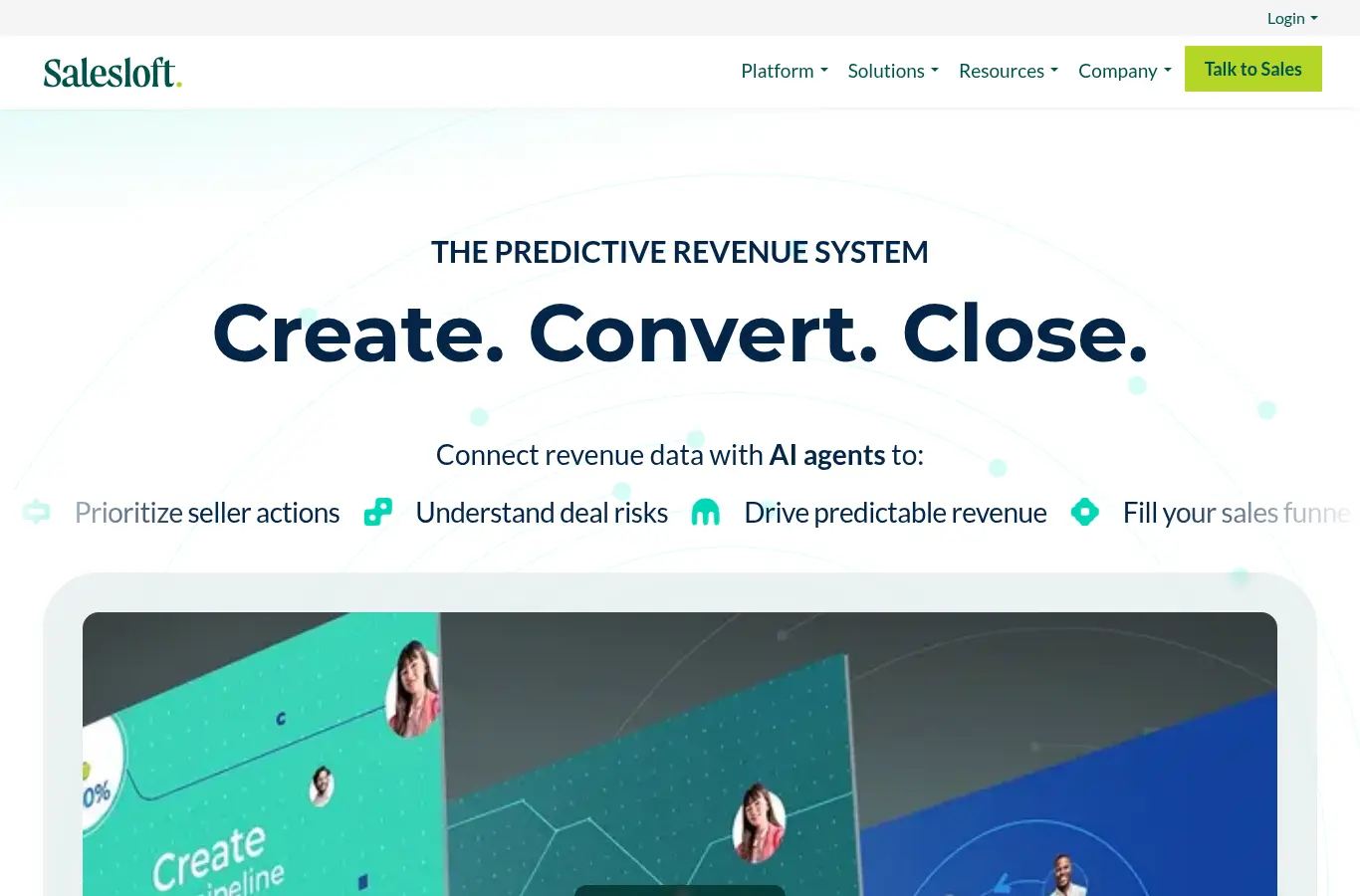
A sales engagement and revenue-workflow platform built around cadences, dialer, and deal management. Comparable to Outreach, with a broad workflow footprint across the funnel.
Like all engagement tools, it drives execution rather than planning. It improves how reps work the plan, not the capacity and quota math behind it.
11. Scratchpad: best CRM-update speed
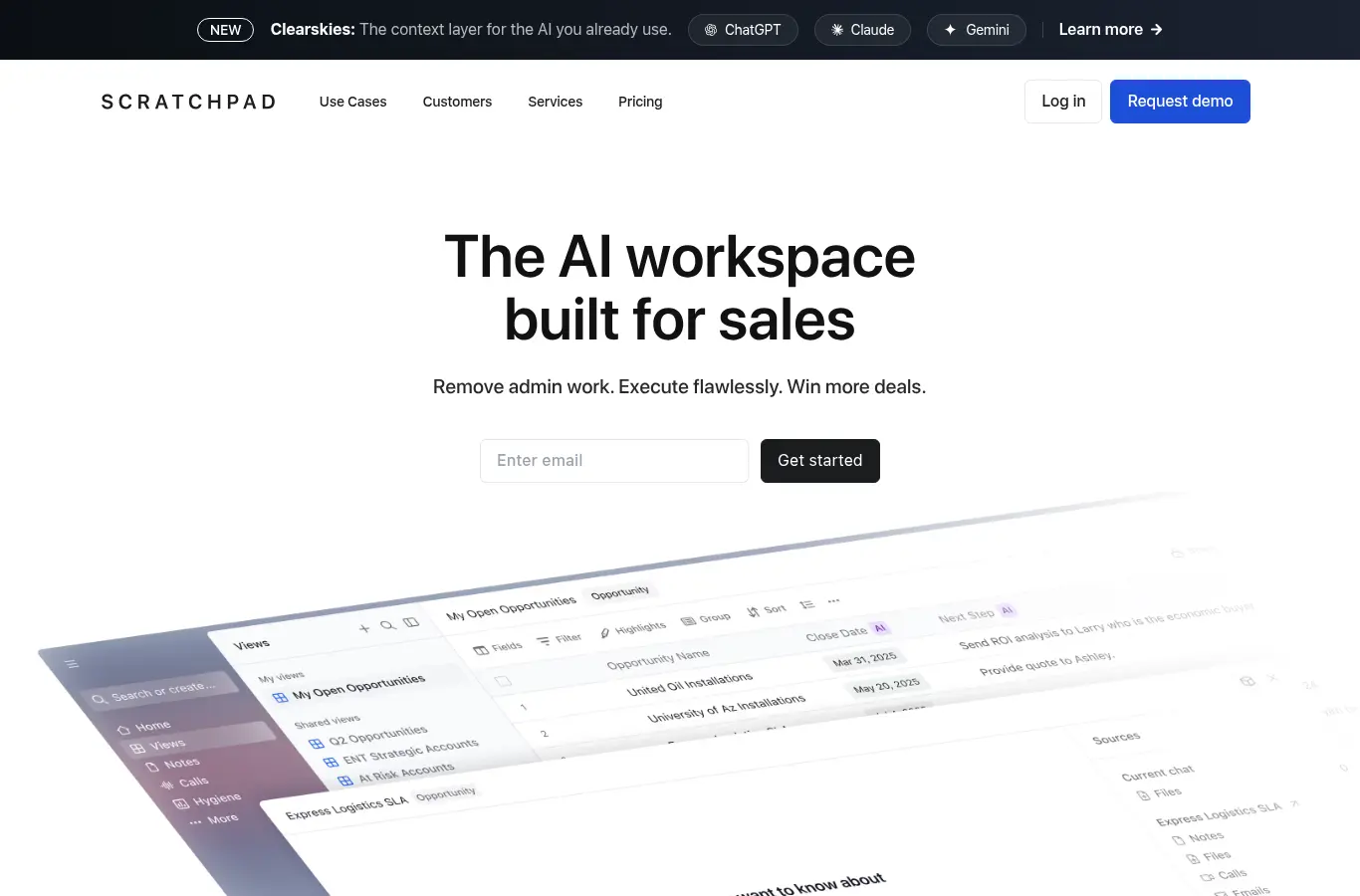
A fast workspace layer over Salesforce that makes CRM updates painless, so pipeline hygiene improves and reps spend less time in the CRM. Good where dirty pipeline data is the bottleneck.
It improves the data quality planning depends on, but it is not itself a planning tool. It keeps the inputs clean; something else models capacity and quota from them.
12. Aviso: best enterprise AI forecasting
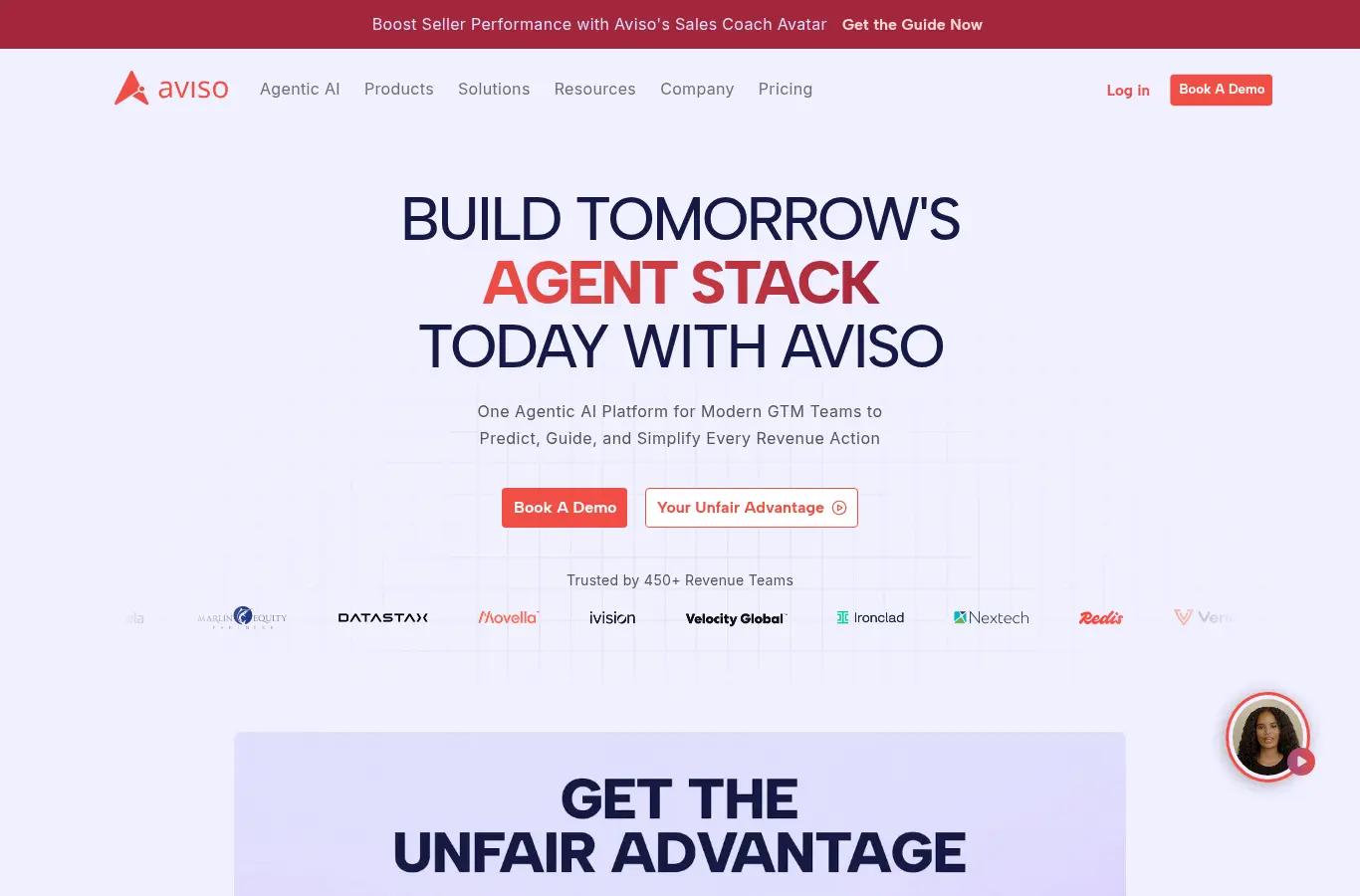
An AI-driven forecasting and revenue operations platform aimed at enterprise revenue teams, with predictive forecasting, deal insight, and conversational analytics.
It is prediction-focused: it calls the number and flags risk, but does not model per-rep capacity, ramp, or the headcount plan behind the target.
How to pick for your stage
- Early stage. A pipeline-first CRM (Pipedrive, Close, HubSpot) plus written stage definitions. Discipline beats tooling at this size.
- Scaling. Keep the CRM, add inspection (Clari, Gong, or BoostUp), keep the data fresh (Scratchpad), and connect coverage to capacity (Lative) once hiring cohorts make the supply side uncertain.
- Enterprise. Salesforce as the record, a revenue platform on top, AI analytics where data hygiene supports it, and capacity modeling as a board-level input.
The weekly pipeline review that keeps the system honest
Tooling holds the data; the cadence holds the discipline. The pipeline review that works runs weekly, forty-five minutes, with a fixed agenda. First, hygiene: deals with no activity in the trigger window get worked, downgraded, or closed-lost on the spot, no carrying zombies into a second week. Second, movement: what advanced, what slipped, and whether the slips share a pattern (a stage, a segment, a competitor).
Third, coverage by segment against derived multiples, never the aggregate. Fourth, the capacity read: is the workable pipeline matched to ramped selling capacity, or is the team either starving or drowning?
Every flag leaves the meeting with an owner and a date. Teams that run this cadence keep their conversion data trustworthy, which quietly upgrades every tool in the stack; teams that skip it buy more software every year and trust their number less.
A worked example: covered and doomed
A hypothetical mid-market team carries $9M of open pipeline against a $3M quarter: 3x coverage, green dashboard, confident commit. Three honesty checks change the story.
Stage-weighting against the team’s own trailing conversion rates cuts effective pipeline to $2.6M, because half the dollars sit in early stages that historically convert at 12%. Segment analysis shows enterprise at 4.8x coverage and mid-market at 1.7x, so the aggregate hides the deficit where the quota actually lives.
And the capacity check shows two of six reps mid-ramp: even the weighted pipeline exceeds what the roster can work by about 15%. None of this is visible in a pipeline list; all of it is visible the first week of the quarter in a system that weights stages honestly, segments coverage, and reads both against capacity. That is the difference between pipeline management and pipeline accounting.
Stage definitions: the cheapest upgrade on this list
Before any purchase, write exit criteria for every stage: what must be true, verifiably, for a deal to advance. “Demo completed” is an event; “champion identified and economic buyer engaged” is a criterion.
Ambiguous stages are why two reps’ identical deals sit in different stages, why conversion rates wobble quarter to quarter, and why weighted pipeline lies. One page, agreed by sales leadership and RevOps, enforced in the CRM with required fields, upgrades every number downstream and costs nothing but an argument or two.
Common buying mistakes
Buying inspection before hygiene. Inspection tools amplify the data they read. If updates are painful and stages ambiguous, fix that first; it is cheaper and compounds.
Trusting flat coverage multiples. The 3x rule assumed a 33% win rate. At today’s 21% average, the honest multiple is closer to 4.8x, and it differs by segment. Derive yours from your own rates; see what is pipeline coverage.
Celebrating volume the team cannot work. Pipeline above workable capacity is not upside, it is neglected deals and burned brand. Check the supply side; see how to calculate sales capacity.
Letting zombie deals vote. Stale opportunities inflate coverage and corrupt every conversion rate downstream. A standing hygiene rule, no activity in X days triggers review, keeps the funnel honest.
Frequently asked
What is pipeline management software?
Software that organizes, tracks, and analyzes open sales opportunities, from CRM pipelines through inspection layers that flag deal risk and capacity layers that check whether the team can work what the funnel holds.
What is the difference between a CRM and pipeline management software?
The CRM is the system of record. Pipeline management spans the CRM plus the discipline and tooling on top: stage criteria, weighted coverage, inspection, and capacity matching.
What is a good pipeline coverage ratio?
It depends on your win rate. At a 21% average B2B win rate, roughly 4.8x weighted coverage replaces the old 3x rule, and the right number differs by segment.
How do you keep pipeline data clean?
Written stage exit criteria, fast update tooling, a zombie-deal rule, and weighting derived from trailing conversion actuals rather than CRM defaults.
Can pipeline tools tell you if you have enough sales capacity?
Most cannot; they measure demand, not supply. A capacity layer reads coverage against ramped rep capacity so over-committed quarters surface early.
One last calibration: the tools on this list are complements, not substitutes, and the order of operations matters more than the logos. Hygiene first, because everything reads the same data. Inspection second, once there is enough pipeline for risk to hide in. Capacity third, once hiring makes the supply side as uncertain as the demand side. Buy in that order and each layer makes the next one smarter.
Clean pipeline beats clever software, and matched pipeline, demand the team can actually work, beats both. See the full sales capacity planning guide, or book a demo to see coverage read against capacity on your own data.